


The US Space Force wants allies involved from the early stages of buying its next geostationary surveillance satellites, built largely from commercial parts.
Two programs, RG-XX and SG-XX, will detect, track and characterize threats to high-value US and allied satellites in that orbit. RG-XX focuses on reconnaissance with some surveillance capability and will conduct dynamic rendezvous and proximity operations, while SG-XX focuses on wide-area surveillance.
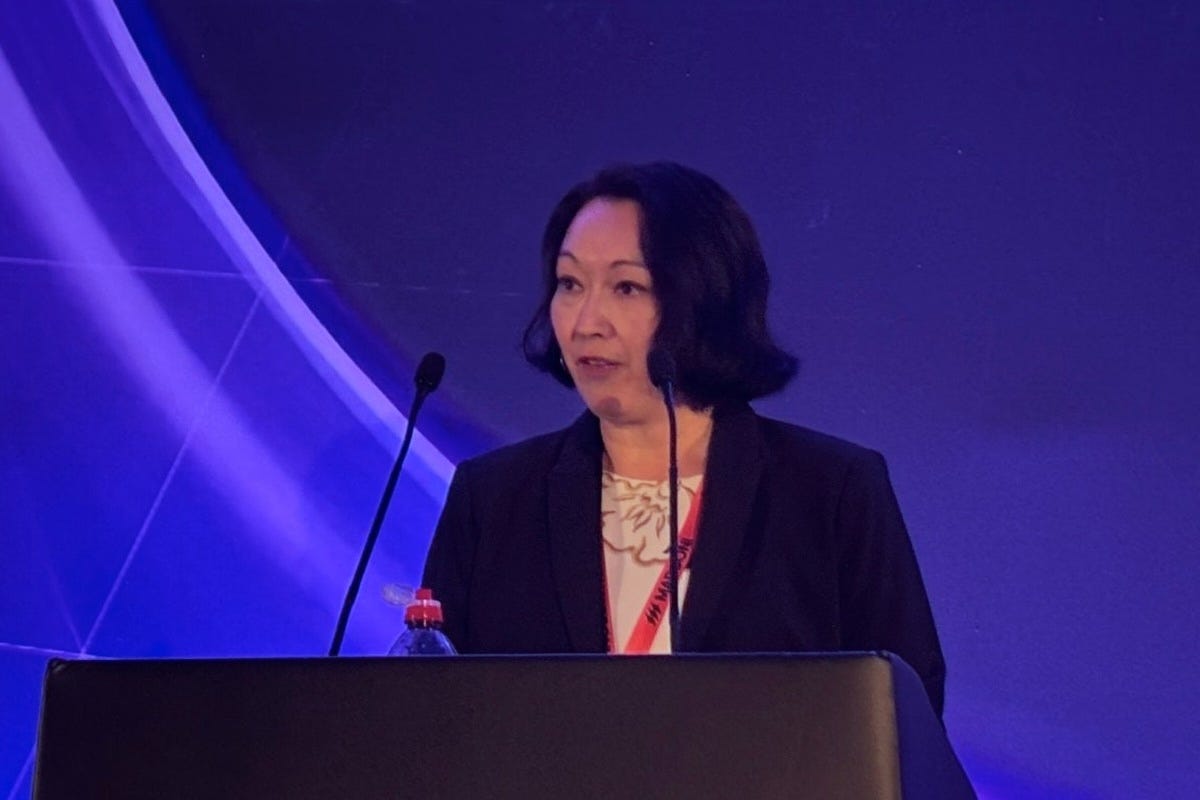
“Space Systems Command’s intent is to establish an international partnership-focused forum early in the acquisition cycle. This allows the Space Force to safely offer allies scalable cooperative agreements ranging from data as a service to purchasing sovereign FMS (foreign military sales) capabilities,” said Angela Lindemuth, deputy director of international affairs at Space Systems Command (SSC), US Space Force.
“Our vision can be distilled into three words: allied by design, meaning we understand well that allies need to be considered and brought into the acquisition fold early to align requirements and standards, facilitate seamless joint operations and enhance US and allied space capabilities,” she said.
Lindemuth said the two programs mark the Space Force’s pivot toward proliferation, using commercially available technology and product lines. Both are exploring on-orbit refueling, which could help integrate partners. She said bringing in commercial technology fits the Secretary of War’s acquisition transformation strategy and delivers decision advantage with speed and scale.
An “Allied by Design” study is looking at how to bring allies into the programs. It focuses on collaboration, data sharing and the integration of next-generation systems.
RG-XX will replace the Geosynchronous Space Situational Awareness Program (GSSAP). The Space Force is buying it through Andromeda, a contract vehicle awarded to 14 companies in April, whose ceiling was raised to about $6.2 billion in May to cover both programs. RG-XX satellites are expected to be more maneuverable than GSSAP and able to refuel in orbit.
The Space Force has requested $355 million for RG-XX and $370 million for SG-XX in fiscal 2027.
“Ultimately, this proactive framework will expand global space domain awareness, securely integrate partnership funding and logistics and multiply coalition space defense capacity to strengthen US and allied space superiority,” she said.
SSC, headquartered at Los Angeles Air Force Base in El Segundo, California, develops, acquires, fields and sustains the Space Force’s space systems. Its International Affairs Office runs joint development projects with allies as well as FMS and building partner capacity (BPC) programs.
Pooling resources with allies
Lindemuth gave a keynote on SSC’s international work at Defence in Space 2026 in London on October 27. The two-day conference is organized by and for the space and defense industry.
Her office’s capabilities development division has more than 35 active international agreements with over 15 partner nations. They are worth $55 billion in total, of which partners have contributed more than $6 billion. Its staff mixes civilian acquisition professionals, uniformed personnel and contractors, who handle agreements, personnel exchanges, technical exchanges and architecture planning.
“Joint capability development with allies is a crucial force multiplier, resulting in an alliance greater than the sum of its parts. Cooperative development and cooperative funding with like-minded nations avoid higher price tags through the pooling of resources,” she said.
She said joint development synchronizes standards and technology, streamlining coalition operations and interoperability. Upcoming work includes space control and space domain awareness partnering, an engineer and scientist exchange program and Allied by Design work on RG-XX and SG-XX.
Recent results include the Wideband Global Satcom negotiations, an amended Responsive Space Capabilities memorandum of understanding and a partnership with Japan’s Quasi-Zenith Satellite System that expands rideshare opportunities and space domain awareness capability.
Near-term targets include:
Missile warning, tracking and defense
Space domain awareness
Tactically responsive space
Space control
SSC’s FMS and BPC division handles more than 190 cases with over 35 countries, with an active line value above $950 million. It projects $12 billion in case value over the next two to four years.
“That is an extraordinary data point, underscoring just how much we partner with allies and what an opportunity it presents to commercial industry,” she said.
She said running sales for the whole command is a massive undertaking as allies’ demand for space capabilities keeps spiraling. The division is scaling its workforce, with more than 25 new FMS-funded positions coming online at SSC. Some allies need a quick fix for a tactical gap, while others want a more enduring strategic capability.
Allies are asking for:
Space control
Commercial satcom
Theater electronic warfare
Anti-jam satcom
Missile warning and tracking
Launch
Working with SSC’s Commercial Satcom Office, the division has coordinated several rapid deliveries of proliferated low Earth orbit satcom services to international partners’ combat operations, often on extremely urgent timelines. The division also ran the first US Northern Command interoperability exercise for the Mobile User Objective System, the military’s narrowband satcom system.
Space center for Poland
SSC also helped Poland, a US European Command ally, set up its own space operations center, which opened in early 2026.
Lindemuth said the center gives Poland a deep strategic capability and wider access to space data and analytical capacity.
It will also strengthen the Joint Commercial Operations cell, a Space Force initiative that brings together more than 20 nations to integrate commercial space services into US and partner military operations. Poland will become a leader in space domain awareness within the cell.
In South America, SSC placed Department of War telescopes at several sites to boost US Southern Command partners’ space domain awareness, in the first-ever space BPC cases.
Satcom planning is another focus. The Allied Satcom Future Architecture Working Group (FAWG) brings together nearly 20 allied nations to align their satcom acquisition strategies and development timelines. A UK liaison officer sits with SSC’s satcom team, which also includes government civilians and contractors.
“This working group exemplifies our forward-leaning allied mindset and how we are operationalizing our allied by design vision,” she said. “In May of 2025, the FAWG Secretariat initiated the first FAWG Community of Interest workshop, which was a game changer for creating momentum in allied satcom partnership.”
The informal group meets twice a year at colonel level and held its 10th meeting in the UK in late 2025. Its workshops give members a structured way to analyze agreed satcom topics and produce actionable outcomes. Topics so far include hybrid satcom terminals, future narrowband requirements, ground infrastructure collaboration and protected satcom.
Commercial capacity is the other lever. SSC’s Commercial Space Office (COMSO) is the Space Force’s main gateway to the speed and innovation of the commercial space sector, in support of its Commercial Space Strategy.
“COMSO is our tie-in to a vast repository of commercial sector capacity and mechanisms used to understand, weigh and exploit a variety of different, and oftentimes less expensive and more readily available capabilities,” she said.
The office includes the Commercial Augmentation Space Reserve, which keeps commercial capabilities on call for crises and conflicts. It also runs SpaceWERX, which develops dual-use technology, the Space Enterprise Consortium, which builds prototypes with non-traditional vendors, and an investor relations team that promotes private investment in dual-use space firms.
SSC sits alongside two other Space Force buyers. The Space Rapid Capabilities Office answers immediate operational threats, while the Space Development Agency uses commercially available technology to deliver on fixed timelines.
RG-XX bids went in at the end of October, with an award expected in about a year, and the first SG-XX launch is planned for 2030. SSC now wants to apply the FAWG model to other working groups and engagements with allies.