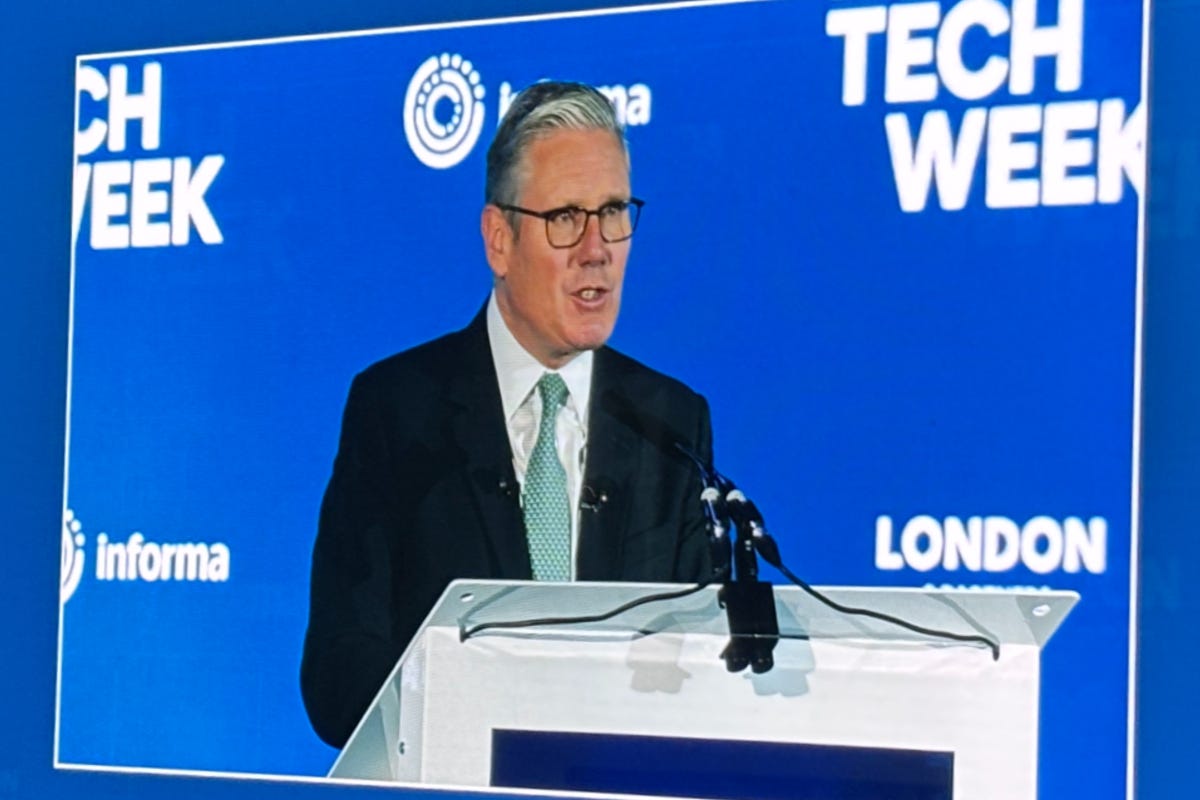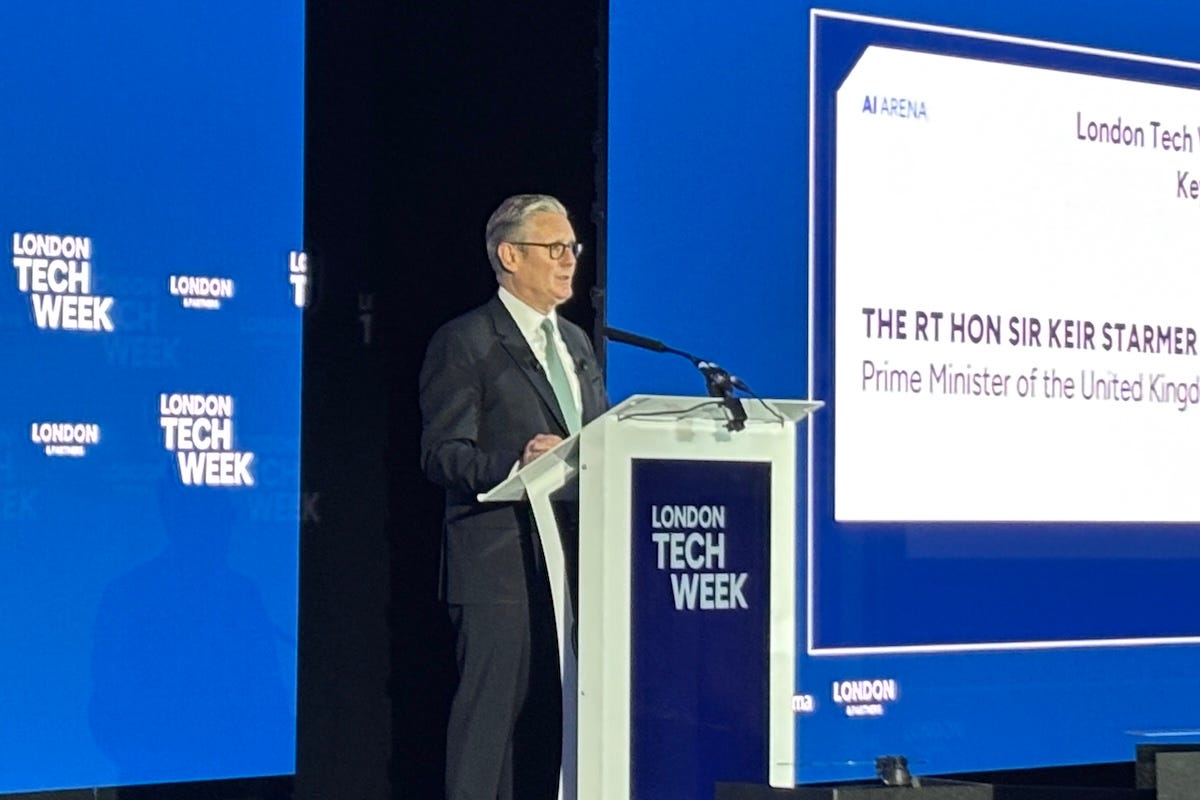
Britain is staking its economic future on artificial intelligence (AI) hardware, committing £1.1 billion ($1.4 billion) to build a sovereign chip industry, a national supercomputer, and a generation of engineers capable of competing with the world's largest technology powers.
The plan spans a £750 million national AI supercomputer, a £120 million innovation program to fund the design and testing of novel chips, and a new investment fund backed by up to £150 million from the British Business Bank. The government is also committing £80 million in total to skills.
“On AI, Britain has three options. We could stick our heads in the sand and hope for the best. Or you can remove the guardrails completely and ignore the consequences. Or you can take a third path, where we back the British businesses creating the jobs and technologies of the future, but never lose sight of who that progress must serve,” said Keir Starmer, Prime Minister of the United Kingdom.
“What matters is whether Britain is ready for it. Whether British innovators have the tools, the investment and the backing they need to lead it. And whether working people have the opportunity to benefit from it,” he said.
Starmer said the third path meant British tech companies starting, scaling and staying in Britain, with the rewards felt across the country. He said government must be active in technology policy, supporting risk-takers and providing the conditions for businesses to thrive, while also ensuring national sovereignty and giving working people security through change.
He said innovation was in Britain’s DNA. The country had invented the World Wide Web, pioneered the jet engine and powered the Industrial Revolution. It was the job of government not just to recognize the scale of that talent but to match it with the scale of its ambition.
He said ideas being born in Britain were not enough. They had to be able to grow there too, which was why the government was crowding in capital, betting on British businesses and creating confidence for investors worldwide.
The global AI chips market is forecast to reach one trillion dollars in the early 2030s. Securing just 5% of that market would generate £50 billion in revenue and create tens of thousands of highly paid jobs in the UK.
Of the £750 million earmarked for the national AI supercomputer, £400 million will go toward next-generation chips. £150 million of that will buy next-generation inference chips this summer, creating an immediate opportunity for British firms. A further £250 million will support more specialized chips as the most promising technologies mature.
Light over electricity
Starmer made his remarks at London Tech Week 2026, the annual technology conference held in London and organized by London & Partners, on June 8. A government press release published the same day set out the full details of the AI Hardware Plan, covering chip procurement, supercomputing infrastructure and skills investment.
Among the most striking announcements was the expansion of the Scaling Inference Lab, delivered by the Advanced Research and Invention Agency (ARIA) and CommonAI, into a national capability for testing and validating AI chip technologies. At least £20 million from the AI Hardware Innovation Program will fund the expansion.
The Lab is already delivering results. British AI company Oriole Networks, working with AMD through the Lab, will deploy the world’s first large-scale AI system that uses light rather than electrical signals to move data between chips. The photonic interconnect technology is designed to significantly boost the performance of UK data centers.
The shift from general-purpose chips to bespoke hardware plays directly to the UK’s strengths. British companies are already leading the next generation of AI hardware. Arm’s chip designs are used in everything from smartphones to AI data centers. Startups Fractile and Olix have raised more than £320 million between them.
A £120 million AI Hardware Innovation Program will provide companies with funding to design, develop, and test novel chips before they know whether the underlying technology will succeed commercially. The government described this as a way for Britain to ensure the next generation of world-leading chip companies is grown at home.
“Last year, I set us a target of upskilling seven and a half million workers with AI training by 2030. Today, I am pleased to report back that 1.7 million workers have already received that training,” Starmer said.
He said these figures came one year after he had set the target at the same stage. He added that while the government could not know exactly where AI would cause disruption, it knew how it would respond and whose side it would be on.
The skills investment covers a new £12 million Centre for Doctoral Training in Chip Design and a £20 million expansion of the TechFirst program to support 500 more Doctor of Philosophy (PhD) students. Undergraduate semiconductor bursaries will rise to 500 per year. Arm has joined as a strategic partner for TechFirst.
He said the government was rolling out AI tutors to 450,000 children on free school meals to close the attainment gap, and announced a new AI jobs tool to help people out of work find employment, create their curriculum vitae (CV) and return to the workforce.
Warrington and beyond
The story Starmer chose to open his speech was not a statistic or a policy announcement. It was a factory in Warrington.
“For centuries, Warrington was at the forefront of Britain’s soap-making industry. And until a few years ago, an Unilever factory was its epicenter. Generations of local people worked there. Families built their lives around it. But then it closed. And for many people in the town, that factory became a symbol of a community left behind,” he said.
That factory was now being transformed into a new AI data center, Starmer said, bringing skilled jobs and investment to a town that had watched opportunity pass it by. He said similar stories were unfolding in Lanarkshire, Liverpool and Leeds.
“Young people can look at that site and see not what their community used to be, but what it can become,” he said.
AI was already delivering faster diagnoses in the National Health Service (NHS), reducing court backlogs and speeding up planning decisions. He described these as real benefits that people across Britain are feeling right now.
UK startups had raised close to half of all European tech investment in 2025, a figure Starmer described as a profound achievement. Britain was the third-largest technology economy in the world. Each investment, he said, was an endorsement of British talent, British industry and the approach the country was taking.
He cited Reflection AI as expanding in Britain, creating 1,000 roles over three years because of the country’s talent pool. AMD was among the companies doubling down on the UK. The government had also created a Global Talent Taskforce to strengthen the routes bringing exceptional innovators to Britain.
Liz Kendall, Secretary of State for Science, Innovation and Technology, who announced the AI Hardware Plan at the same event, said the UK was already a global leader in chip design and believed it was a race Britain could win.
On children’s safety, Starmer said the pace of technological change could not be an excuse for harm. He called on tech companies to introduce device controls preventing children from sending and receiving sexually explicit images, citing an earlier incident involving the Grok platform.
“If they choose not to, then we will act. And we will change the law. When it comes to the safety of our children, standing by is not an option,” he said.
He said the question was not whether the AI revolution was coming, but whether Britain would shape it or be shaped by it. He said the government had made its choice: to take control, to be ambitious about what Britain could achieve, and to make AI work for every part of the country.