


The UK is moving from tracking objects in orbit to preparing to act there, starting with a defense contract for satellites that can maneuver close to others.
The Ministry of Defence (MoD) has hired Astroscale UK under Project LEDA to build, launch and operate demonstrator spacecraft capable of rendezvous and proximity operations (RPO). The satellites will help the UK understand orbital warfare, including how such spacecraft operate and how they could counter RPO threats.
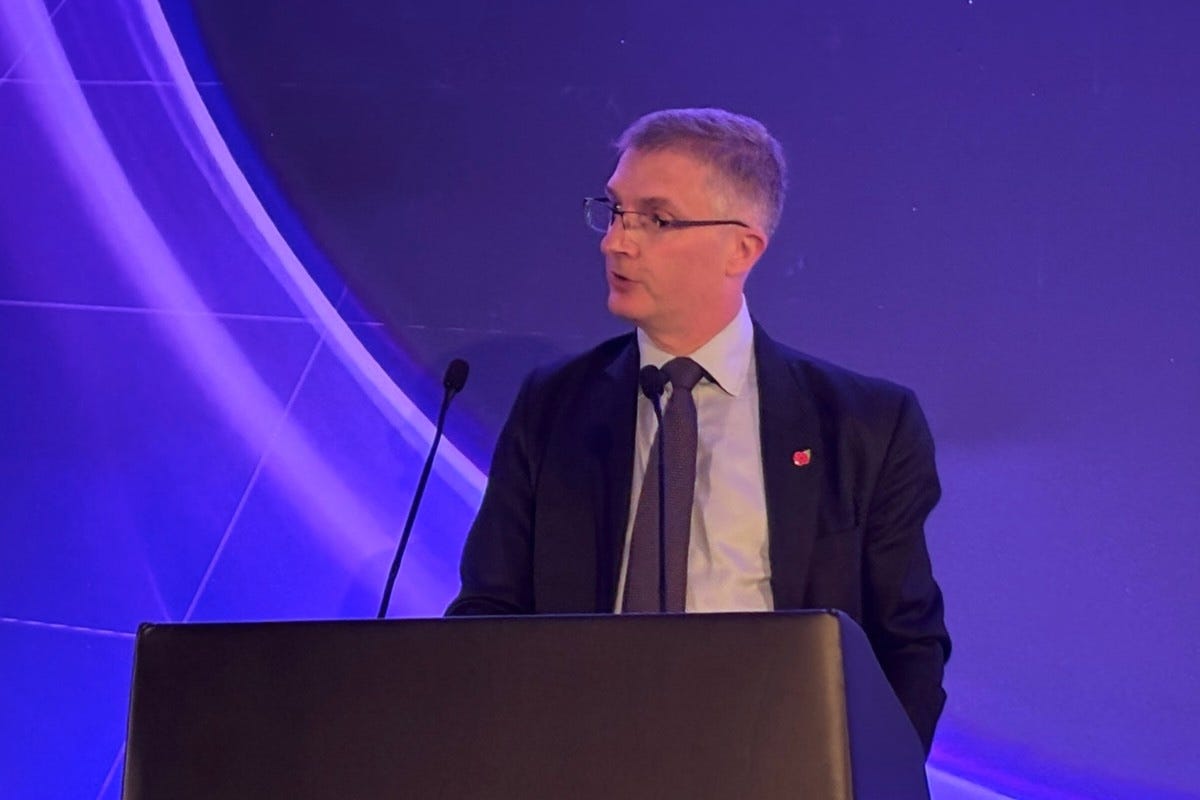
“This is not about acting irresponsibly or seeking escalation. It is about credible deterrence,” said Rear Admiral Tony Williams, director of the Space Systems Portfolio at the National Armaments Director Group.
“Control of space is not about seeking conflict in space. It is about demonstrating that we can protect the capabilities upon which our economy, our society and our armed forces depend, and that if those capabilities are threatened, we have credible options available to respond,” he said.
Williams said the UK is investing in its ability to understand what is happening in orbit and attribute activity with greater confidence.
He said that ability will help protect the services the armed forces rely on and, where necessary, constrain adversaries’ freedom of action. He added that no nation can deliver control of space alone, so the work needs military, diplomatic, regulatory and legal levers across government as well as allies.
“The United Kingdom remains committed to responsible behavior in space, international stability and the sustainable use of the domain, and we will do so alongside our allies and partners,” Williams said.
Astroscale UK is the Harwell-based arm of Tokyo-based Astroscale Holdings, which specializes in servicing and inspecting satellites in orbit. It announced the £15 million contract on October 28 and will deliver LEDA with support from BAE Systems and satellite maker Open Cosmos.
From seeing to acting
Williams gave the official opening keynote at the fourth Defence in Space Conference, an industry-run event held in London on October 27 and 28. His theme was the shift from awareness to action in protecting freedom in space.
Only a generation ago, space was the preserve of a handful of governments, defined by scientific achievement and prestige. Today, satellite timing signals enable billions of digital transactions a day, navigation systems guide aircraft and shipping, and Earth observation helps monitor climate change and respond to natural disasters.
Williams said space is now critical national infrastructure, in a domain that is increasingly congested.
He pointed to No. III Space Effects Squadron (3 SES) as a tangible demonstration of how UK thinking on space has shifted.
Chief of the Air Staff Air Chief Marshal Sir Harv Smyth announced the unit on September 23. It is the UK’s first squadron dedicated to operations supporting the control of space, with a mandate to disrupt, degrade and deny hostile activity. It joins two Royal Air Force squadrons that watch for and warn of threats.
“The significance of 3 SES goes beyond the establishment of another squadron. It is about turning control of space from a requirement into an operational capability, and it forms part of a much broader program of activity,” Williams said.
That program includes orbital warfare, electronic warfare and capabilities to counter direct-ascent anti-satellite missiles fired from the ground.
“Collectively, these new capabilities will help defend UK space interests, safeguard critical space services and generate operational advantage for the integrated force,” he said.
For years, defense focused on space situational awareness, which asks what is in space and where. That meant:
Tracking satellites
Monitoring debris
Predicting conjunctions
Keeping a catalog of every object in orbit
Williams said those tasks remain essential but are no longer sufficient.
“The challenge is no longer simply to know where objects are. The challenge is to understand what those objects are doing, why they are doing it and what that means for us,” he said.
He said the key questions now include who operates those objects and what effects they might generate.
“That’s the journey we’re on: from situational awareness to domain awareness to the control of space, from seeing to understanding to acting,” he said.
The traditional line between military, civil and commercial space is also blurring. The UK Space Agency, the Met Office and the Science and Technology Facilities Council all contribute expertise, while industry increasingly owns and operates capabilities that defense can draw on.
“Our advantage will therefore come not simply from possessing individual systems, but from how successfully we integrate them,” he said.
He said recent conflicts have shown the importance of secure supply chains, rapid innovation and the ability to respond quickly as technologies and threats evolve. He added that industrial resilience is increasingly inseparable from operational resilience, with benefits for UK skills, jobs and exports.
People still decide
Williams said artificial intelligence (AI), automation, advanced sensors and commercial data could process vastly greater quantities of information and turn it into understanding at speed. But he said people must still ask what they are seeing, what it means and what should be done about it.
“Technology alone will never be enough. Our decisive advantage remains our people: the operators, analysts, engineers, scientists, acquisition professionals and intelligence specialists who turn technology into operational effect,” he said.
Before his keynote, the conference heard from the Allied Forces Foundation (AFF), a British-American charity that brings wounded, ill and injured service members from allied nations together through endurance challenges. Defence in Space has chosen the AFF as its charity for three years running.
“Without space, the men and women who are fighting in combat now cannot operate anymore, and it’s critical what you do,” said Stuart Taylor, founder and president of the AFF.
He said the charity has represented 26 countries over 16 years, with Ukraine’s wounded warriors most in need.
Irina Petrov, vice president of marketing, communications and membership at the Global Satellite Operators Association, spoke as an AFF supporter. She said the charity brings around 10 to 12 Ukrainian veterans with physical or emotional trauma from the front line to Scotland each year.
She said many of them travel abroad for the first time, using English learned at school or university, and walk the Scottish mountains alongside allies from other countries.
This year, one of them was a 21-year-old drone operator who had joined Ukraine’s forces at 18.
“He could have set up any defense tech or any company in tech as one of the founders, had we only had peace. Yet he went to the front line and he was a drone operator,” Petrov said.
She said he spoke fluent English, was very tech-savvy and became the favorite of the whole group. He walked everywhere with a camera, and his mother later told Petrov he had wanted to return to Scotland once the war was over. He lost his life a couple of months after the event.
“He, like many of us who’ve served, went back to the fight as a wounded warrior and sacrificed his life for our freedom,” Taylor said.
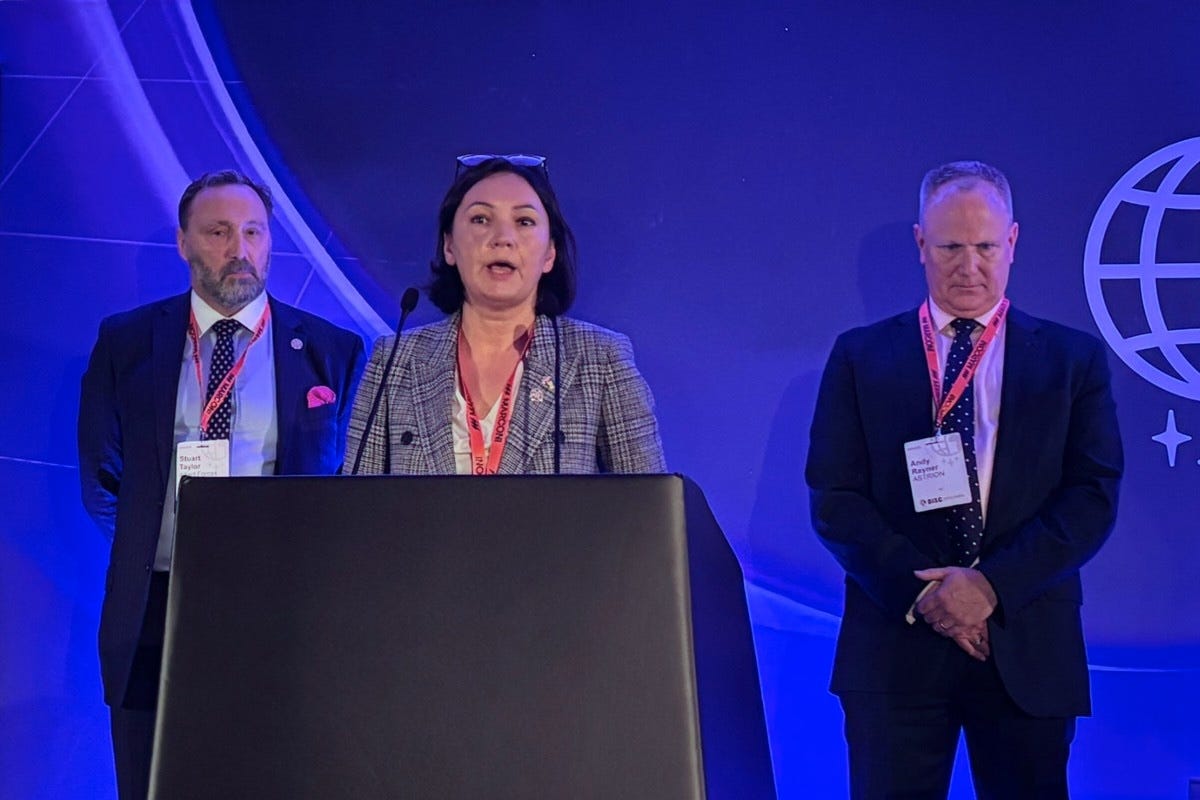
Andy Rayner, vice president for international growth at ASTRION, said he has supported the AFF for more than 10 years.
“My challenge to industry is get your checkbooks out, come and support the charity. My challenge to those who are serving is get a team together, come and participate. You cannot walk away and not be moved by the people that we interact with and the impact that the charity has,” he said.
Rayner said supporters who cannot reach Washington DC, where the AFF held its Warrior Yomp on November 7 and 8, can join the Cateran Yomp, run by the Army Benevolent Fund in Scotland each June.