


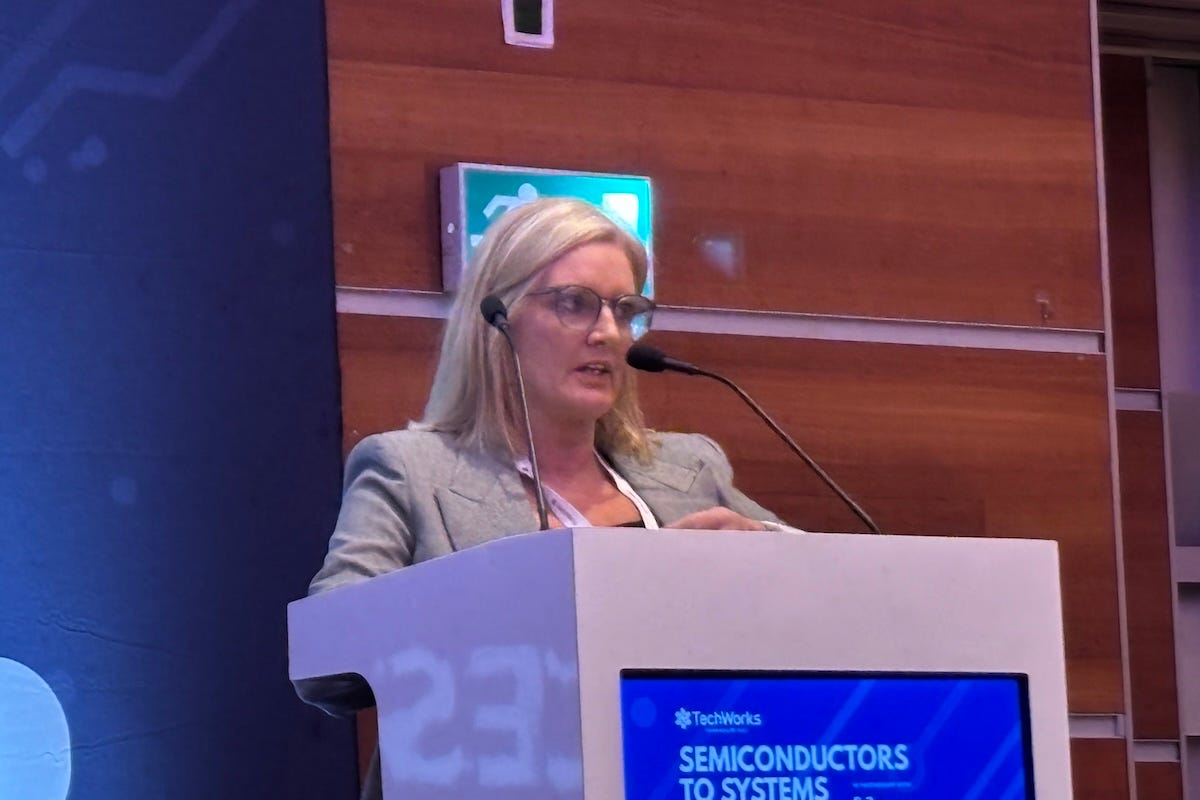
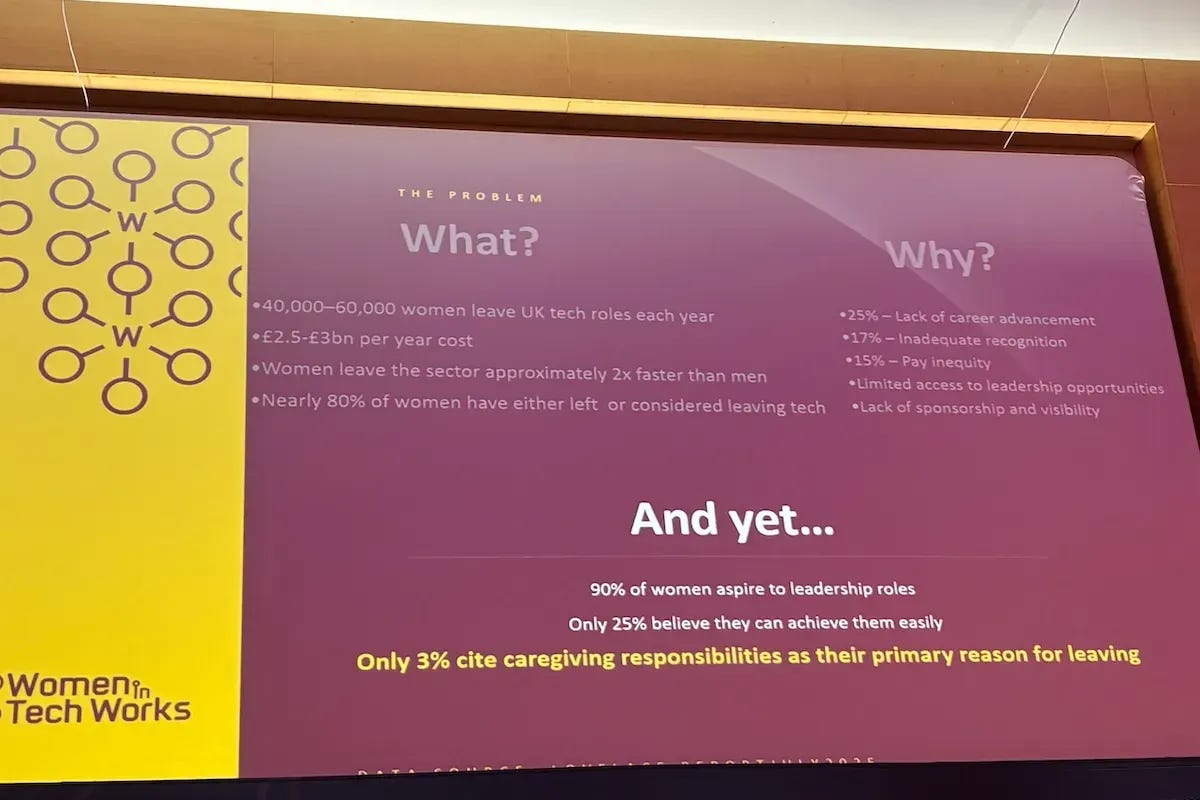
Women are leaving tech jobs across the UK at roughly twice the rate of men, with as many as 60,000 exiting the sector each year.
The departures cost the UK economy up to £3 billion annually.
The reasons have little to do with family life. Nearly 80% of women in tech have either left the industry or seriously considered leaving, according to the 2025 Lovelace Report. The barriers start well before anyone reaches the door.
The top reasons are a lack of career advancement (cited by 25% of women surveyed), inadequate recognition (17%), and pay inequity (15%), as well as limited access to leadership opportunities and sponsorship.
Across the industry, companies are already feeling the impact inside their own organizations.
“We’re losing 60,000 women in tech roles every year, costing £3 billion to the UK economy,” said Jillian Hughes, founder of Women in TechWorks and director of operations at Silicon Catalyst EU. “We’re leaving at twice the rate of men.”
“There is a myth that women leave the tech sector to have families or caregiving duties,” Hughes said. “That is a myth. Only 3% of women surveyed said that was the reason.”
About 90% of women want to progress in their careers, but only 25% believe they actually can.
Only 20% of women in the UK work in artificial intelligence (AI) roles, Hughes said, calling it an area of opportunity as the sector’s fastest-growing segment expands. She said continuing to fill the pipeline will not move the needle while women keep leaving at the current rate.
“This is a fully inclusive program,” Hughes said. “We need to retain everybody, but men are leaving for different reasons.”
Men are also leaving tech roles, though for different reasons than women, she said. Women in TechWorks is recruiting male allies and mentors alongside its work supporting women.
She said she spent months reviewing the data before deciding where Women in TechWorks could make the biggest difference.
Mentors already signing up
The developments were announced at the Semiconductor to Systems Summit on August 26 in London, organized by TechWorks in partnership with the UK Semiconductor Centre (UKSC), where industry leaders and international delegations gathered to discuss the future of the UK’s chip sector.
Hughes said she worked closely with UKSC and the UK Electronics Skills Foundation (UKESF) in shaping the program.
“We’ve just launched our first mentoring program,” she said. “Many of the men in this room have already signed up to be mentors.”
The program is still going through legal steps before a wider rollout, but a second version already in development will add skills-gap support and recruitment alongside mentorship, she said.
“We can’t do an intervention now because the government is already seeing the problems that we are seeing,” she said. “So let’s work together.”
The shift followed the December launch of the government’s Women in Tech Task Force, which Hughes called a welcome development that allowed Women in TechWorks to redirect its planned returnship and retention work into joint action rather than pursue a standalone intervention.
Later in the program, Charles Sturman, chief executive officer of TechWorks, marked the organization’s 30th anniversary with a bigger announcement.
“We intend to bring our semiconductor manufacturing and design communities together under a new identity,” Sturman said. “The UK Semiconductor Industry Association (UKSIA) will build on 30 years of National Microelectronics Institute (NMI) and TechWorks experience, with a simple and clear ambition to be the strong, authoritative and independent voice of the whole UK semiconductor industry.”
He said the new association will combine design, manufacturing, packaging, equipment and materials, working across companies from startups and scale-ups to the largest established international players. It will remain independent and funded by its members, with its voice representing industry rather than government, he said.
“When we go to government, investors or international counterparts, we want them to be clear about who we are and who we represent,” he said.
“Our ambition is for UKSIA to be authoritative, credible, commercially relevant and generally representative of industry, providing analysis, advocacy, best practice, collaboration and sector strategy,” he said.
He added that UKSIA will sit alongside TechWorks’ existing networks: the Applied Electronic Systems Innovation Network (AESIN) and the IoT Security Foundation, which he called more relevant than ever in the era of AI and quantum computing.
Building the wider ecosystem
Sturman then welcomed Andy McLean, chief executive officer of UKSC, to the stage, describing the split as UKSIA serving as the independent industry voice with advocacy and permanent industry-led technical communities, while UKSC holds the national mandate for government-backed strategy, technology roadmap, skills investment and international engagement.
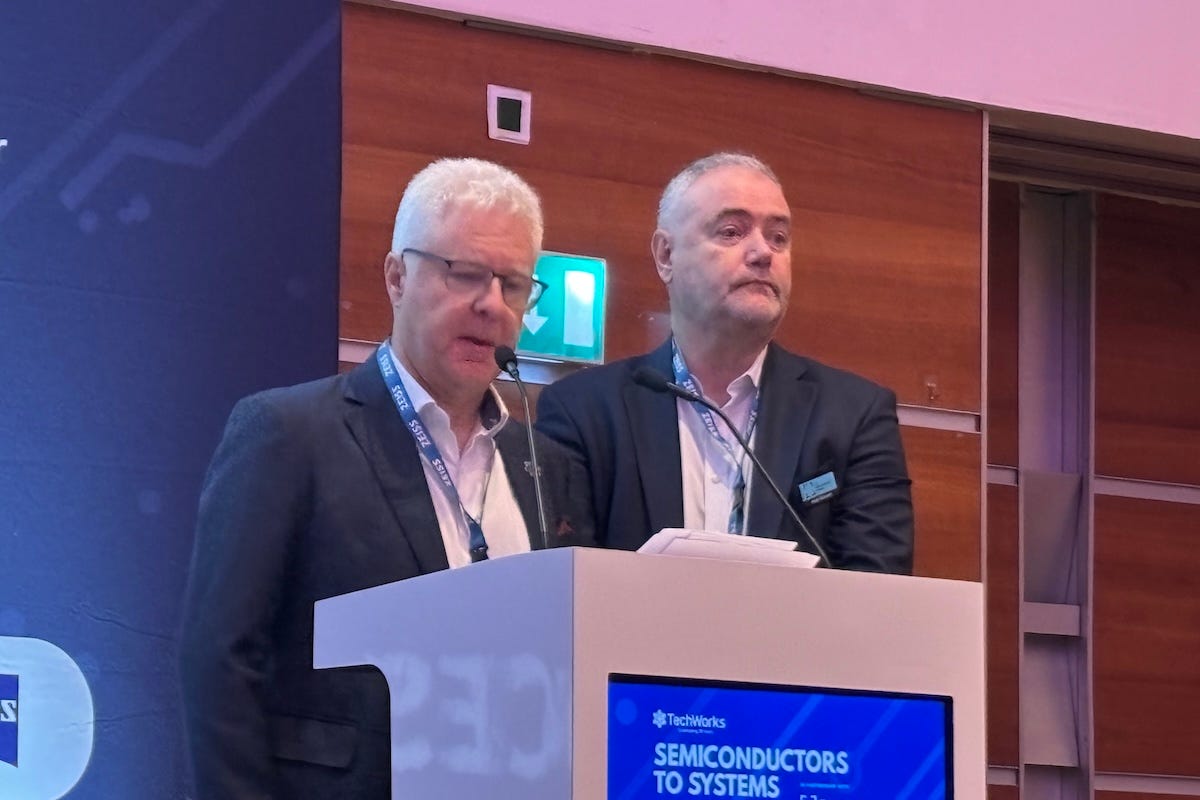
“UKSIA and the UKSC will work ever more closely together to create a stronger, more coordinated voice and support system for industry, drawing on our complementary strengths,” Sturman said.
TechWorks has worked with UKSC since the centre’s inception last year, including as a partner in organizing this year’s summit.
“This partnership will deliver a more joined-up and easier-to-navigate UK semiconductor ecosystem for all,” he said.
“I don’t think there’s ever been a stronger need for the overall semiconductor ecosystem to connect, to collaborate and to partner as we move forward with enormous growth ahead. We are delighted to see the refocus for TechWorks and look forward to continuing this partnership between UKSC and UKSIA,” McLean said.
TechWorks was founded in 1996 as the NMI, when the UK still had a substantial semiconductor manufacturing industry and the internet and mobile phones were just taking off, Sturman said.
The organization now brings together more than 300 companies across design, manufacturing and the wider technology ecosystem.
“The fundamental reason we exist hasn’t changed,” Sturman said. “We bring industry together to share knowledge, solve problems and learn from each other.”
TechWorks has expanded on several fronts over the past two years, he said:
Widening AESIN beyond automotive into aerospace, defense and other systems sectors
Developing frameworks for supply chain trust and for trusted AI compute
Working toward compliance with the Cyber Resilience Act and its impact on systems internationally
Hughes also directs operations for Silicon Catalyst EU, whose UK accelerator plays a parallel role in strengthening the industry from the startup end.
“We build an ecosystem of partners and experts to deliver this program,” she said. “No semiconductor company has to start on its own.”
Silicon Catalyst was established 11 years ago and now runs ChipStart UK, a government-funded incubator now in its fourth year that helps early-stage semiconductor companies develop, commercialize and scale, Hughes said.
“The numbers are impressive,” she said. “We have more than 500 investors and 450 advisers, with programs now running in Malaysia, Europe, Japan, Australia, the UK and the US.”
The accelerator gives founders access to in-kind and strategic partners, including electronic design automation (EDA) software tools and foundries such as TSMC, she said. It is also seeking advisers, mentors and partners to deliver expert training to the companies it supports.
UKSIA’s formal launch is still to come, and the next year will test how far new structures and mentorship can drive lasting change in the sector.