


The UK has spent more than a decade building one of the world’s strongest quantum ecosystems, but its most mature companies now risk having to scale abroad.
Rivals are investing heavily, and UK start-ups that outgrow early grants struggle to find capital and customers at home.
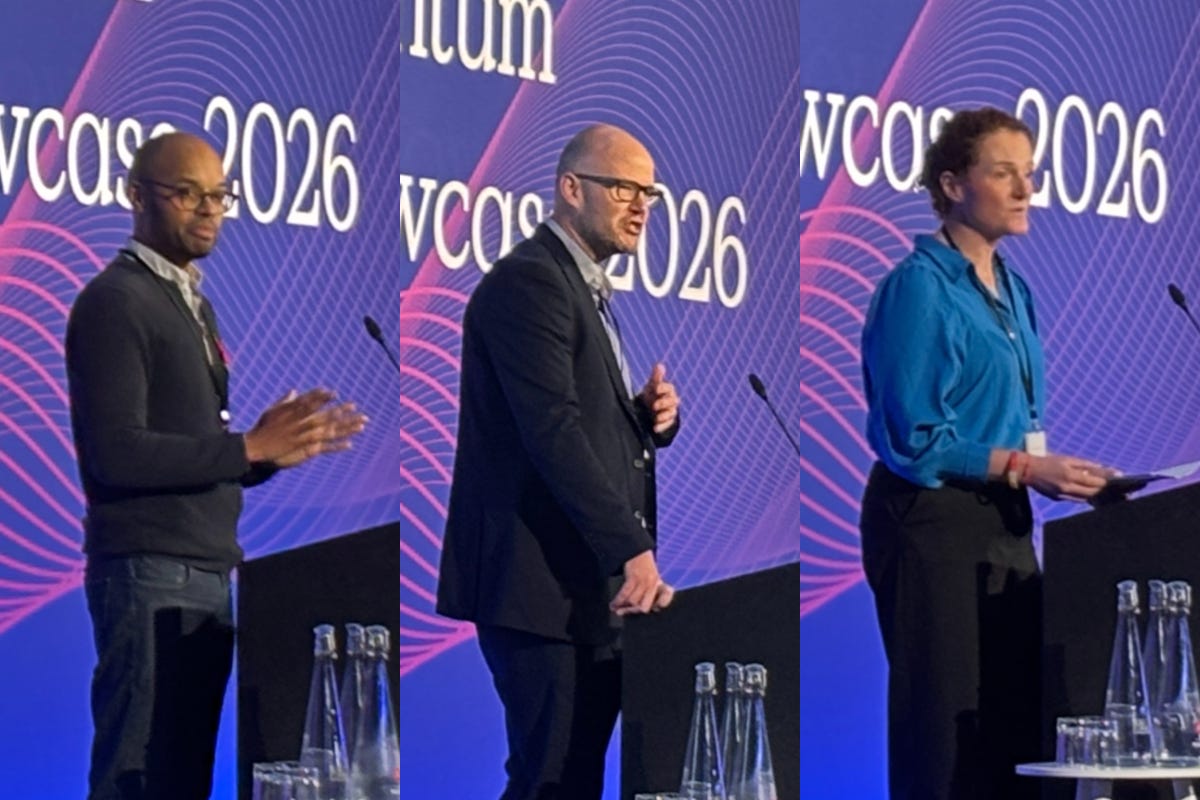
“Once these businesses get to a certain size, there’s almost no more that the UK could do for them. They were stalling, failing or scaling elsewhere,” said Tom Adeyoola, executive chair of Innovate UK. “This is a particular issue for quantum, because we do have these companies reaching this level of maturity.”
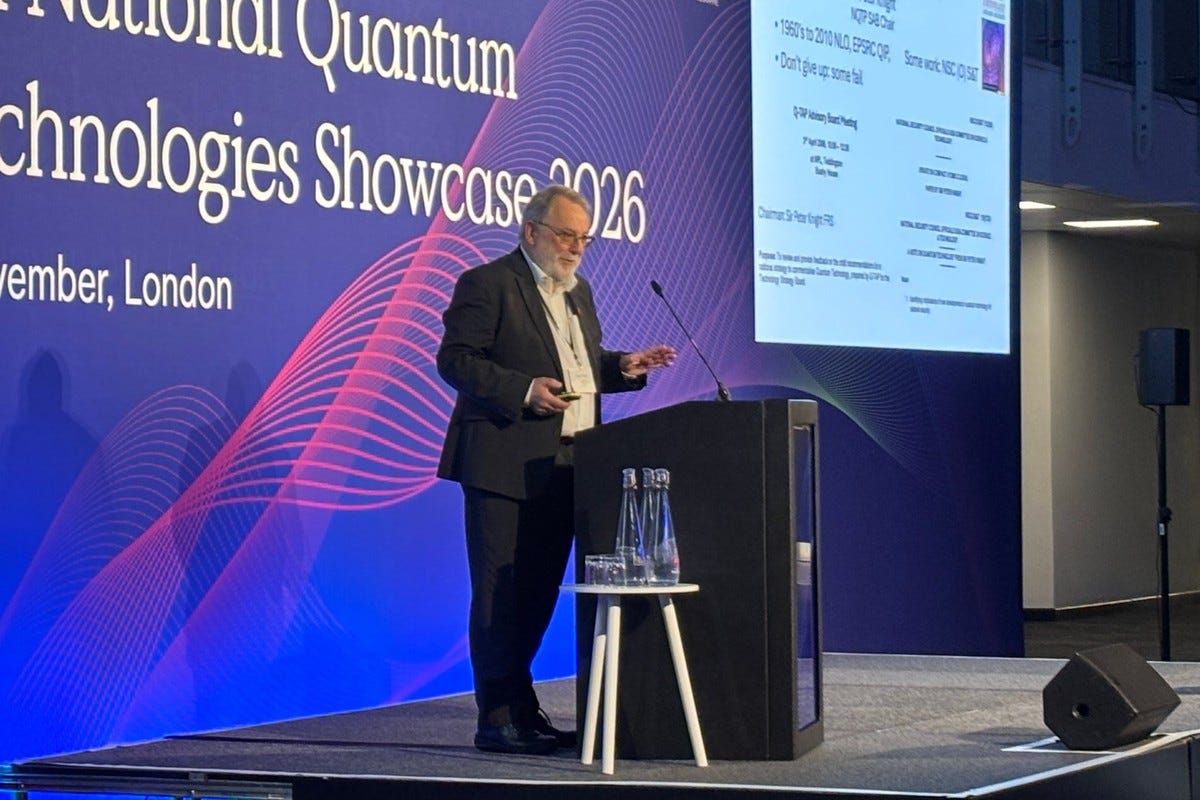
“The challenge is to make this stuff sticky in the UK. It’s all very well to have this fantastic journey, but we must not hand it over and find that we don’t reap the economic and societal benefits in the UK,” said Sir Peter Knight, chair of the Strategy Advisory Board of the UK National Quantum Technologies Programme.
Sir Peter, in his final year leading the program’s advisory board, warned at the City Quantum and AI Summit last month: “We don’t want a repeat of invented here, exploited elsewhere.”
Adeyoola said Sir Peter’s concern is that someone else could still take the benefits of an ecosystem the UK has nurtured, because the world has woken up to quantum, not only for computing but also for sensing, imaging, timing, navigation and novel materials. He said quantum firms are running out of runway.
“The transition is not inevitable, and I would argue there is even more of a sense of jeopardy and urgency this time around,” he said.
Innovate UK’s answer is Velocity, a new approach due to launch in autumn 2027.
“We’re not just launching a new program; we’re changing our entire strategy. There will be no more one-off grants and brief engagements. If a business comes into the Innovate UK fold, we’re in it for the long haul together,” Adeyoola said.
He said the agency will place bigger, longer-term bets with its own funding and connect companies with private investors and customers.
It will also help explain what quantum means for ordinary people.
“It’s quite easy to tell the story of AI. In fact, it does quite a good job of telling the story itself. Quantum is complicated. It needs a voice,” he said.
“It isn’t going to be enough for us to turn back in three to four years’ time and say, ‘What great science we’ve got in the UK! What great companies we’ve got that are emerging.’ We need to start translating this into capability and into delivering commercial value,” said Derek Craig, Quantum Technologies Programme director at UK Research and Innovation (UKRI).
He said other countries are increasing their quantum investment at scale to compete, and the UK is only one part of a wider global system.
Government as customer
The speakers were addressing the opening plenary of the UK National Quantum Technologies Showcase in London on November 6.
Hannah Boardman, director of Frontier and Early-Stage Technologies at the Department for Business, Innovation, Science and Trade (BIST), said ProQure commits up to £1 billion to buying useful large-scale quantum computers in the early 2030s.
“ProQure is unprecedented in its scale and its ambition. It recognizes that government must do more than support innovation at the beginning of the journey. It must also help create credible demand, give companies a route to deployment and act as an intelligent early customer,” she said.
“It’s about saying that there is a customer for this technology. There’s no point in just having these machines and then not putting them to use,” Craig said.
Demand is also being created for quantum sensors. Last month’s budget included a £138 million quantum sensing and timing procurement catalyst, with £30 million from the Ministry of Defence (MoD), its largest quantum investment to date. The Department for Transport is the first civil department to join.
“We know our scientific foundations are strong, but the challenge is now adoption. We need to bring the customers to the table,” he said.
“The focus on quantum technology procurement within the UK government is truly groundbreaking, as is potentially this many government departments working together so seamlessly. It should signal to all of you that government is playing its part not only as a funder, but also increasingly as a customer of quantum technologies,” Boardman said.
She said government cannot be the whole market. In June, it set up the Quantum Growth Alliance, which brings together major UK businesses in financial services, telecoms, energy, life sciences, defense and aerospace.
Funding remains a hurdle for growing companies.
“Companies also need access to capital that keeps pace with them, and this is a challenge for the UK. This is especially after a technology has been proven, but before revenues arrive at scale,” she said.
The British Business Bank made two of its largest-ever direct investments in quantum companies this year.
“That kind of forward-leaning capital helps UK companies grow here, stay here, and complements early-stage backing from the likes of NSSIF (National Security Strategic Investment Fund). We recognize we need to go further in crowding in private investment through public,” Boardman said.
The government has also announced:
£5 billion of extra financial capacity for the British Business Bank, targeted at scale-ups
£15.4 billion of additional capital for the National Wealth Fund to mobilize private investment
A new founders’ relief to make the UK more attractive for starting and growing businesses
Race for sovereignty
The stakes go beyond economics. Adeyoola said quantum enables navigation systems that work when GPS signals are denied, sensors that improve radar and imaging, and encrypted networks for ultra-secure data transfers. He said the need for sovereign capabilities has become evident since the national program began.
“Countries also want the benefits, the jobs, the growth, the exports, the strategic advantage, and they’re beginning to invest very heavily. We are quite simply in an international race to grow quantum, protect quantum and reap its rewards,” he said.
He urged quantum companies to protect their intellectual property using the government’s Secure Innovation guidance.
“With geopolitics in constant flux, you should consider protecting your investment. After all, security is not just a necessity for the company itself; it is a selling point for future investment and prospective customers,” he said.
Boardman said the UK is working with trusted partners, including Germany, with which it will share €20 million of research.
“All leading quantum nations face similar questions around benchmarking, standards, infrastructure, supply chains, demand and investment. We make faster progress by moving beyond dialogue towards practical cooperation, joint investments, shared infrastructure, interoperable standards and clearer routes for companies to scale internationally,” she said.
The national program dates back to 2013, when then-Chancellor George Osborne found £270 million of new money for quantum.
“Some things work, some things don’t work. The trick was to be persistent and not give up, making sure you have the evidence to say why this journey is a worthwhile journey,” Sir Peter said.
A recent report found that investing £300 million in the research hubs over 10 years created more than 2,000 skilled jobs, supported 74 spin-out companies and attracted an estimated £482 million in private investment. Boardman said such figures help convince politicians at the highest levels of the opportunity.
Craig announced the UK Quantum SuperConnector, a national program led by Imperial College London with the universities of Bristol, Cambridge, Glasgow and Oxford, to help researchers turn lab ideas into investable businesses.
He said Mission 2 aims to deliver the most advanced quantum network at scale.
“No one single organization is going to be able to deploy a quantum network at scale. This isn’t simply about demonstrating the tech; it’s thinking about how that can be exploited by an end user,” he said.
He said UKRI will shortly launch a major testbeds program for quantum networks. The MoD also plans to publish a quantum action plan in the new year to coordinate quantum work across the defense community, and Boardman said she expects the change by next year’s showcase to be even greater.