


The United Kingdom’s fusion program is moving into a phase where the central question is no longer whether it can work, but whether it can be built, financed and delivered at scale. The narrative is shifting from scientific feasibility to execution discipline, where capital deployment, program timelines and industrial coordination determine outcomes.
What once depended on breakthroughs in plasma physics is now constrained by the practical realities of infrastructure delivery. Investors and policymakers are increasingly focused on cost control, risk allocation and the ability to replicate complex systems, rather than achieving isolated experimental milestones.
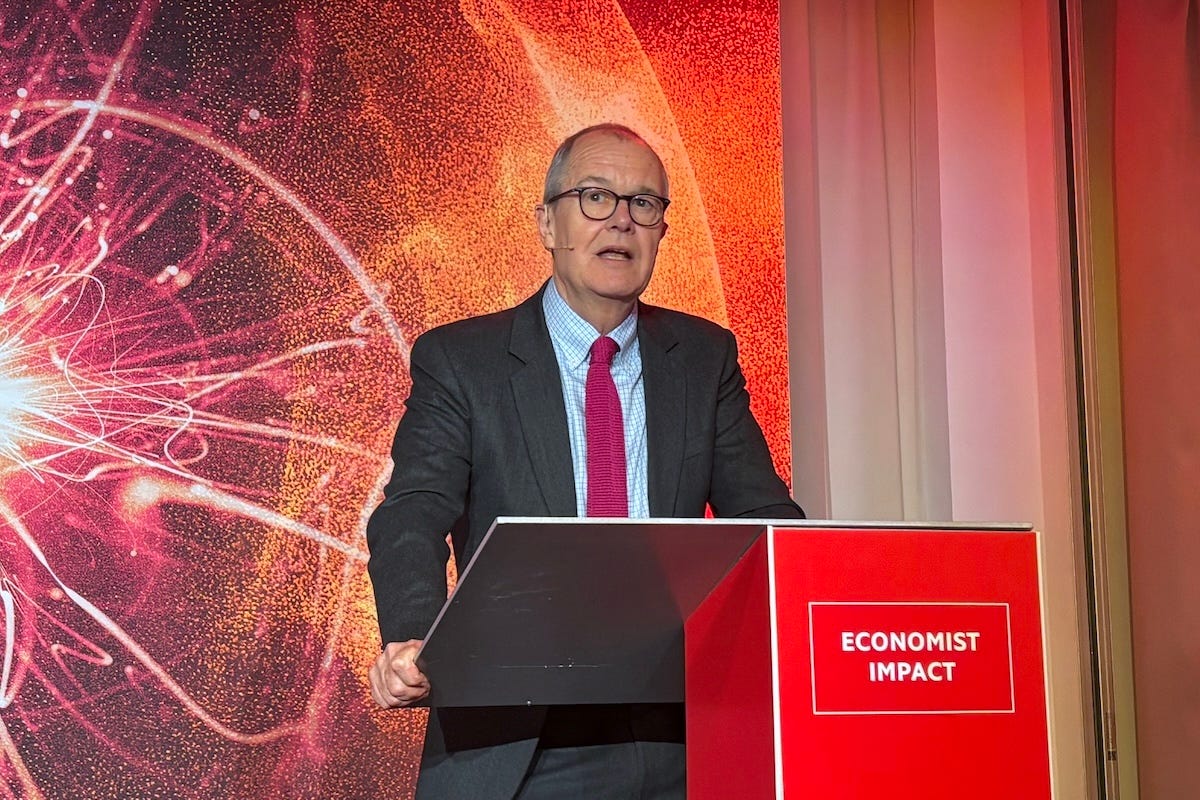
“What has been essentially scientific experiments for half a century is on the way to industrial reality,” said Lord Patrick Vallance, Minister of State for Science, Innovation, Research and Nuclear in the UK Government.
“The promise of fusion isn’t going to be achieved by government and public bodies alone. It has to be an approach that allows companies to start, grow, develop and scale into a system that can deliver multiple power plants,” he said.
The UK government has committed more than £2.5 billion to fusion, including £1.2 billion for research and development, as well as funding for infrastructure and commercialization. The strategy reflects a point where key technical challenges are increasingly defined, shifting pressure toward execution, delivery timelines and capital efficiency.
Vallance said the next phase requires a coordinated model that combines public funding, private capital, and industrial-scale capability. The government is preparing a fusion investment prospectus and a market framework for fusion electricity to reduce risk and attract global investors.
This repositioning underscores a broader shift. Fusion is emerging as an infrastructure investment story, where delivery risk, program management and cost discipline will determine progress as much as technological capability.
The implication for industry is clear: success will depend on whether fusion projects can transition from bespoke scientific efforts into repeatable, financeable assets.
Systems integrator model
Fusion Fest, held in London on April 14 and organized by Economist Impact, brought together policymakers, industry leaders and researchers to examine how fusion is transitioning into a commercial industry. The session featured Vallance and David Gann, Chair of UK Fusion Energy (UKFE).
UKFE is a wholly owned subsidiary of the UK Atomic Energy Authority (UKAEA), tasked with delivering the country’s Spherical Tokamak for Energy Production (STEP) program.
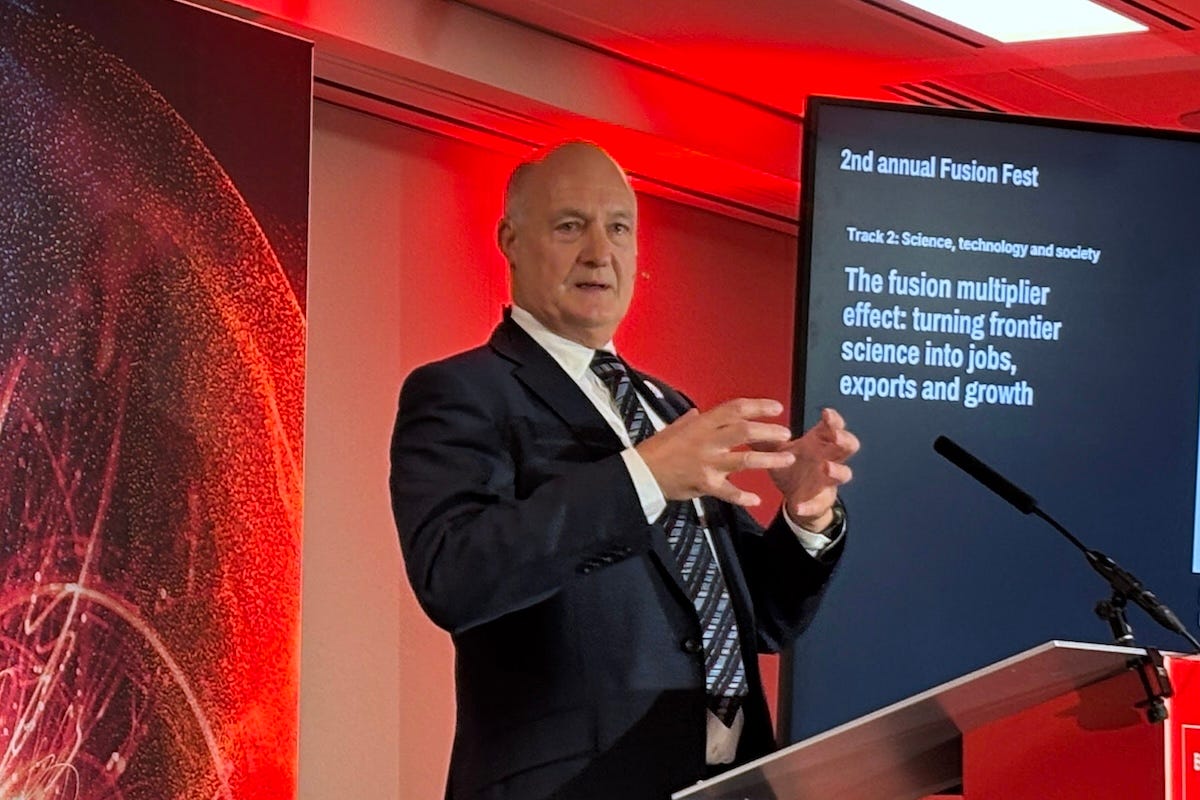
Gann said the industry now requires a fundamentally different operating model, centered on integration rather than isolated scientific progress.
“Without having a view of ourselves as a systems integrator, a lot of things won’t happen. You need to be able to specify intelligently what needs to be put together so industry knows what to build,” he said.
“When you have to solve problems to move to the next milestone, you need to resolve questions, discard what doesn’t work and keep moving forward. That’s how you turn science into something that can actually be built,” he said.
The systems integrator role forces the sector to move away from open-ended research toward targeted engineering decisions, in which each component must contribute to a buildable, scalable system. Lessons from major infrastructure programs show that clear specifications and coordinated supply chains are essential to delivery.
This model is central to the STEP program, which aims to build a prototype fusion power plant at West Burton in Nottinghamshire, with operations targeted by 2040. The project is designed not only as a technical demonstration but as a platform to validate commercial delivery models.
“This is a move to make a power plant, and that really is the critical thing,” Vallance said.
“Building this on the site of a former coal power station is a powerful symbol of the energy transition, but it’s also about creating jobs and opportunities in the local economy,” he said.
The program is backed by £1.3 billion in government funding and has already begun drawing in industrial partners, including a £200 million construction contract and a £70 million agreement for magnet systems. These early commitments are intended to reduce uncertainty and accelerate delivery.
Supply chain constraints
Beyond the plant itself, STEP is acting as a catalyst for a broader industrial ecosystem. Fusion development is already driving demand across advanced materials, robotics, digital engineering and precision manufacturing, creating opportunities for both established firms and emerging startups.
The existence of a full-scale program provides a clear signal to the market.
“We’re a good customer for smaller technology ventures that need to get going. That gives confidence to investors and entrepreneurs to come into this space and start building capabilities,” Gann said.
“No one is going to invest in a technology if there isn’t a clear market for it. Designing a whole plant creates that market and brings suppliers into the system,” he said.
The STEP program is designed around three core delivery goals: putting net electricity on the grid, developing a self-fueling machine and achieving reliable long-term operation through effective maintenance regimes. These requirements are forcing suppliers to align their technologies with real-world performance expectations rather than theoretical benchmarks.
The program also builds on decades of operational experience from the Joint European Torus (JET), giving the UK a foundation in robotics, remote handling and maintenance that can be directly applied to plant design. This legacy reduces uncertainty and accelerates engineering decisions.
At the same time, government-backed initiatives are expanding the sector's technical base. These include the lithium-breeding tritium innovation program, aimed at developing fusion-fuel capabilities, and a dedicated artificial-intelligence supercomputer designed to support fusion research and clean-energy applications.
At the policy level, the government is repositioning itself as a market enabler rather than solely a funder.
“We know we need to make it simpler and quicker to get major projects off the ground. More and more people are waking up to the vital role that fusion can play in any future energy system as a secure, home-grown source of fuel,” Vallance said.
These measures aim to reduce regulatory friction and create a predictable environment for long-term investment. They are also intended to support the development of a domestic fusion supply chain, which policymakers see as critical to long-term competitiveness.
However, execution risks remain significant.
“One of the biggest impediments isn’t money. It’s whether we can get the people we really need with the right engineering, manufacturing and scientific skills,” Gann said.
“The question is whether we can bring those skills into the industry in the timeframe required to actually deliver these machines,” he said.
The UK has allocated £50 million to support apprenticeships and aims to train more than 2,000 people in fusion-related disciplines. Even so, the scale of engineering required — from complex assembly to high-precision manufacturing — suggests workforce capacity will be a decisive factor.
The next phase will require tighter integration between design, manufacturing and supply chains, particularly as the industry moves toward repeatable plant construction rather than one-off projects.
As fusion moves toward commercialization, the defining challenge is no longer proving the science but executing at scale. The sector’s trajectory will depend on whether capital, coordination and capability can converge fast enough to turn ambition into delivery.