


Giving an artificial intelligence (AI) agent more instructions does not make it more effective. Experiments with security guidelines have found that a targeted brief can outperform a comprehensive document on the same topic.
The finding points to a discipline gaining traction among technology leaders: context engineering. As AI agents take on more work, the ability to define, calibrate and deliver the right instructions is becoming as important as building the agents themselves.
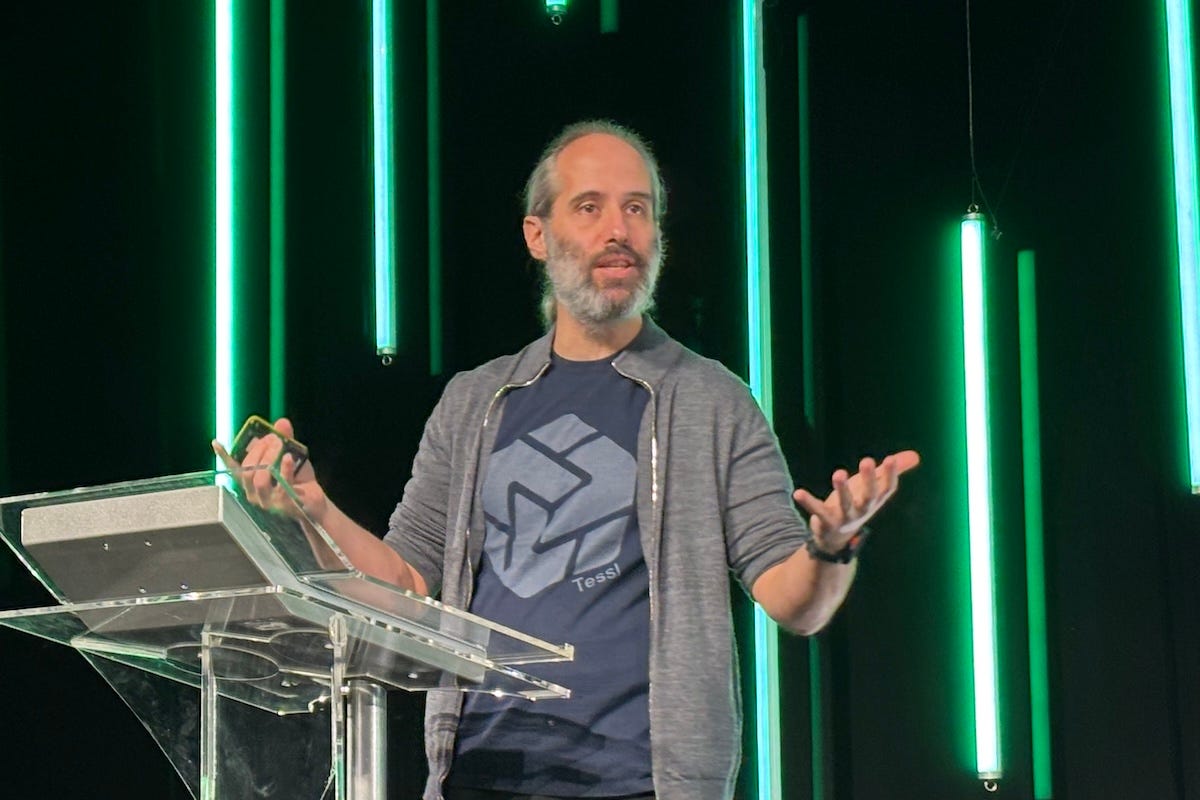
“Context helps substantially. Agents scored a lot better when they got focused instructions. But if we told them more, they performed worse,” said Guy Podjarny, founder and chief executive of Tessl. “There is value in saying just the right amount of context.”
“You can’t optimize what you can’t measure. How well you train your workforce is a fundamental variable in how successful your organization is. That is also true for this AI labor that you are managing,” Podjarny said.
The study compared three conditions: agents with no instructions; agents given a targeted three-kilobyte set of guidelines from OWASP (the Open Web Application Security Project); and agents given the full 20-kilobyte OWASP best-practice document. Those given the focused summary outperformed those given the complete guide, despite receiving far less information.
Attention is a finite resource for AI models, just as it is for humans.
“I like the term context engineering, because the fundamental skill of using AI well is to be able to state a problem with enough context in such a way that, without any additional piece of information, the task is plausibly solvable,” Toby Lütke, chief executive of Shopify, has said.
He cited the formulation as the defining principle of context engineering. Precise, targeted instructions consistently outperform longer, less focused ones, he added.
Different models also respond differently to identical instructions. Running the same context through multiple cutting-edge AI coding tools produced substantially different results, he said.
He noted that the top model from Anthropic’s Claude lineup was highly intelligent but prone to overriding instructions, while OpenAI’s Codex was more compliant but less creative. Teams must factor these differences into how they select and calibrate models, he added.
To improve context quality, Podjarny outlined four steps: define what the agent needs to know; evaluate whether it applies those instructions correctly; distribute the context across the agent’s workflow; and observe results in real-world use.
He co-founded Snyk, which became one of the most widely adopted developer security platforms. He stepped down as chief executive in July 2019, handing the role to Peter McKay while remaining as president and board member, before leaving the board in early 2025 to focus on Tessl.
He launched Tessl on the premise that AI agents represent a new development paradigm requiring new tooling. He returned to Snyk’s board as director and chairman in April 2026.
Agents as AI employees
Podjarny was in London for Tech Show London 2026, organized by CloserStill Media. His session examined how AI agents are transforming the software development process and what leaders must do to compete in an increasingly AI-native market.
At Tessl, 95% of code is written by agents. Podjarny said the company writes virtually none of its code manually, with human effort concentrated on directing agents rather than producing code.
“Claude Code came along with what I perceived as the first wave of agent coding. You interacted with the agent via the terminal, and mostly what you’re doing is telling the agents to do things for you and inspecting the results. It’s more about delegation,” he said.
He traced the evolution from GitHub Copilot to Cursor to a generation of tools that extended agent-assisted creation to non-developers.
He said the defining shift is from augmenting developers to replacing the act of writing code altogether.
“Agents are the next evolution of giving the model a body. The large language model (LLM) can now say: I want to look something up, open this file, try this out. And then it acts,” Podjarny said.
He described an agent as AI labor, an AI employee to whom work is delegated.
He said the bottleneck at Tessl is no longer writing code but deciding what to build and what trade-offs to make.
The challenge is that agents are inherently unreliable. The same task may succeed on one attempt and fail on the next.
“You can ask the LLM to scan code and ask: is there a vulnerability? It finds one. You fix it. You scan again and it doesn’t find it. Did it not find it because of the randomness factor, or because you fixed the vulnerability? It is very hard to deal with that,” Podjarny said.
He said addressing this requires building evaluation capabilities. Teams accustomed to deterministic systems must learn to work with statistical processes, designing workflows that do not depend on agents succeeding every time.
“Agents are statistical creatures. They are non-deterministic. You have to build mechanisms to evaluate their work,” he said.
He added that this understanding is long-established in the research community but new territory for professions such as software development.
Speed compounds the problem. AI agents produce code faster than any human, making it harder to detect failures before they cause harm. He compared the situation to the shift from traditional waterfall development to DevOps, when quarterly quality assurance (QA) gates became unworkable because of the pace of releases.
He said agents introduce another order-of-magnitude acceleration, making anticipation rather than observation the only viable control strategy.
From coding to steering
The productivity divide between teams that have mastered agent delegation and those that have not is already apparent, both within individual organizations and across the industry as a whole.
“On one side, you have what I think of as the agent jugglers. At any given time, they have five agents building for them, if not 15. You don’t need to measure to see that they are more productive. They just get so much done, so quickly,” Podjarny said.
A feature study he cited found that developers expected to become more productive when using AI development tools but, after using them in practice, reported the opposite. He said the shortfall stemmed from a failure of delegation.
“If you find yourself asking a colleague to do something and you don’t trust their result, and you keep tracking every step they’ve made, you end up wasting time. That ability to successfully delegate is a core element of the distinction,” he said.
He said most teams remain on the non-juggler side, still learning to delegate effectively. The relevant skills are more managerial than technical, including communicating intent clearly, providing focused context and evaluating output rather than overseeing process.
As agents generate more code, the role of the developer is shifting from writing to directing.
“Increasingly, building and writing code is easy. What is more important is the instructions for this AI employee. It is the intent, the environment, the way you equip this employee to work,” Podjarny said.
Agents are producing code at scale, but humans remain the default reviewers, creating what he described as review fatigue. When incidents occur in production, humans are also the default point of escalation.
“We need to delegate the software development lifecycle to the agent, and focus our human attention on the context development lifecycle, on the layer that steers the agents and tells them what to build. That is the future,” he said.
He drew a parallel with the disruption cloud computing brought to established businesses, citing his experience building Snyk as a company that grew directly from that shift. Organizations that failed to adapt lost ground to cloud-native competitors.
“AI is moving faster than cloud, every day, 10 times faster. The urgency to build this competency, to accept and embrace the change, is higher than it has ever been,” Podjarny said.
“Using agents doesn’t just breed efficiency. It brings affinity. If you don’t use agents, you don’t know what agents can do, and you remain skeptical,” he said.
He said organizations must invest in the experience, even when it is frustrating, to develop the intuition needed to judge what good agent output looks like. He added that organizations are increasingly building for a world in which agents are both users of products and a means of delivering value to customers, making fluency with AI a competitive requirement for any organization building technology.