London has a new physical home for artificial intelligence (AI). In the heart of the City, a connected campus — two buildings a five-minute walk apart — now offers enterprises, startups, public sector bodies and schoolchildren a place to get hands-on with the latest AI technology.
The campus marks a decisive shift from experimentation to execution. Agentic AI — in which networks of autonomous software agents handle entire workflows with minimal human intervention — has moved from the pilot stage to organization-wide deployment, and the businesses racing to keep up need somewhere to learn fast.
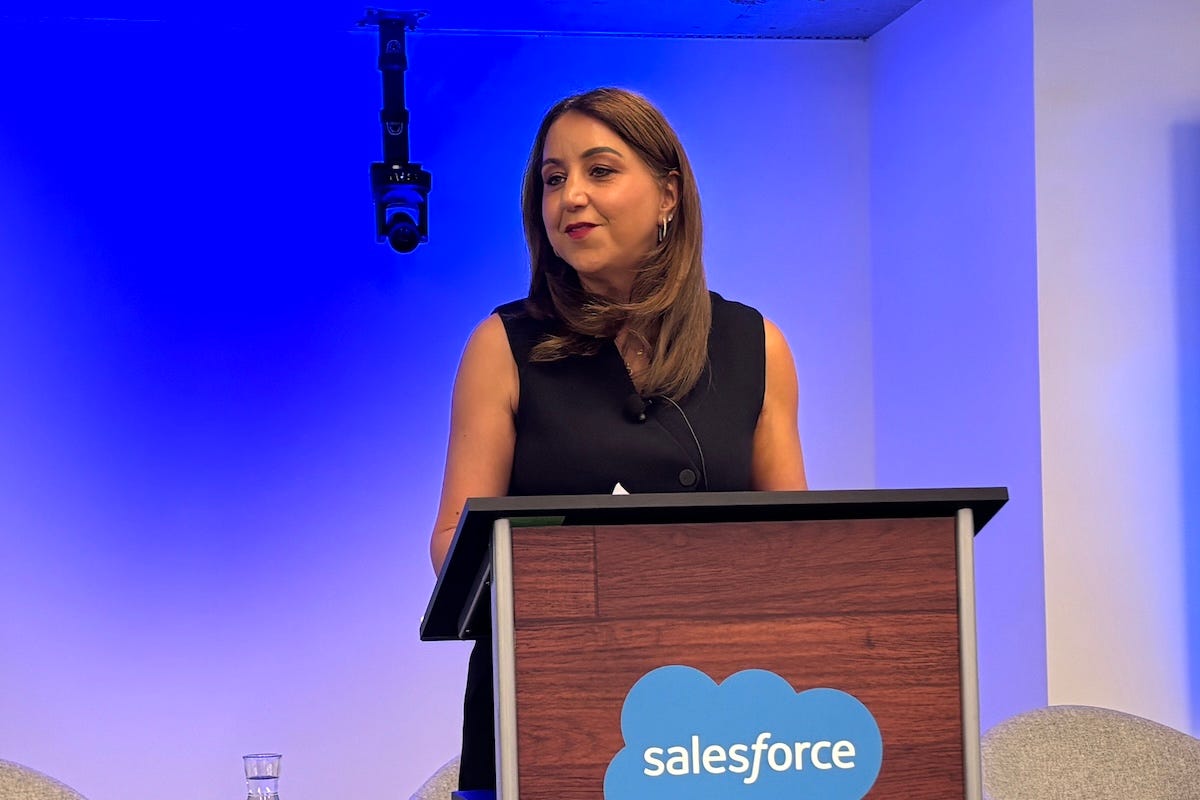
“Agentic AI has moved beyond pilots to large-scale deployment, where entire ecosystems of agents are transforming every function of business,” said Zahra Bahrololoumi CBE, Chief Executive Officer of Salesforce UKI.
“The UK has the talent and ambition to lead the world in agentic AI. Together, we can define a new era where every worker is equipped to harness it,” she added.
The new AI Center at Devonshire Square joins Salesforce Tower, the company’s UK headquarters, to form the expanded London Campus. It relocates from Salesforce’s original AI Center at the Blue Fin Building, which drew 8,000 visitors.
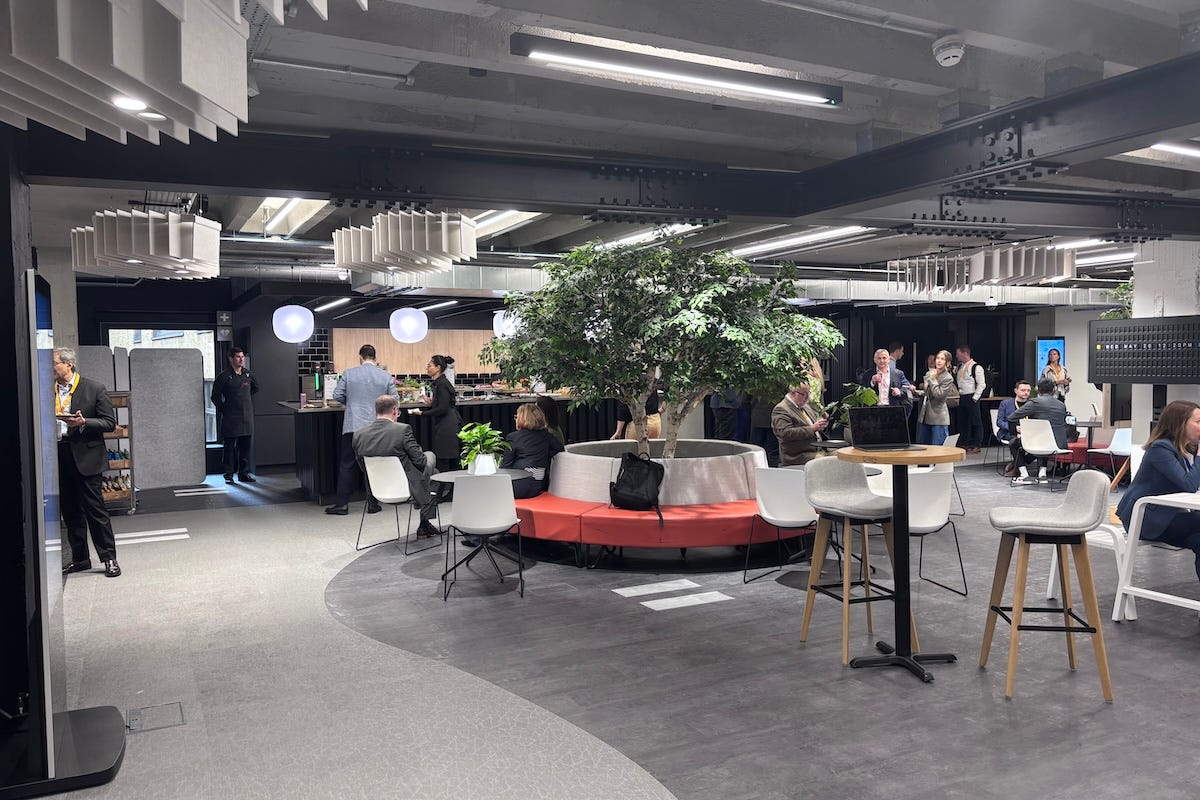
The new site features a learning lab, collaboration zones and an immersive AI theatre. More than 5,000 visitors are expected this year.
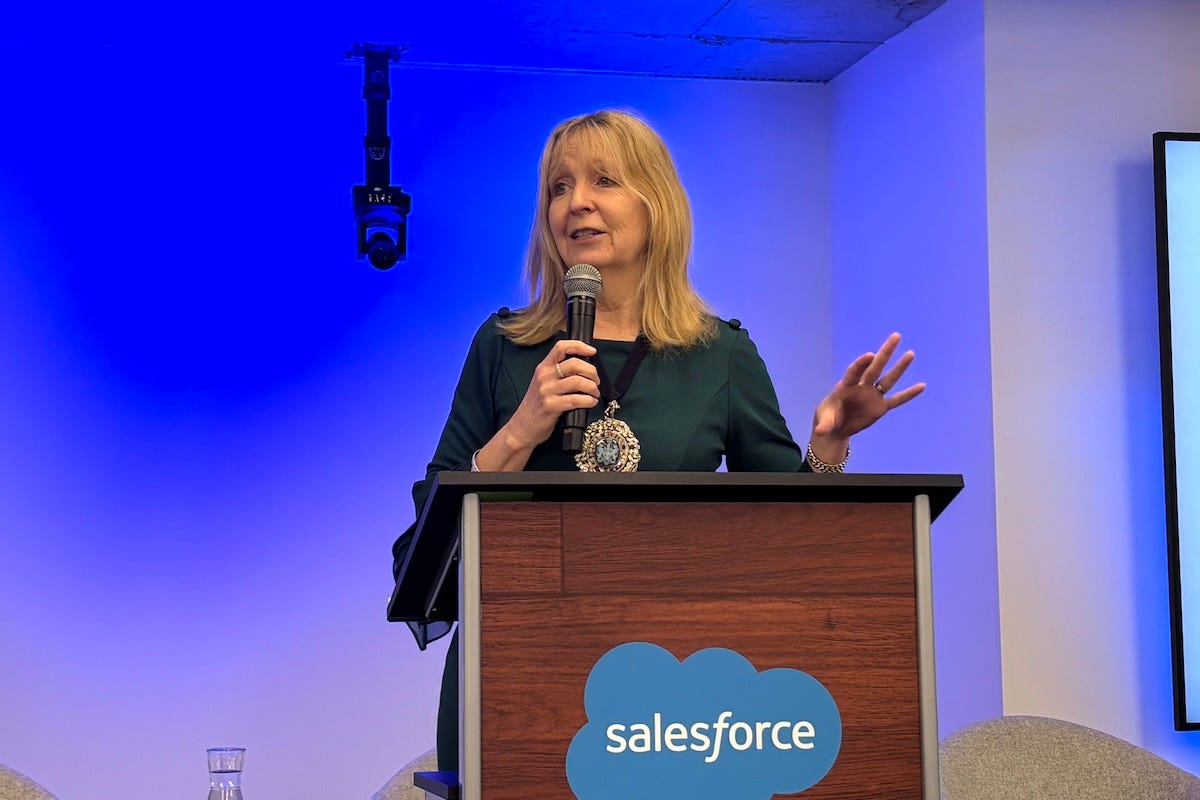
Dame Susan Langley DBE, Lady Mayor of the City of London, who attended the opening, said the campus represented a direct investment in people.
“London’s greatest asset has always been its people, and this campus is a direct investment in equipping them for the economy ahead,” she said.
The Devonshire Square location was once a warehouse for the East India Company, a hub of trade that, in its time, was at the cutting edge of global commerce. The shift from goods to AI, Dame Susan noted, felt poetic.
The space is also open to Salesforce Ventures portfolio companies, giving the UK’s broader AI ecosystem a shared base for collaboration.
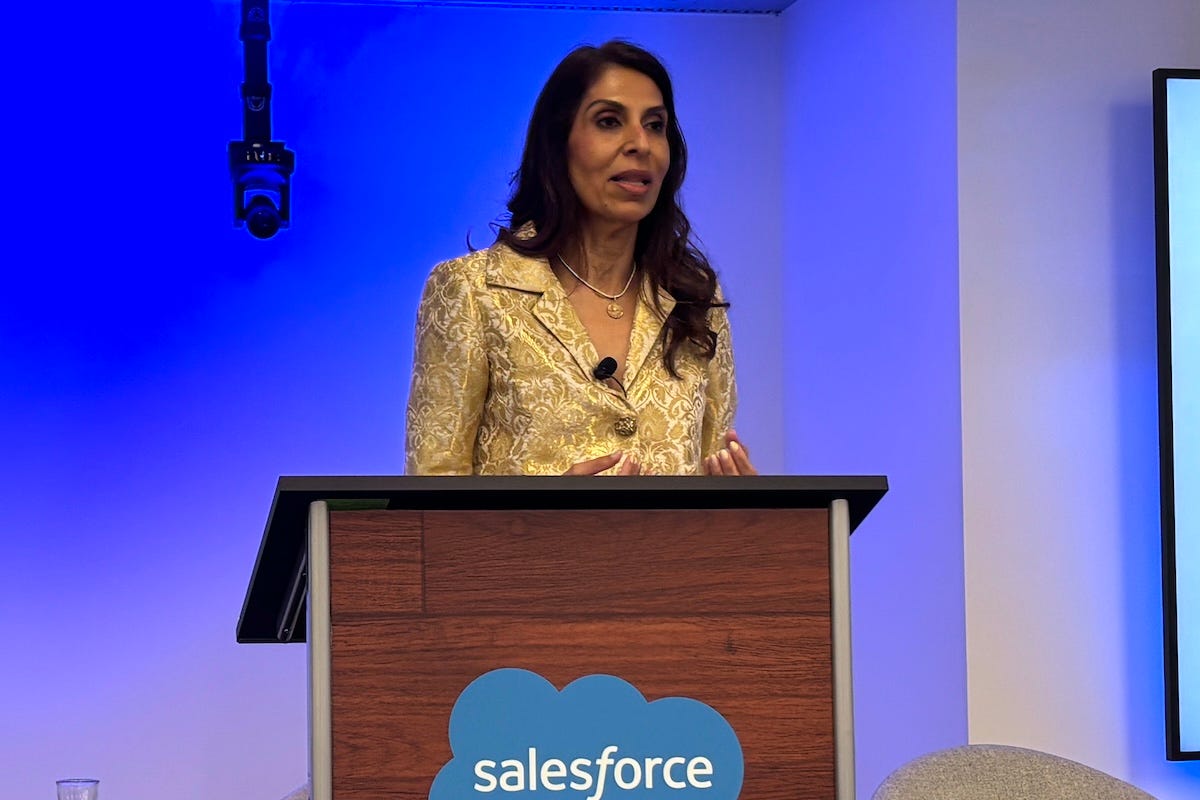
Relina Bulchandani, Executive Vice President of Real Estate and Workplace Services at Salesforce, oversaw the design. Every element, from multi-purpose zones to breakout spaces, was built to be flexible, inclusive and accessible, catering to the different ways people learn and work.
“We believe that place matters. This space doesn’t just host innovation. This space truly curates innovation,” Bulchandani said. “Our world is becoming incredibly digital-first, and we made a deliberate choice to build something that is truly physical, something we can walk into, feel, connect and collaborate in real life together.”
The campus was designed to serve a broad community: employees, customers, partners and the next generation of workers entering an AI-driven economy. The vision was not finished on opening day.
“The best thing about this space isn’t what it looks like today. It’s what it will become with all of us co-creating, co-innovating, co-locating together,” she said.
UK’s AI Sweet Spot
The AI Center opened on May 20 at a ceremony in the City of London attended by senior government officials, business leaders, community organizations and schoolchildren. The event marked the formal launch of Salesforce’s expanded London Campus. It formed part of the company’s broader $6 billion, five-year commitment to the UK.
Dame Susan, who spends roughly 100 days a year overseas in her role as ambassador for financial and professional services, said AI regulation is among the most frequent topics she encounters abroad. She said international observers largely believe the UK has found the right balance, something other major jurisdictions have struggled to do.
“Some geographies, Europe for example, still regulate a little too tightly, regulating around things that don’t exist. The US perhaps is a little too loose. But they are looking to the UK for how we’re regulating and adopting AI,” she said.
Bahrololoumi echoed that assessment, pointing to recent domestic policy developments as evidence of momentum. She said the government’s AI Opportunities Action Plan had given the UK the bold start it needed.
“I was delighted to see the proposals to establish a cross-economy AI sandbox included in the King’s Speech last week. This will really create more opportunities for AI adoption in critical sectors, particularly the public sector,” she added.
Technology Secretary Liz Kendall said AI had vast potential to improve lives and grow UK prosperity, and that widespread adoption was vital to ensure everyone could benefit, not just a select few.
She said innovative firms had a big role to play in equipping British businesses, public services and the next generation of workers with the tools they needed.
On the investment side, Bahrololoumi was direct about where Salesforce’s $6bn commitment was going. Rather than data centers or physical infrastructure, the money was flowing into skills, adoption and sovereign capability.
“We didn’t plow it into a data center; we didn’t plow it into those capital assets. We plowed it into our sovereign capability to grow our adoption and our skills. That is a very marked difference,” she said.
Salesforce Ventures has separately invested over $250 million in UK-based AI companies. They include AutoGenAI, an AI-powered proposal-writing platform; Covecta, an agentic AI company deploying purpose-built agents for the financial services sector; and ElevenLabs, an AI voice technology company.
Independent projections from International Data Corporation (IDC) suggest the Salesforce ecosystem could generate over $41 billion in economic impact and create more than 500,000 new jobs in the UK by 2028.
She said the figures underscored why the direction of AI transformation mattered as much as its pace, and why investing in people and skills rather than infrastructure alone was the only path to realizing that potential.
Agents Already at Work
The physical design of the center was no afterthought. Bulchandani said the team spent considerable time thinking through how different users, including communities, partners, customers and employees, would actually move through and use the space.
The building features social lounges, breakout zones and an immersive AI theatre. It also houses 3D printers used by the in-house team to manufacture hardware components on-site, including the gold hub units fitted to the Wayfinder navigation screens. Visitors receive a wristband embedded with a programmed microchip that personalizes their experience throughout the center.
Paul O’Sullivan, Senior Vice President of Solutions Engineering and UKI Chief Technology Officer at Salesforce, said the biggest challenge in bringing the center to life was navigating the boundary between commercial and industrial spaces, particularly around health and safety compliance.
He said the team had effectively bridged the two worlds by designing and building technology hardware on the premises.
On workforce development, Bahrololoumi launched the Future Trailblazers initiative, calling on every Salesforce UK employee to volunteer to deliver AI literacy and safety training in schools. At the opening, primary school students from St Mary’s and secondary school students from School 21 attended workshops inside the center.
“The future of the UK economy will be built on the shoulders of the next generation, and we must ensure young people have the skills to thrive in it. Real change happens when business shows up for its communities,” she said.
Salesforce said the initiative would contribute to the government’s target of upskilling 7.5 million workers by 2030.
Dame Susan, speaking in her capacity as a member of the government’s skills task force, said she had no doubt the center would deliver.
“At the heart of any business is not the technology. It’s the people,” she said.
Beyond skills, the center is intended to accelerate the real-world deployment of agentic AI across the UK.
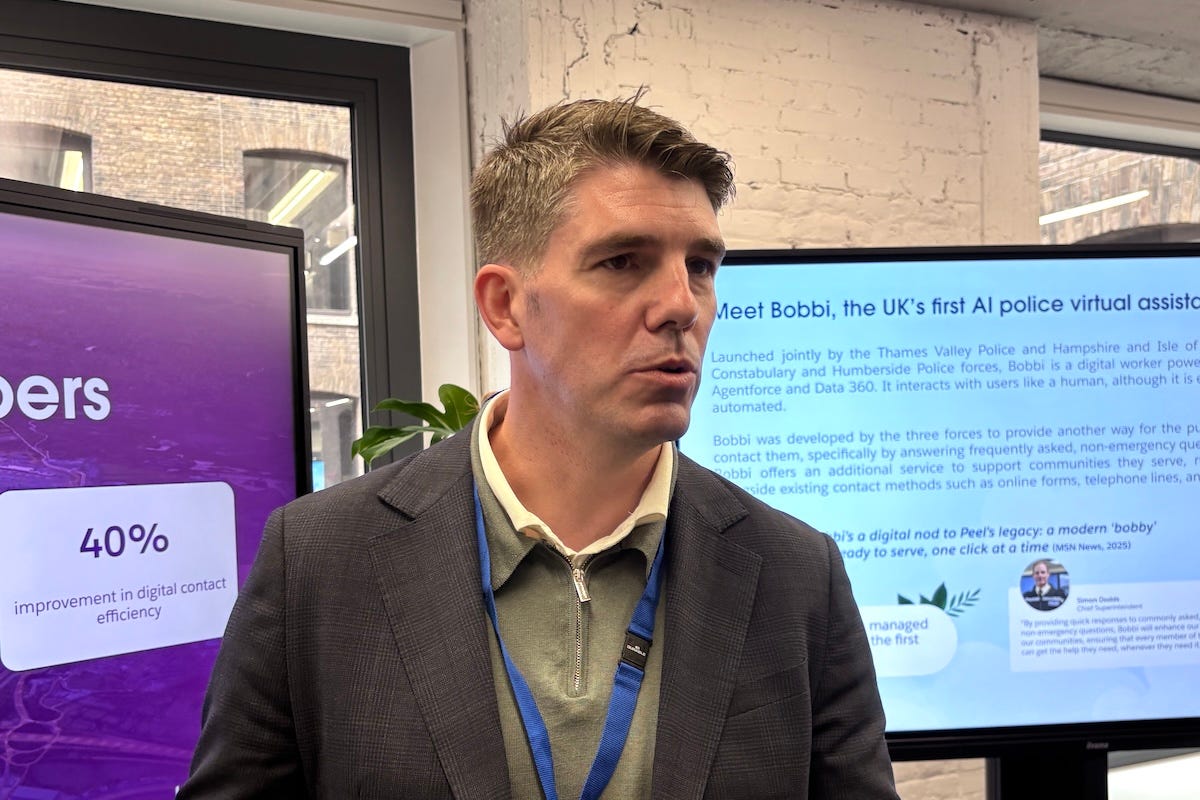
Bobbi, a pioneering AI digital assistant built on the Salesforce Agentforce platform, is already helping three UK police forces handle citizen inquiries, resolving 82% of inbound non-urgent cases without escalating to a human officer.
The deployment is one of several showing that agentic AI can ease pressure on stretched public services while maintaining, and in some cases improving, the quality of citizen experience.
Other organizations deploying Agentforce include the National Trust, the National Centre for Violence Against Women and Girls and Public Protection (NCVPP) and NHS Shared Business Services.
“We believe in using AI not to replace people but to expand human agency. Agentic AI allows humans to focus on creativity, problem-solving, empathy and human judgment, and to do more satisfying work that drives greater impact,” Bahrololoumi said.
As AI agents become more deeply embedded in business processes, new roles, businesses and industries will emerge that cannot yet be imagined. The London Campus, she added, is where that future begins to take shape.