


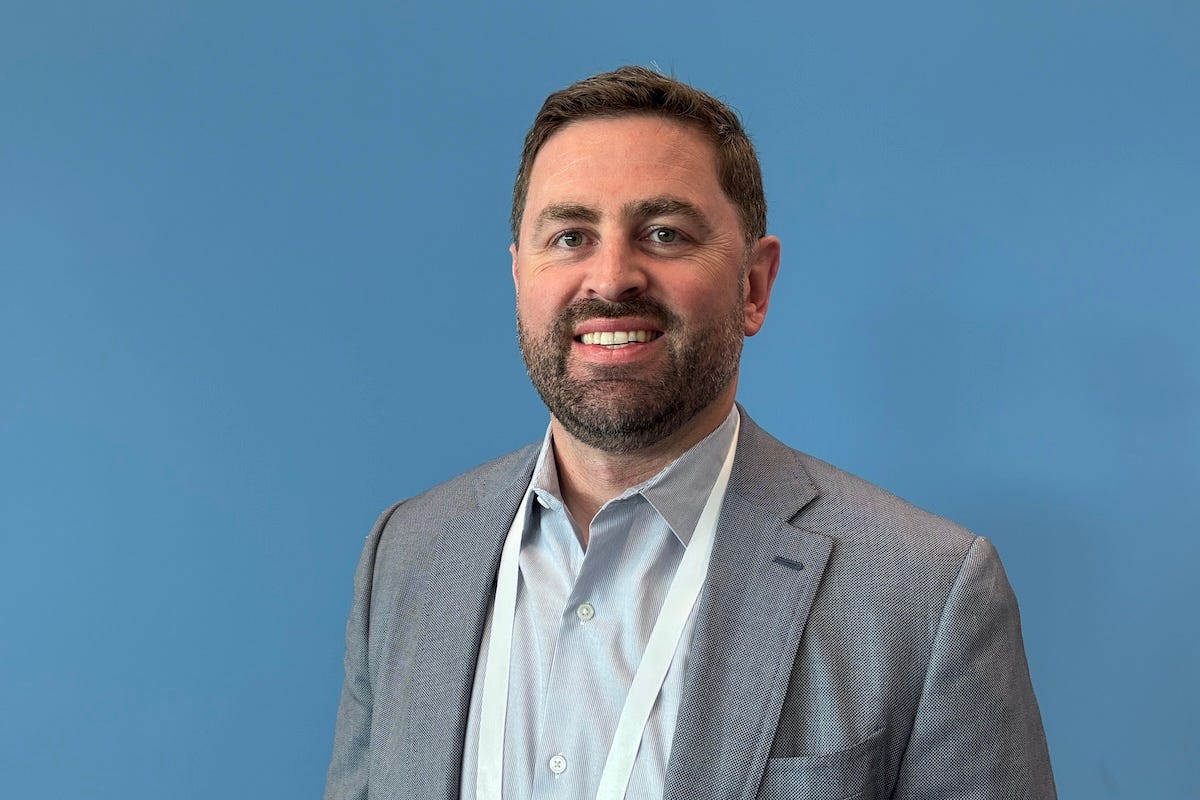
Salesforce, the San Francisco-based enterprise software giant, is confronting a new era of artificial intelligence (AI) sovereignty, as governments move to control which AI tools cross their borders.
AI sovereignty, pushed by nations to control the AI technology used within their own borders, has already changed how Salesforce builds its infrastructure and now threatens to determine which AI models its customers can even reach, as export controls and national security concerns collide with more than a decade of borderless cloud computing.
“As a global company, sovereignty is a deeply important issue to us,” said Mick Costigan, vice president of Salesforce Futures. “Our customers are asking for clarity and future-proofing from us on this, and you’ll see adaptations, like the EU sovereign cloud, working with partners like AWS.”
“We had a wrinkle last week. The benefits of technology being able to flow around the world are important. Any attempt to limit sovereignty is going to have consequences,” said Costigan.
That wrinkle traced back to a US government export control directive issued on June 12.
The order required Anthropic to suspend access to its two most advanced models, Fable 5 and Mythos 5, for foreign nationals after Amazon researchers found a way to bypass Fable 5’s cybersecurity safeguards. Unable to verify user nationality in real time, Anthropic cut off both models for all users worldwide.
Costigan traced the current standoff to a much longer historical arc.
“We lived in a moment of globalized access to technology until 2006, when Google was kicked out of China, which ended China’s participation in the global technology market,” he said. “We’ve seen further encroachment since, but the G7 and the OECD (Organization for Economic Co-operation and Development) have mostly remained a free technology market.”
That same history has shaped how Salesforce runs its own business today.
Costigan said the company moved away from running its own data centers several years ago, partly in response to growing demand for data sovereignty after Edward Snowden’s surveillance disclosures. It shifted instead to third-party partners such as AWS.
Salesforce counts governments among its own customers, which Costigan said puts the company in the middle of the argument.
“There is a tension between the ambition for sovereignty that some governments have and their ability and willingness to bear the costs,” he said. “We’re going to be responsive to our customers, but we’ll also advocate for what we think is the best way of delivering innovative technology to most people around the world.”
On the specific dispute between Anthropic and the government, Costigan was measured in his response.
“I don’t know what happened inside those conversations, but the US government has legitimate interests it’s looking out for,” he said. “Anthropic has an advanced position. I appreciate their foresight in thinking through the consequences, whether that’s disruption or access to powerful models by bad actors.”
Salesforce Ventures has invested in Anthropic, giving the company a direct stake in the outcome. Costigan leads Salesforce Futures, a team within Salesforce’s strategy organization that tracks change in technology, business and society.
“Our job is to help our leaders and our customers anticipate, imagine and shape the future,” Costigan said.
He said the team spends about a third of its time talking directly with customers and the rest on internal strategy questions.
The standoff has since eased. The US government lifted the export controls on June 30, and Anthropic began restoring global access to Fable 5 on July 1, alongside updated cybersecurity safeguards. Mythos 5 access was already partially restored for a group of US organizations after a June 26 approval.
Building the trust layer
Costigan made the comments during a briefing before the opening of the Agentforce World Tour London on June 18. The event, organized by Salesforce, focused on how enterprises should navigate the rapid rise of agentic AI.
He has spent 13 years at Salesforce, including a stint leading its Latin America team.
“One of the first things we said when we started building Agentforce was that the model’s great, but you need a trust layer around that model,” Costigan said.
Costigan reached for an analogy from a car museum, recalling Carl Benz’s original 1886 motor wagon.
His team had to secure zero-data-retention commitments from frontier AI labs for enterprise customers, he said. That remains an unresolved issue in the terms and conditions of some of the newest models.
“It’s an engine, three bicycle wheels and a garden bench, basically,” he said. “I look at it and think that’s kind of like an LLM (large language model) in 2021, where the engine is the whole thing and there are these flimsy things around it.”
He said the real question is how far along that evolution AI has come.
“Is it 1920, and we’ve just gotten past the really dangerous part of owning a car, and we’re in a Model T where everything is DIY?” Costigan said. “Or are we at a point where you want to buy a fully fledged car, and it’s much less about what you do to it yourself?”
He illustrated the risk of skipping that evolution with a joke he saw on social media.
“I’ve started talking to my wife like Claude,” he said. “She sends a text message. Did you feed the cats? I say yes. And it’s like, why are the bowls empty? It’s like, you’re right to check in on that. Actually, I didn’t feed the cats.”
He said that without the right harness, models will still make things up rather than check the facts. He added that his team increasingly sees these harnesses, rather than the models themselves, as the more durable source of value.
“Will more of the value that companies derive from AI come from the generalizing ability of the model, or from the ability of the harness to help people take action confidently, with access to the right data and tools?” he said.
That question extends to companies building their own agents rather than buying Salesforce’s. Asked whether workflow platforms such as Make.com would let smaller companies build their own agents and erode Salesforce’s market, Costigan said there is room for both approaches.
“There’s room for lots more AI use in the enterprise,” he said. “It’s easier the more you are a startup. You can design your organization to be machine-readable. The more you’re in an existing organization, the more challenging that becomes.”
Salesforce’s answer has been to open its own platform to outside builders rather than compete with them.
“Headless 360 makes it easier for people trying to build their own agents to still access all the benefits of the Salesforce platform at the same time,” Costigan said. “We can play in both senses without it necessarily being a cannibalization of our business.”
Headless 360 strips away Salesforce’s user interface so external systems can read and act on its data, business logic and workflow history directly.
“Across the market, you have a mix. You can DIY your own agents, or you can pre-buy agents that are already tuned for specific use cases,” Costigan said, adding that the tool lets outside agents reach Salesforce through MCPs (model context protocols).
Betting on the ecosystem
Costigan pointed to Salesforce’s UK footprint as proof of how deeply it has embedded itself with outside partners.
“In the UK, we’ve been here for over two decades, so we have a very well-developed set of partners,” Costigan said. “If you walk around at this London event today, you’ll see many implementation partners, a combination of global businesses like Accenture, Deloitte and PwC, as well as local firms.”
Salesforce also has specialists focused on individual products such as Tableau, Informatica, and Marketing Cloud, and financially backs some of those partners.
“We are one of the largest corporate venture capital firms, including our friends at Anthropic,” Costigan said.
Salesforce Ventures conducts longer-term research with the futures team, according to Costigan, and has a history of investing in partner firms to help them grow.
Salesforce Futures colleagues Marc Escobosa and David Berthy picked up that thread in a June 29 article titled “The Future UI of AI Is All Around You.”
They write that the dashboards and apps at the center of office work today are giving way to agents that act inside whatever tool a person already has open, echoing the vision Apple sketched in its 1987 Knowledge Navigator concept video.
The piece cited Workdry Group, a Salesforce customer in the water treatment industry.
Its inspectors used to spend up to four hours after each site visit writing compliance reports. Using Salesforce’s Voice to Form tool, they can now dictate observations on-site, out-of-order, and in industry shorthand, cutting the job to about 20 minutes.
Escobosa and Berthy also pointed to the experience of Claude Code creator Boris Cherny, who switched from typing prompts to speaking them. Freed from the instinct to tidy his thoughts, Cherny found the AI produced better results from his more rambling, unfiltered speech.
The next step, they wrote, is AI that holds real-time conversations rather than the turn-based exchanges of today’s chatbots, a shift that would make it feel less like a tool to invoke and more like something simply present in the room.