Pure Data Centres Group (Pure DC), a hyperscale cloud and artificial intelligence (AI) data-center developer and operator active across Europe and the Middle East, has launched Europe’s first large-scale data-center microgrid in Dublin, Ireland, testing how operators can keep AI expansion moving when public electricity networks cannot keep pace.
The 110-megawatt on-site system was developed with AVK, a United Kingdom-based provider of power and energy infrastructure for data centers and industrial facilities. It allows the campus to generate power during early development phases before full grid capacity becomes available, enabling Pure DC to add computing capacity without waiting for a traditional electricity connection timetable.
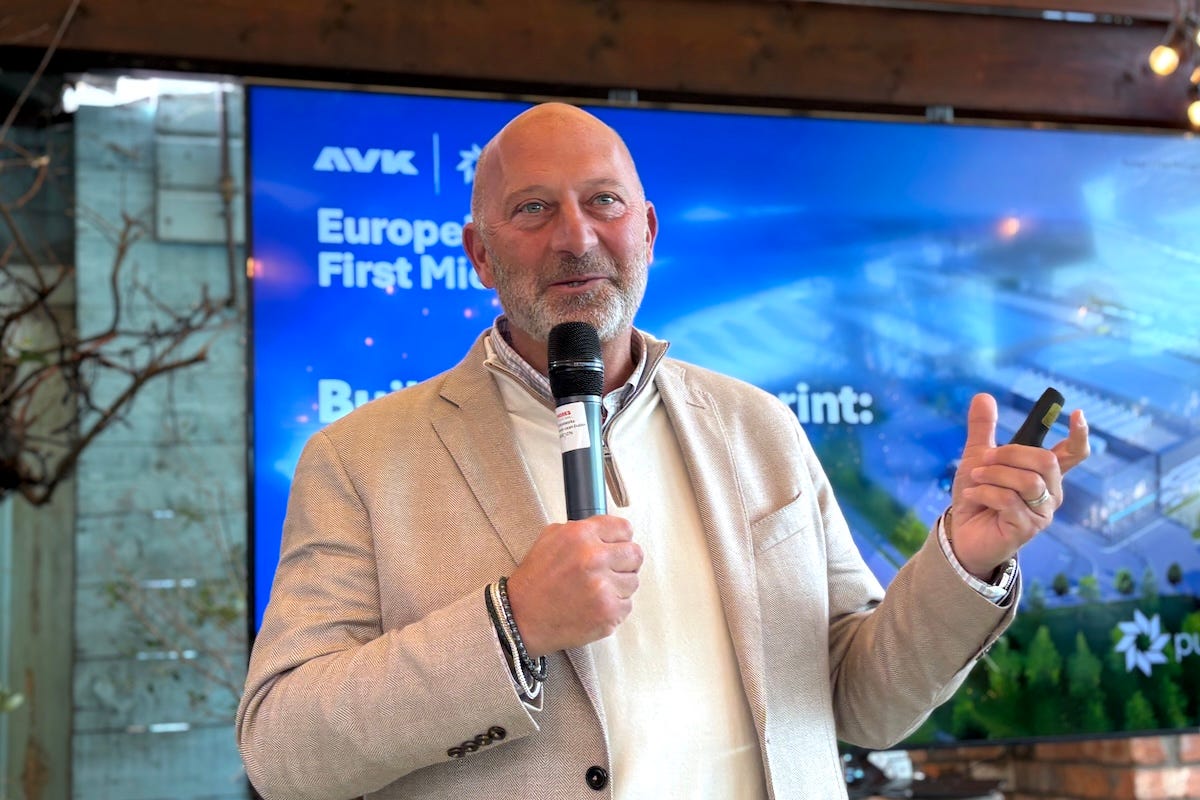
“The biggest barrier to deploying AI infrastructure in Europe today isn’t technology, it’s power,” said Gary Wojtaszek, executive chairman and interim chief executive officer, Pure DC. “This microgrid proves that even the most constrained markets can unlock new digital capacity.”
“The future of AI infrastructure will be built where energy and compute come together, and that’s exactly what we’re building at Pure,” he said.
The Dublin project turns a power constraint into an infrastructure strategy. Instead of treating energy as a utility service that arrives after a site is planned, Pure DC is bringing generation onto the campus itself and building around that capability.
That matters because AI workloads are changing the economics of the data-center sector. As operators race to support cloud and AI customers, access to land and fiber still matters, but power is becoming the gating factor for how quickly new capacity can be delivered.
Pure DC announced on March 10 the appointment of Gary Wojtaszek as executive chairman and interim chief executive officer, a leadership move the company said would guide its next phase of AI-driven expansion across Europe and the Middle East.
Wojtaszek previously led data-center operator CyrusOne through a period of rapid growth, helping scale the business into one of the world’s largest hyperscale platforms before its $15 billion acquisition by investment firms KKR and Global Infrastructure Partners.
Dame Dawn Childs DBE, FREng, who had served as chief executive officer since May 2023, is transitioning to the role of president of Pure DC as part of the leadership change.
Own power first
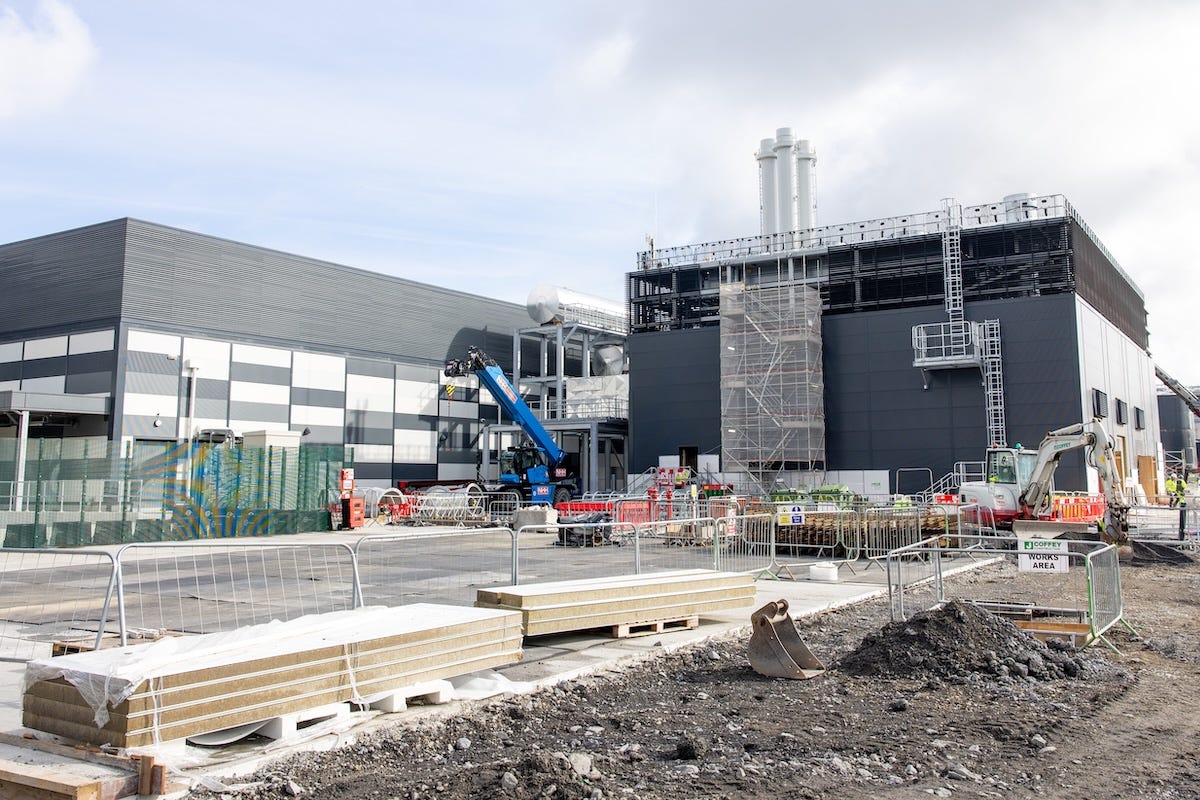
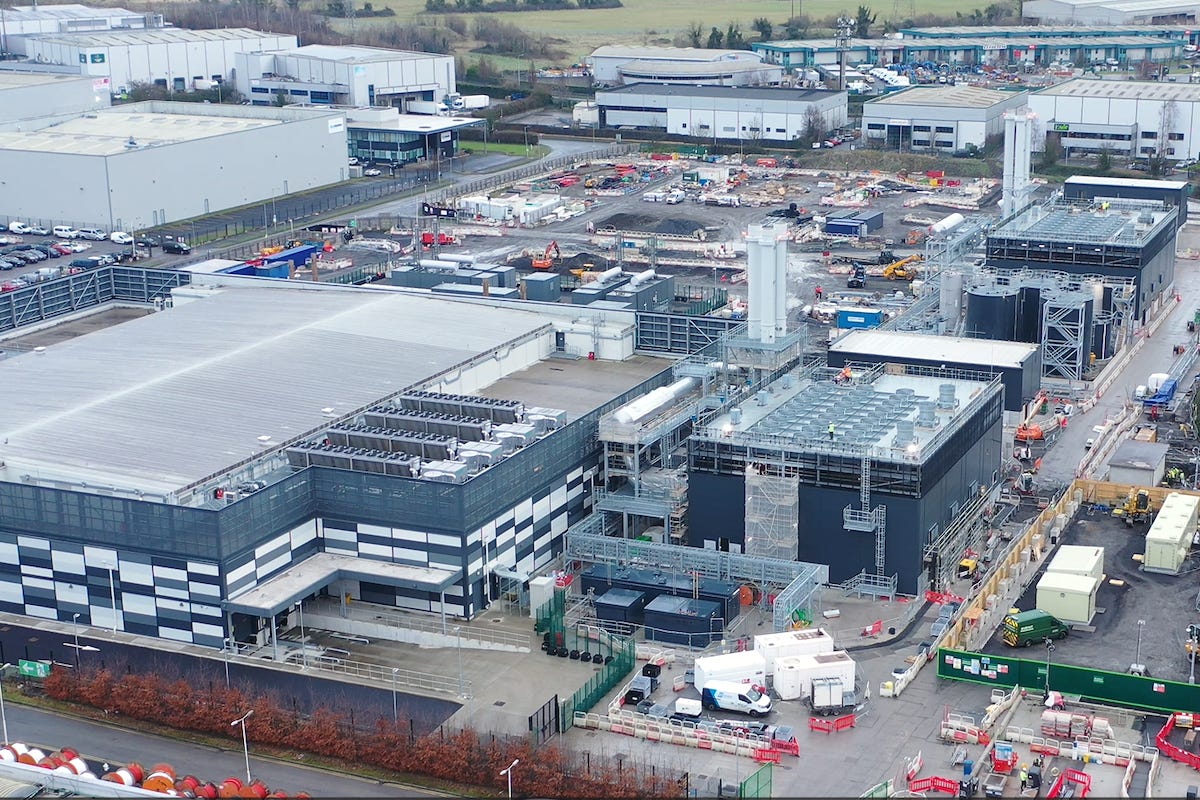
Pure DC announced the microgrid on March 11 during a media tour of its new data-center campus in Dublin. The project was presented as Europe’s first large-scale deployment of its kind, developed with AVK to support phased delivery of cloud and AI infrastructure while reducing pressure on Ireland’s national grid.
The system includes three interconnected energy centers, each capable of generating up to 30 megawatts of power. The first two centers are expected to be fully operational by the end of 2026, with a third to follow later.
In practical terms, the campus can draw on dispatchable on-site generation during its early development stages and then move toward a hybrid configuration as grid capacity becomes available. That structure is intended to support operational resilience while giving the company more flexibility over how quickly it can bring halls online.
Wojtaszek said the scale of the development made the project notable even by industry standards. He said the completed site would represent about $1.5 billion in infrastructure investment, while customers were expected to install another $3 billion to $4 billion in chips inside the facility.
“I had never seen a data center that was self-powered,” he said. “When I heard that this facility had developed its own generation system, I realized this was something really unique.”
He said the design effectively gives the campus its own power grid. Electricity is generated on-site to power the facility’s computers, and the digital output then flows outward as cloud and AI services.
That framing helps explain why the project holds significance beyond a single Dublin site. For years, data-center developers largely treated access to electricity as a prerequisite controlled by grid planners and utilities. In the AI era, some operators are moving to treat energy supply as a core component of their products.
Pure DC and AVK said the microgrid is designed to complement, rather than replace, a long-term grid connection. Over time, the campus is intended to operate in a hybrid mode that combines grid-supplied electricity with on-site energy infrastructure to improve resilience and flexibility.
The design includes a battery energy storage system (BESS) to help manage load fluctuations and improve response times. The system is intended to support future renewable-energy integration as the campus evolves.
The site also includes a combined heat and power capability. Infrastructure has been put in place for heat recovery and possible future connection to district heating networks, subject to third-party demand and regulatory approval.
Water use has also drawn scrutiny for large computing campuses. Planned water-management measures include rainwater harvesting and on-site treatment to reduce reliance on mains water for engine-related processes.
The system has also been engineered to accommodate gradual changes in fuel composition, including hydrogen blending. That does not remove the carbon debate around data-center growth, but it does give the site a pathway to adapt as gas networks decarbonize.
AVK Chief Executive Ben Pritchard said the project showed how carefully designed on-site energy systems could work alongside national planning frameworks. For Pure DC, the commercial case is equally straightforward: if power delays hold back data-center delivery, operators will increasingly look for ways to control more of the energy stack themselves.
The Mayor of Fingal County Council, Councillor Tom O’Leary, also welcomed the project, saying the microgrid demonstrates how new digital infrastructure can support Ireland’s energy transition while integrating renewable power, storage, and lower‑carbon fuels such as biomethane.
Power bottleneck
Wojtaszek used the Dublin site to make a broader point about the AI infrastructure race. He said the core constraint is no longer whether the industry can design advanced chips, software or cooling systems. The more immediate challenge is whether enough electricity can be brought to the right sites, at the right speed, to support deployment.
“Data centers consume an enormous amount of electricity,” he said. “Even a relatively small facility like this could consume the equivalent power of around 100,000 homes.”
He said that the level of demand inevitably raises questions for governments, utilities, and local communities, especially in markets already struggling with grid reinforcement, permitting, or renewable integration.
“When you consume that much electricity, it places huge demands on the grid and on power generation,” he said. “That naturally creates questions from communities and governments about how the system will support that growth.”
That helps explain why the company has framed the microgrid as more than a stopgap. In Wojtaszek’s view, self-generated campuses are likely to become a more common feature of the sector, particularly in supply-constrained markets where hyperscale and AI customers still want capacity.
He said such sites could also contribute to wider grid stability because they are built with substantial backup generation. In markets that experience weather shocks or temporary supply disruptions, operators may eventually be able to play a more active role in supporting resilience.
This reflects a wider shift in how data centers are perceived. Long treated as back-end infrastructure, they are increasingly becoming strategic assets tied to energy policy, industrial competitiveness, and national AI ambitions.
Beyond Dublin
Pure DC said it now has more than one gigawatt of data-center capacity live or under development and plans further expansion across Europe and the Middle East.
In a press release, Germany, the Netherlands, and the United Kingdom were identified as key targets for replicating similar microgrid deployments.
“We’re going to continue building data centers in FLAP-D (Frankfurt, London, Amsterdam, Paris and Dublin) markets,” he said. “At the same time, we are expanding into massive AI campuses across Europe.”
He said the company had launched its first major facility in Finland and was also looking at Spain, Portugal, Eastern Europe, and the Middle East for additional large-scale development.
The numbers underline how capital-intensive the sector is becoming. Wojtaszek said a single gigawatt of data-center capacity can represent roughly $10 billion to $15 billion of investment, a figure that rises further once customers fill those sites with high-end computing hardware.
He also argued that the pace of AI adoption is giving those investment decisions new urgency. Earlier technology waves, such as the internet and mobile phones, were transformative, he said, but AI has the potential to reach more deeply into business operations and daily life.
That broader thesis helps explain why companies are willing to experiment with new infrastructure models. If AI demand continues to rise while grid capacity remains tight, projects like Dublin may come to look less unusual and more like an early template for the next phase of the European data-center market.
For now, Pure DC’s campus illustrates the industry’s new logic: when electricity becomes the bottleneck, energy strategy moves to the center of the build.