


Pure Data Centres Group (Pure DC), a hyperscale cloud and artificial‑intelligence (AI) data‑center developer active across Europe and the Middle East, has chosen to rely on natural gas as a temporary power source for the microgrid at its new Dublin data‑center campus while waiting for full electricity‑grid capacity.
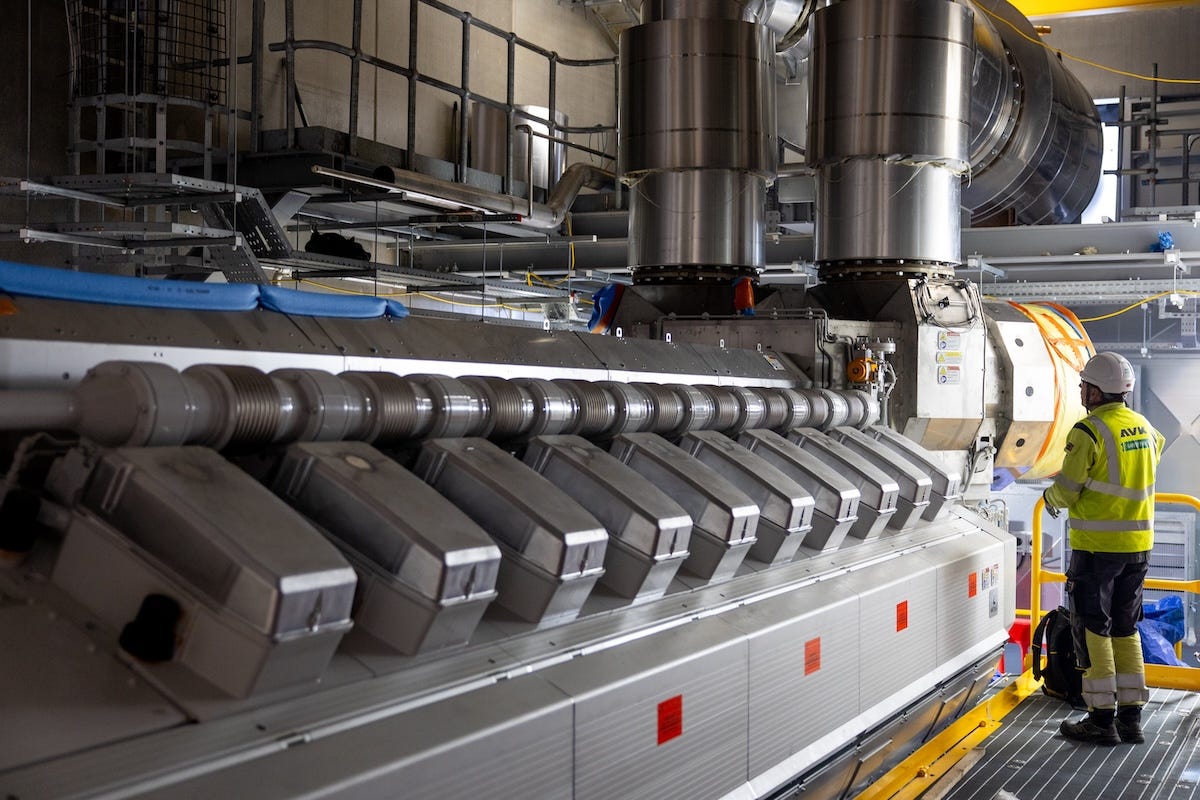
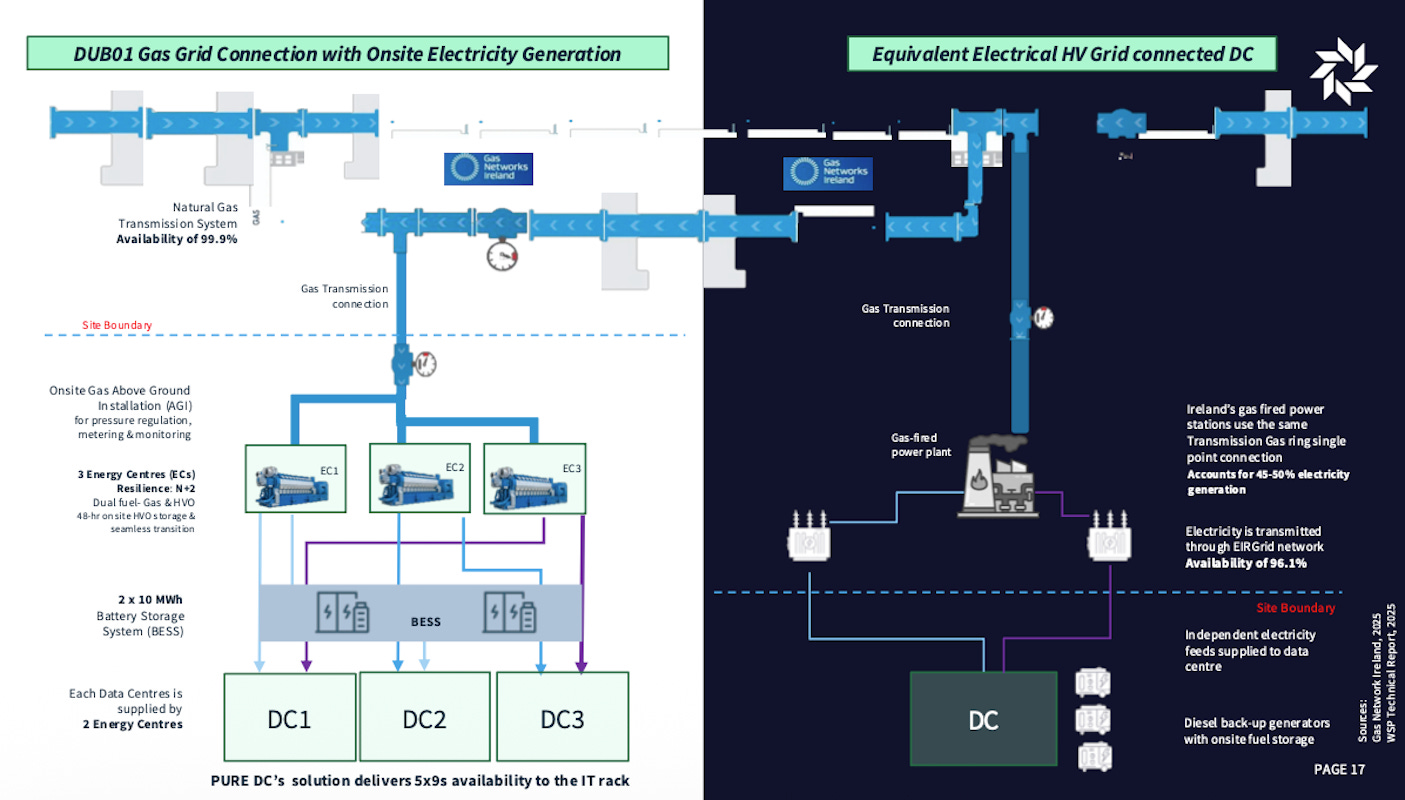
The campus operates a 110‑megawatt on‑site microgrid using natural‑gas generators supported by battery storage. The engines are designed to run on dual fuels, allowing the facility to switch to hydrotreated vegetable oil (HVO) as a lower‑carbon backup fuel when needed.
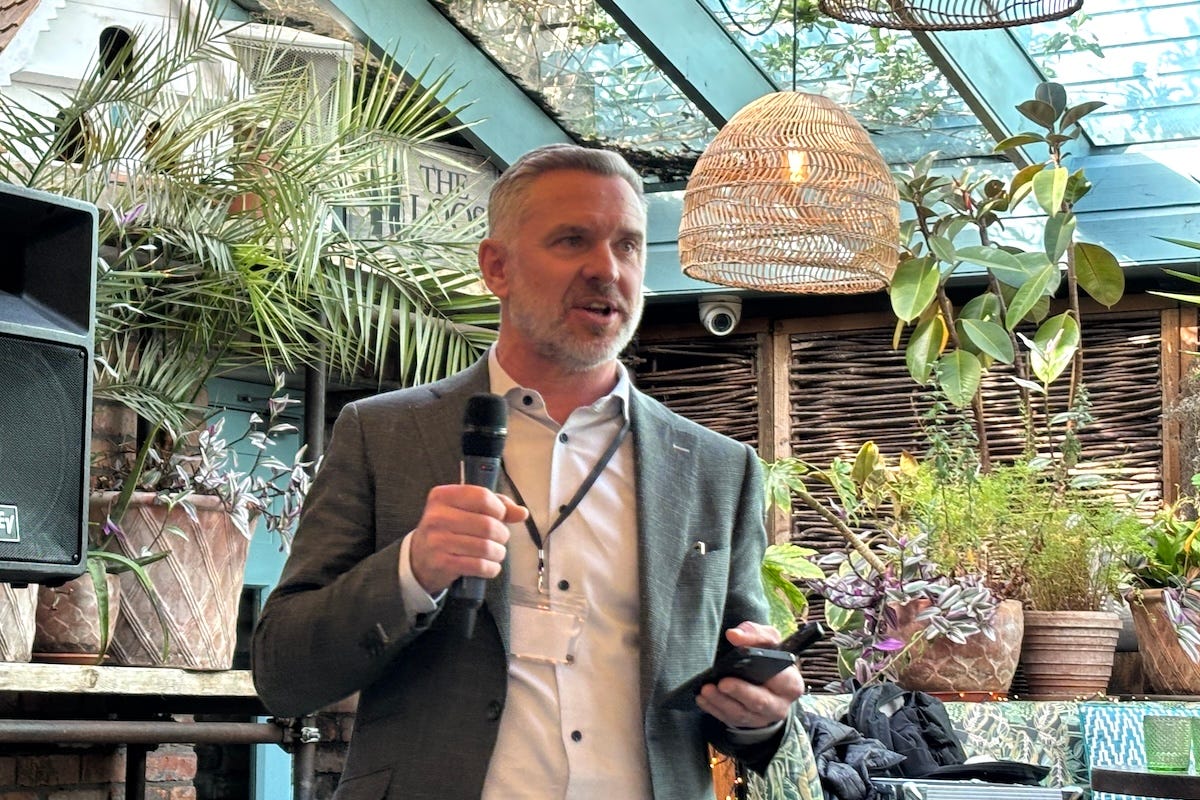
“We are not only relying on the gas network because it’s a third‑party utility network. We have to provide our own backup fuel on site, so the engines are dual‑fuel,” said Ian Whitfield, Chief Technology Officer, Pure DC. “In this case, we use HVO, a sustainable alternative to diesel.”
“We very much see this as a step on our journey. It’s been a long and very difficult journey, and we’re not quite finished yet, but we will go live later this year,” Whitfield said. “It’s part of a greater solution and a blueprint that hopefully others can follow.”
The campus in the Ballycoolin area of Dublin, Ireland, is designed primarily for several wholesale data‑center customers rather than hundreds of retail colocation tenants.
Pure DC is currently negotiating with several potential hyperscale clients and expects to close some large wholesale agreements within about a month. Each contract could span 10 to 15 years or longer.
Reliability engineering
Whitfield said hyperscale facilities must deliver extremely high uptime because they host essential digital services ranging from communications platforms to financial systems and healthcare infrastructure.
“We have to deliver continuous critical services. In our world, we deliver what we term a five‑nines (99.999%) infrastructure. What does that mean? Effectively, you’ve got just over 300 seconds of the year that you don’t have to provide availability for,” he said.
“To all intents and purposes, these facilities are designed to be up for 100% of the year continuously.”
Whitfield said the reliability target requires multiple layers of redundancy across the generation and electrical distribution systems.
“There are additional engines because we know that these engines require maintenance after so many thousands of hours,” he said. “There are duplicate power feeds from the energy center into the building, so that if we have an outage on one, or we need to do maintenance on one, we can run the facility on the other.”
Whitfield said the control system is duplicated so engineers can maintain it, perform updates, and handle network switch failures while still providing continuous services.
Private power grid
Whitfield presented the project on March 11 during a media tour in Dublin. Executives explained how the site replicates the functions of a traditional electricity grid inside the campus.
Whitfield said a traditional data center typically draws electricity from the public grid and keeps generators as backup. Pure DC replicated that arrangement on campus by operating its own on‑site power generation plant.
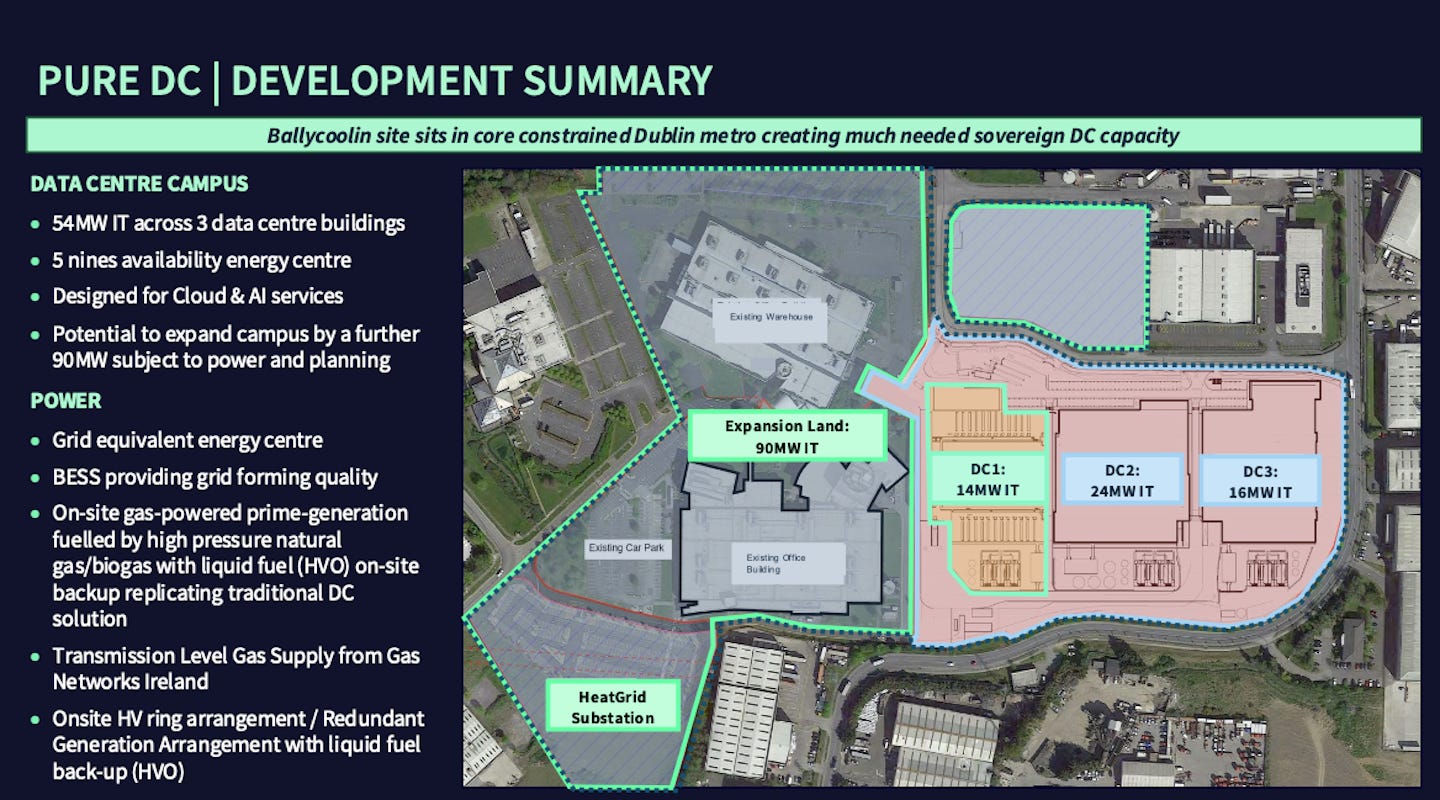
The campus includes three data‑center buildings housing multiple data halls designed for high‑density AI computing.
Whitfield said the energy infrastructure sits behind the buildings and currently provides about 70 megawatts of primary generation capacity.
“What you can see is the first two capacity blocks of our three‑capacity‑block energy centers, so effectively around about 70 megawatts of prime generation that is sat there, plus a lot of other infrastructure that goes to make that work effectively,” he said.
The current phase of the campus supports roughly 54 megawatts of computing capacity. That capacity could expand significantly as additional buildings are developed.
The power generators used in the microgrid are supplied by Wärtsilä, a Finnish company that manufactures and services power sources and other equipment for marine and energy markets.
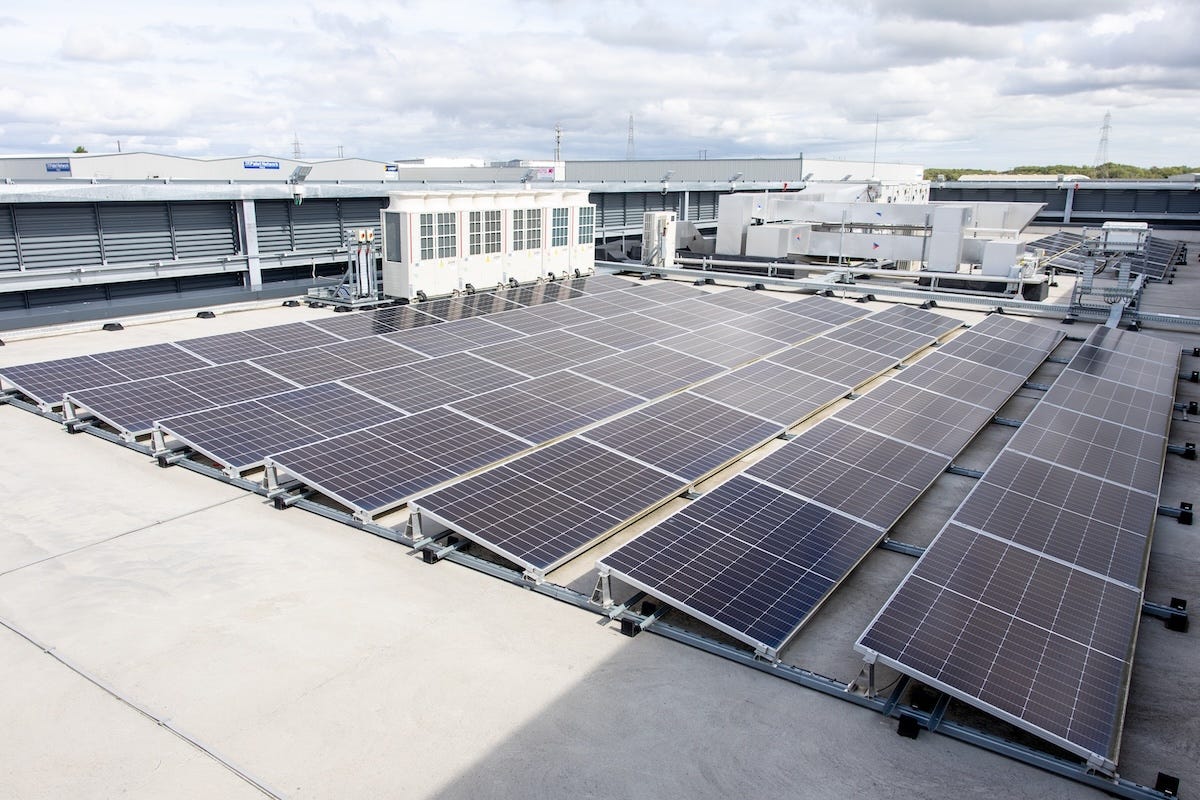
China’s Chengdu Tecloman Energy Storage Technology Co Ltd supplies the Battery Energy Storage System (BESS) supporting the facility’s power management. The Pure DC Dublin facility also deploys solar panels to create an additional power supply.
Grid constraints
Whitfield said the microgrid strategy emerged after the company encountered difficulties securing a traditional electricity‑grid connection for the campus.
“We did have an application to the electricity grid. Back in the day, traditional data centers would have a utility connection and backup generators,” he said.
But the project faced the same grid‑capacity constraints that have slowed data‑center development across parts of Ireland in recent years.
Whitfield said that, like many other developers in Ireland at the time, Pure DC had its grid application deposit returned and had to rethink its approach. The company ultimately chose to pursue the microgrid plan instead.
Engineers then evaluated whether the national gas network could support a large on‑site generation facility powering the campus.
“The modeling that we did with Gas Networks Ireland in the early days showed that this facility of this scale, connected into the robust infrastructure in and around Dublin, would have little impact on the availability of gas services for the country,” he said.
Water‑free cooling
Whitfield said the campus also aims to reduce environmental impacts through its cooling technology.
“There’s a lot of press over recent times about the amount of water that goes into cooling a data center. All of Pure DC’s facilities across our portfolio use zero water in operation, so we use a closed‑loop cooling system,” he said.
“You fill it once and then it operates continuously without using any more water resources, and that’s a really important point for us.”
Whitfield said many U.S. data centers historically relied on cooling towers that consume significant volumes of water.
Whitfield, a Chartered Engineer with more than 25 years of experience in the data‑center sector and a former Chief Executive of RED Engineering Design, joined Pure DC in 2021. He leads the company’s strategic data‑center engineering and energy initiatives.
He said future phases of the campus could also support wider energy initiatives beyond powering servers.
The energy‑center design allows waste heat from generation systems to be exported for potential use in district‑heating networks or nearby developments.
“We’re working very closely with partners to bring and use this system as a catalyst for decarbonized heat for the wider community in this area,” he said.
He said facilities with integrated energy centers could eventually become part of broader energy ecosystems that combine digital infrastructure, renewable fuels, and local heating systems.
Such projects could enable hyperscale campuses to evolve from large energy consumers into infrastructure platforms supporting both digital services and regional energy transitions.