


England’s North East has more than doubled its space sites in six years but still receives the UK’s lowest defense spending per person.
UK Space Agency data shows space organization sites in the region rose from 34 in 2017 to 81 in 2023.
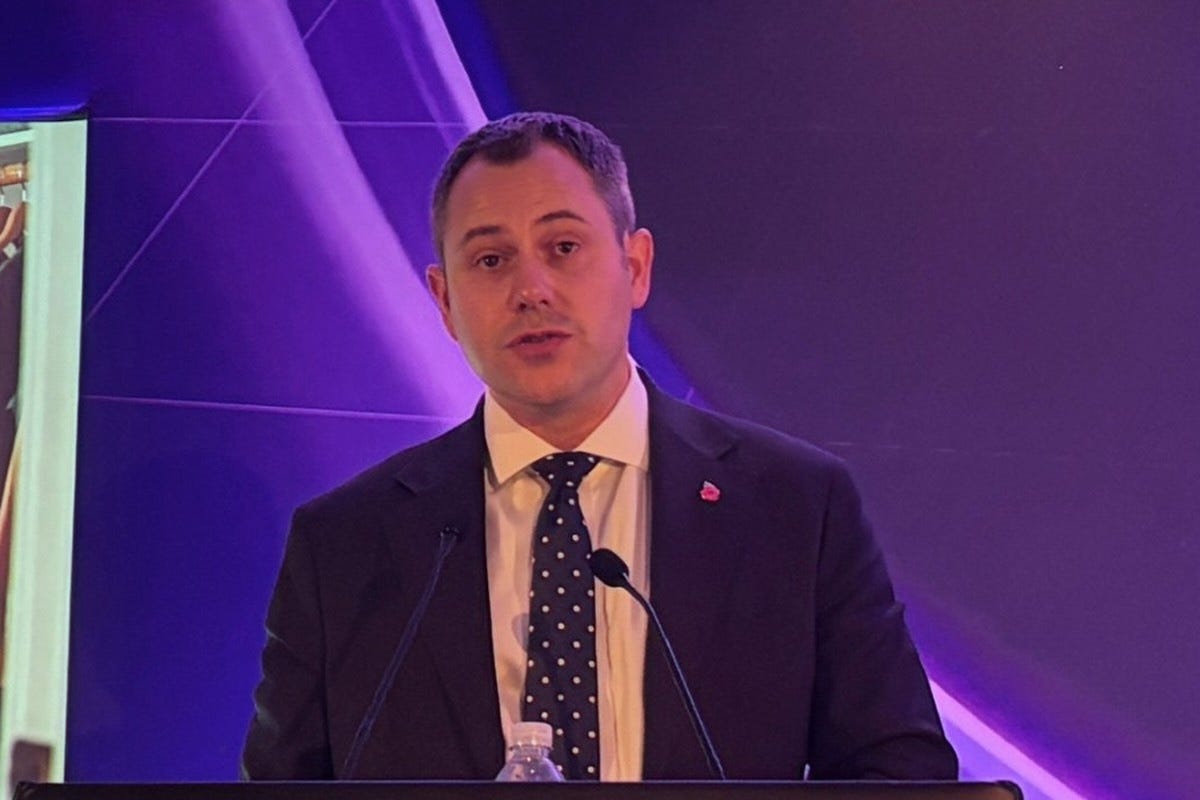
“Growth in the space economy should happen across the whole UK. Regional clusters are essential to national success,” said Chris Spicer, regional director UK/Europe at Lockheed Martin Space. “The future of the UK space sector won’t be built in one region. It will be built by growing and connecting capability across the whole country.”
He said the North East combines world-class universities, engineering excellence, advanced manufacturing and a fast-growing space sector.
The South East (spanning Hampshire, Surrey, and the Isle of Wight) remains the UK’s largest space cluster. Yet the North East receives only about £70 per person in Ministry of Defence (MoD) spending with industry, compared with £1,130 in the South West. Spicer said he saw the benefits of that defense dividend in Plymouth while working for Babcock.
“It’s not just numbers. You can see the impact when you walk around, but that shouldn’t be limited to a select few locations,” he said.
The North East Combined Authority puts the region’s MoD industry spending at £65 per resident in 2024/25, the lowest of 12 UK areas, against a UK average of £461. London, the South East and the South West take 55% of the total.
Spicer said investment can act as a catalyst for wider regional growth.
He said space is no longer shaped by governments or major organizations alone. Innovation increasingly comes from collaboration between small firms, start-ups, universities, research institutions and established industry, while the problems being solved grow more complex. He said industry needs certainty and confidence to invest, innovate and grow.
“Space is a long-term industry and requires long-term commitment. The question is no longer who can build the best technology. It’s who can build the strongest ecosystem around it,” he said.
Lockheed Martin Space is the space arm of US group Lockheed Martin, which employs around 2,000 people in the UK.
Building beyond the south
Spicer spoke at the fourth Defence in Space Conference, an industry-run event held in London on October 27 and 28. The event brought together government, defense, industry and academia. His keynote focused on creating UK growth and global opportunity through space collaboration.
He said Lockheed Martin UK is investing more than £100 million in the North East, alongside its science, technology, engineering and mathematics (STEM) programs and university partnerships.
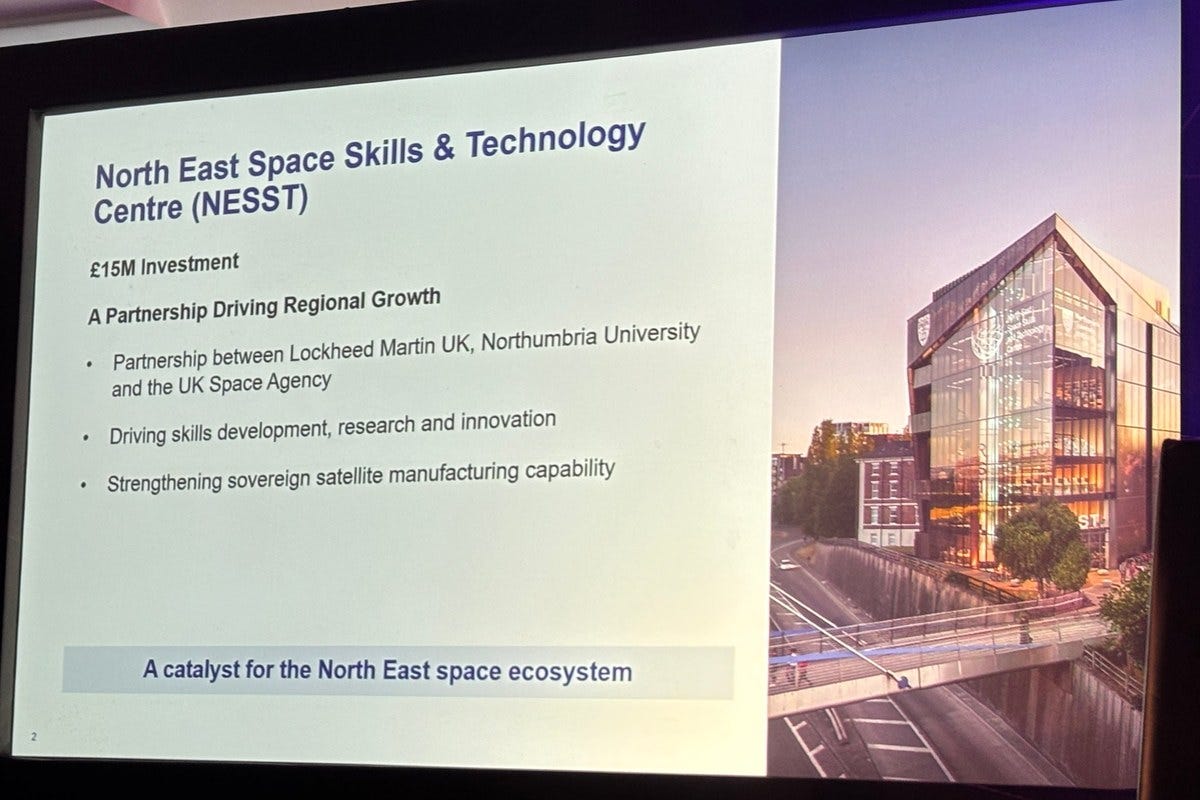
This includes £15 million in the North East Space Skills and Technology Centre (NESST) at Northumbria University and £85 million for a planned satellite manufacturing and test facility at NETPark in County Durham, with £20 million already invested. Spicer said such investments support high-skilled jobs, economic and national resilience and stronger UK supply chains.
“Building sovereign capability isn’t just about satellites. It’s about creating the people, skills and infrastructure needed to sustain the capability for decades,” he said.
NESST is a £50 million partnership between Lockheed Martin UK, Northumbria University and the UK Space Agency in Newcastle. It focuses on skills, research and sovereign satellite manufacturing and is expected to support hundreds of jobs. Spicer said it will act as a catalyst for the wider North East space ecosystem.
Regional investment is also spreading beyond the North East, to places such as Keighley in West Yorkshire.
Spicer cited Space Test North there, a new facility backed by public and private money that will test satellites and space hardware. The £9 million center will be the first dedicated radio frequency and environmental space-testing facility in the north of England.
US-based MPG, part of Dover Corporation, backs it, along with a £4.5 million grant from the Local Regeneration Fund.
Plans cover around 15,000 sq ft of industrial testing space, with vacuum, thermal and humidity chambers and a vibration table to recreate the conditions hardware faces in space. Bradford Council says no comparable facility exists in the region.
Spicer said the project was drawn to Keighley by collaboration between the University of Bradford, Keighley College and local industry. He said it fills a critical gap in the UK testing market, and will create high-skilled jobs, support research and attract further investment into the region.
“Whether it’s NESST in the North East, NETPark in County Durham or Space Test North in Keighley, the lesson is the same. When industry, academia and government invest together, they create the conditions for long-term growth,” he said.
Not just scientists
Spicer said every successful space program starts with talent, and the UK must invest in STEM education, apprenticeships and workforce training to stay globally competitive. He said space careers also stretch well beyond scientists and engineers, into a wide range of areas such as:
Manufacturing
Data and digital technology
Cyber
Project management
Finance and accounting
Communications and human resources
Supply chain and operations
“A huge frustration of mine coming into this domain is that space is seen as a domain where you need higher education or a science background. Our goal is not simply to inspire the next generation. It is to create clear pathways from classroom to career,” he said.
Lockheed Martin UK has worked with New College Durham for five years through its AMTEC center. The partnership builds pathways into engineering, advanced manufacturing, digital technology, cyber security and space careers, and helps existing workers upskill and retrain.
The partnership also embeds space-themed learning across several technical disciplines.
This year’s Space Camp in Newcastle, a week-long immersive program held over the October half-term, drew 280 students and featured 64 workshops and 28 industry speakers. Students explored astronomy, space engineering and satellite communications, and designed, built and launched around 200 rockets.
Spicer said that for the first time, more than 60% of the Year 12 attendees were female.
The fully funded camp targets Year 6 and Year 12 students at key points in their education. As a parent of two young children, he said he values the way it removes barriers to access.
STEMFest, held in Newcastle in early October, brought together about 3,000 pupils and 60 organizations for robotics, coding and careers talks. It is part of wider outreach by RTC North, which he said reaches all secondary schools, 48% of primary schools and 85% of further education colleges in the region.
He said the talent push comes as the operating environment grows tougher, with challenges spanning secure communications, national security, resilience, sustainability and space security.
Space control, once seldom mentioned, now appears in the media weekly, if not daily.
“It’s not that the science is getting any harder; it’s always been hard. It may not be long before countries are fighting over spectrum,” he said.
Spicer said no single organization can solve these challenges alone.
“The future space economy will be built by those who create opportunities and build bridges, not those who would surround themselves with a moat and long for more of the status quo,” he said.
The UK has significant strengths in research, engineering and innovation, as well as strong regional clusters. He said its opportunity is to connect those strengths and compete globally, with governments working with industry, large businesses with small firms and universities with global partners.
“The greatest competitive advantage any nation can create is not a piece of technology. It’s an ecosystem where people, ideas and investments can thrive,” he said.
Spicer was due to join the rest of this year’s Space Camp in Newcastle after his talk.