


Scientific breakthroughs alone do not secure market leadership in fusion energy. The industry is entering a phase where industrial scale, supply chains and manufacturing capability will determine who wins.
The shift marks a decisive transition from proving that fusion works to proving that it can be deployed reliably and economically. In the next stage, execution, rather than discovery, becomes the defining challenge.
“Laser inertial fusion already has a demonstrator at the National Ignition Facility (NIF) at Lawrence Livermore National Laboratory (LLNL). The physics is proven; the task now is to build the industrial base and scale the supply chain to commercialize it,” said Jeff Lawson, chief executive and co-founder of Inertia.
The NIF reached ignition in December 2022, when 2.05 MJ of laser energy produced 3.15 MJ of fusion output—the first laboratory energy breakeven. That milestone, built on decades of public investment, confirmed the physics and shifted the focus to engineering and industrialization, with subsequent shots demonstrating repeatable yield.
“I looked at the space and asked: why are so many people pursuing things that are still unproven, when NIF has already shown this works? Why wouldn’t you take the only working experiment and apply it to the largest market on the planet, which is energy?” he said.
The commercialization challenge now centers on building an ecosystem capable of sustaining large-scale production, including supply chains for critical components, manufacturing processes and consistent system performance over time.
Lawson, whose background is in software and who previously built communications firm Twilio into a multibillion-dollar business, entered fusion after identifying this gap between scientific success and industrial deployment. He positioned Inertia as focused on bridging that divide.
Inertia is a US-based fusion energy company focused on commercializing laser inertial fusion by scaling manufacturing, supply chains and industrial processes rather than pursuing new physics regimes.
On April 14, Inertia expanded its partnership with LLNL to advance fusion lasers and inertial targets. The deal includes a Cooperative Research and Development Agreement (CRADA) on laser development and two Strategic Partnership Projects (SPP) covering target design and manufacturing.
The work is managed by LLNL’s Livermore Institute of Fusion Technology (LIFT), which aims to bridge the gap between research and commercial deployment. By combining national lab expertise with private-sector execution, the partnership targets faster progress in infrastructure, supply chains and talent, and sets a model for broader industry collaboration.
Diode bottleneck
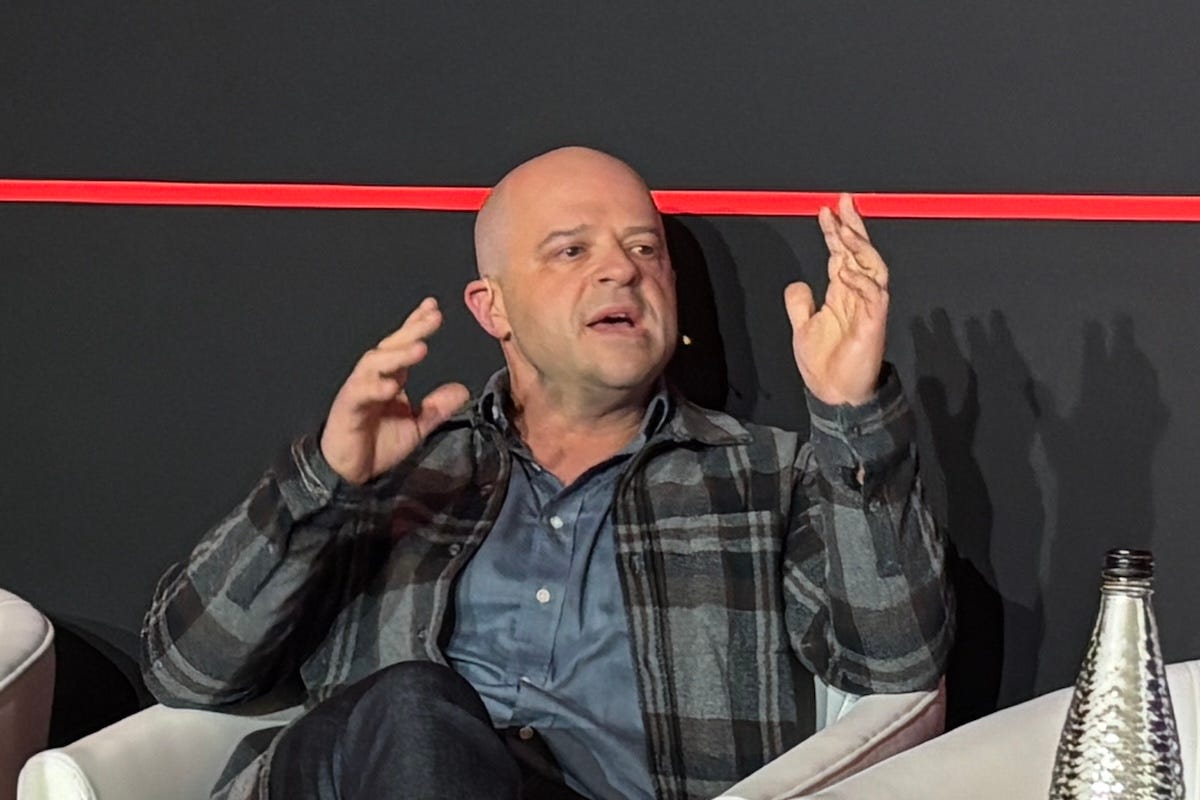
Lawson made the remarks at Fusion Fest in London, organized by Economist Impact. The fireside chat, moderated by Oliver Morton, senior briefings editor at The Economist, focused on how fusion shifts from scientific breakthrough to industrial-scale deployment.
A key constraint in the supply chain for laser systems is the availability of laser diodes. Lawson said the challenge is not rooted in physics but in manufacturing scale.
“People told me the laser would be unaffordable. You’d need a much larger system, and that could cost $100 billion, maybe $200 billion, someone even said a trillion. That’s obviously a huge number, so I started looking at what actually drives the cost,” he said.
“The biggest cost driver is the laser diodes at the core of the system,” he said. “They’re not magical or made of anything exotic; the real issue is that humanity doesn’t produce them at scale because there’s almost no demand today.”
Production would need to expand by roughly 1,000 times to meet commercial requirements. At current output levels, scaling could take decades, creating a significant bottleneck. The semiconductor industry provides a clear precedent for how such scaling can reduce costs and improve yields.
“You’d have to scale production roughly 1,000 times. But when you scale semiconductor manufacturing by orders of magnitude, prices fall, quality improves and yields go up,” he said. “That dynamic has played out across the industry for decades.”
Another major hurdle is the production of fusion targets, which are currently bespoke prototypes with extremely limited output.
He said current targets cost about $500,000 each and a power plant would need to run at around 10 hertz, implying roughly $5 million per second—an uneconomic model. He added that only six targets are produced each year and each is a bespoke experimental prototype.
Commercialization requires transitioning to factory-based production, including automated assembly, fueling and injection. Lawson compared this to consumer electronics manufacturing.
“When you bring a prototype to market, you don’t keep hand-making it — you build a factory. Humanity produces about 1.5 billion smartphones a year, and a fusion target is far simpler than a smartphone. So the challenge is not complexity, it’s scaling production,” he said.
Industrial talent
The transition to industrial scale depends heavily on talent drawn from sectors that already operate at high manufacturing volumes, particularly consumer electronics and autonomous systems.
Lawson said the talent required to scale manufacturing already exists, pointing to companies such as Apple and Samsung that bring new products to market at scale each year. Inertia is recruiting engineers and supply chain specialists from these sectors to turn prototypes into mass-produced systems.
“We’re hiring people from companies like Apple and Waymo who have built supply chains for smartphones and autonomous vehicles, and applying those same capabilities to fusion systems,” he said.
Design adjustments are also required to make production viable, as some materials used in experimental setups are unsuitable for large-scale manufacturing.
“The current targets use depleted uranium and gold, and I would not want to build a company based on mass-producing depleted uranium components. That’s not a practical path for commercialization,” he said.
“If you substitute lead, which is another high-Z material, you take about a one to two percent hit in yield. But that trade-off is supported by data, so it becomes an obvious decision when you think about scaling production,” he added. High-Z materials are elements with high atomic numbers and a high electron density.
The company is designing a more powerful system to support these changes. A 10 megajoule laser, significantly larger than current systems, would help compensate for manufacturing imperfections and increase output.
He said the company expects to meet its targets between 2035 and 2037, with the timeline driven by engineering and manufacturing challenges rather than underlying physics. The approach is not an extrapolation but an interpolation between known data points, drawing on results from both lower- and higher-energy experiments to reduce scientific risk.
As fusion moves toward commercialization, success will hinge less on breakthroughs and more on execution at scale, where supply chains, manufacturing discipline and industrial expertise define competitive advantage.