Quantum computers are delivering measurable results in drug discovery, cancer treatment and fusion energy, with hybrid classical-quantum workflows driving breakthroughs across all three fields.
The approach is consistent: break a complex problem into components, assign classical computing to the simpler parts and quantum processors to the hardest parts, then combine the outputs. Researchers are reporting significant gains in both scope and accuracy.
“Researchers went from simulating smaller atoms, methane dimer, simple type activity into really biologically relevant enzymes and proteins,” said Katie Pizzolato, vice-president of IBM Quantum Platform.
“They put the parts that classical could do well. They took complex parts of the molecule that quantum could better simulate, and they assembled it all back together at the end.”
Pizzolato was describing a two-year collaboration between IBM and the Cleveland Clinic that ran from 2024 to 2026. The project achieved a 40-times gain in simulation scope, progressing from simple atomic models to T4 lysozyme and trypsin, enzymes central to understanding protein function and human digestion.
The team worked with high-performance computing centers, including RIKEN in Kobe, Japan, to accelerate the classical compute component, and open-sourced its methods so that others across the ecosystem could build on them.
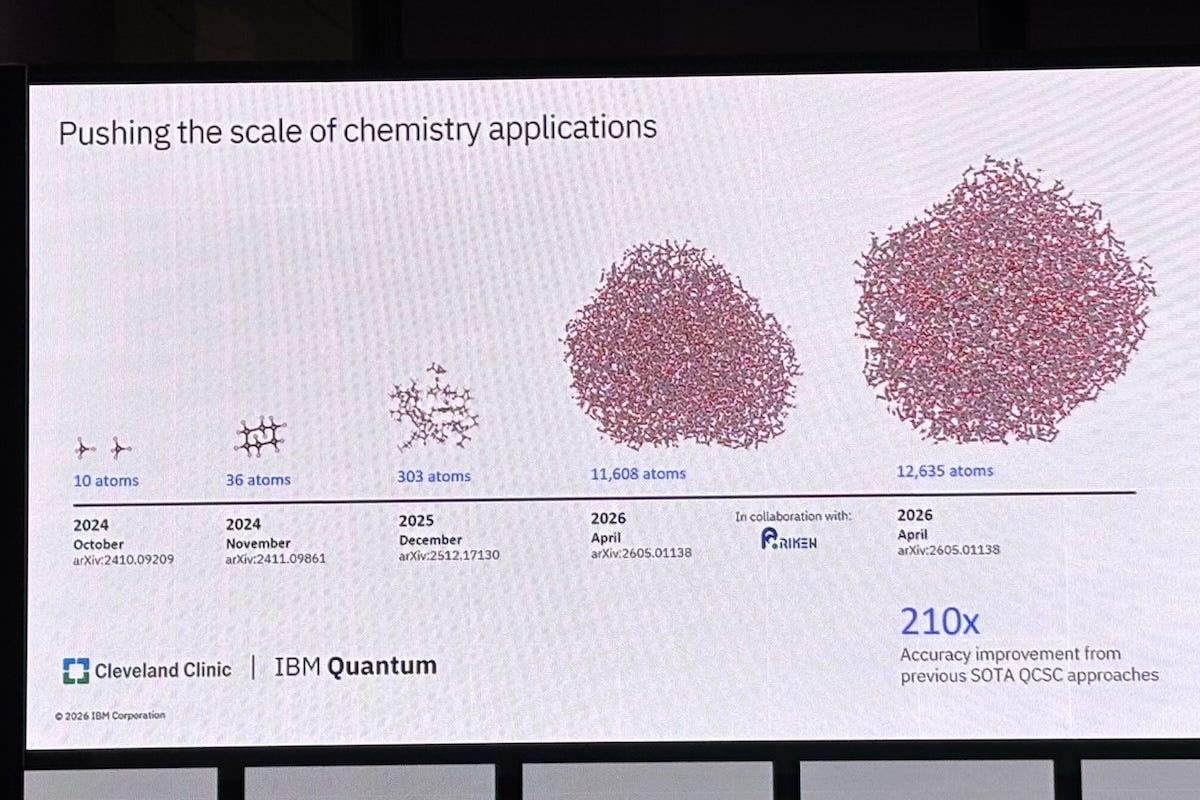
“They didn’t do it all at once,” she said. “They did it in a methodical way, where they used the system, they found better ways to do it, which is the history of how we’ve consumed technology.”
The team began with molecules in the gaseous state before advancing to larger molecules in the liquid state, a progression she described as a model for how the industry should approach quantum application development.
“We are past the phase of abstract exploration and experimentation,” she said. “We really are in a phase for practical explorations of places that will deliver value.”
Pizzolato framed this as an industry-wide shift. Businesses, institutions and national labs are now producing work that is both commercially and scientifically relevant. Classical computers, she added, are actively extending the reach of quantum systems today, with the two technologies working in concert rather than in competition.
From cancer to fusion
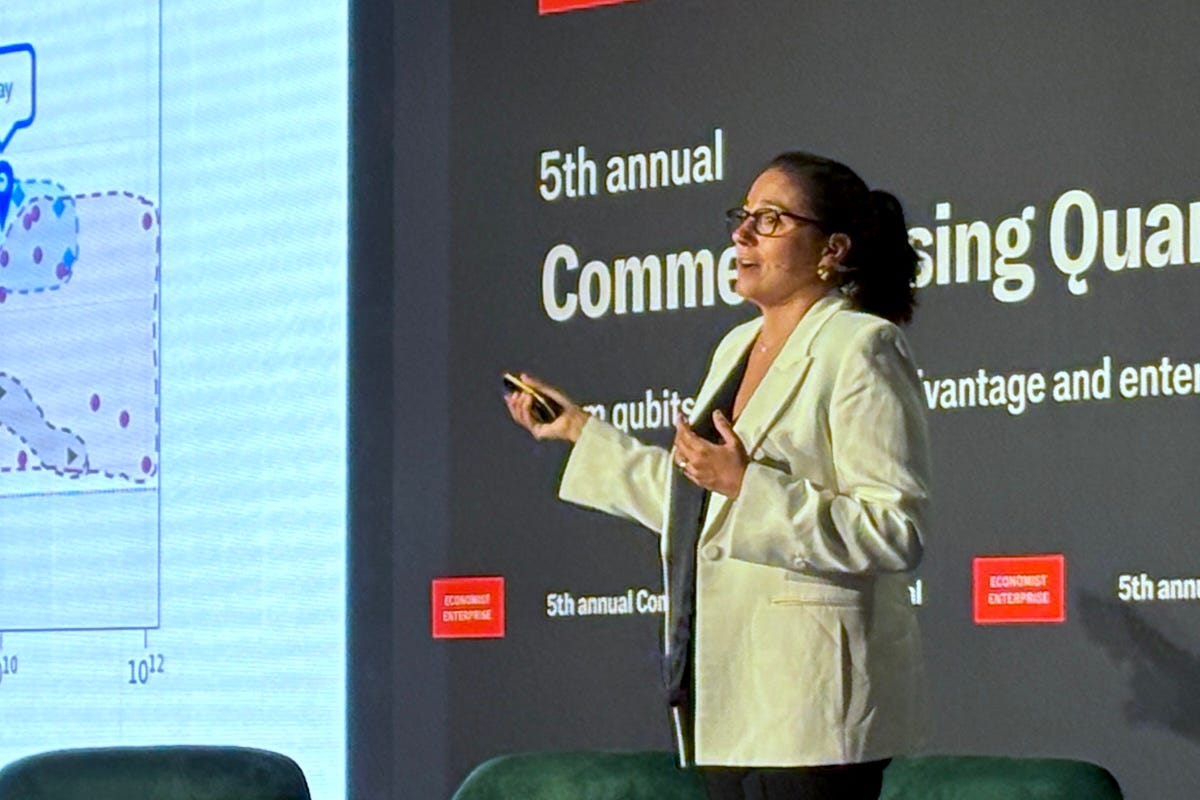
Pizzolato was speaking at Commercialising Quantum Global 2026, organized by Economist Enterprise on June 16 in London. Her keynote, titled “Small steps and quantum leaps: delivering useful quantum computing now,” surveyed the progress IBM and its partners have made in translating quantum computing from experimental platforms into commercially relevant applications.
She has been part of the IBM Quantum Group since 2016. IBM Quantum Platform supports a network of more than 325 member organizations and has deployed over 90 quantum computers on the cloud and in data centers since the program’s inception.
A second use case focused on photodynamic cancer therapy, a treatment approach in which light activates compounds that destroy cancer cells. A research team applied the same hybrid classical-quantum workflow to drive algorithmic discovery in identifying treatment pathways, combining central processing units (CPUs), graphics processing units (GPUs) and quantum processing units (QPUs).
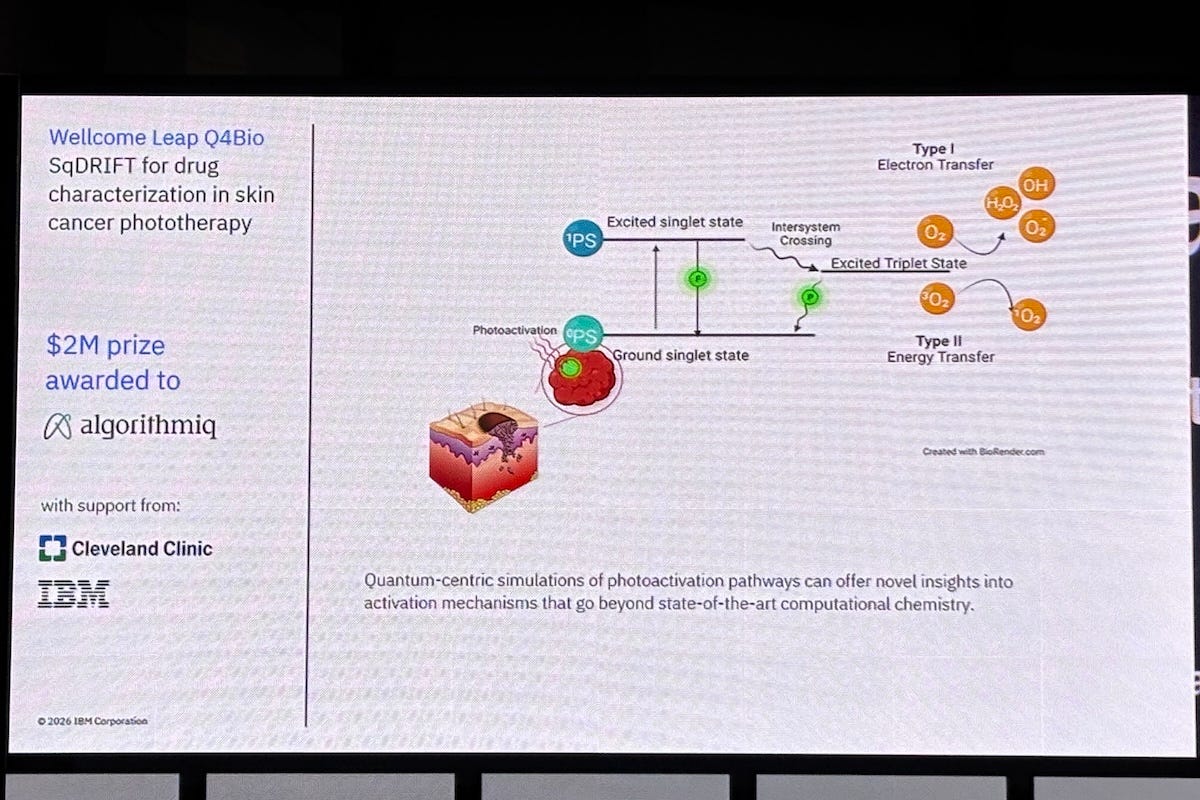
“Not only did that algorithm do a great job and win this year’s Wellcome Leap Quantum for Bio (Q4Bio) Prize, but a big part of winning it was showing that there was progress or vision into chemically relevant and biologically relevant things to do,” Pizzolato said. “This is a great example of ecosystem quantum-centric supercomputing and algorithm discovery all working together to push the bounds of the technology.”
The Q4Bio award recognizes quantum computing research with a demonstrated pathway toward biological and clinical relevance. The CPU, GPU and QPU combination unlocks applications that none of the three compute types could achieve independently.
The third use case extended the Cleveland Clinic's embedding technique into fusion energy research. Oak Ridge National Laboratory and collaborators, including Commonwealth Fusion Systems, used the method to simulate tritium production in molten salt. Tritium is a key fuel for fusion reactors; its scarcity on Earth means fusion programs must breed it from lithium inside the reactor.
Pizzolato said that tritium is scarce on Earth and that fusion programs must produce large quantities of it as part of the fuel cycle.
Oak Ridge recognized that the Cleveland Clinic’s open-sourced embedding technique could be applied to an entirely different scientific problem. The collaboration brought together enterprise partners, national laboratories and academic institutions, the same triangle she described as essential to quantum ecosystem success.
IBM has been conducting joint research with the MIT fusion group for several years.
Roadmap and power demands
Pizzolato framed the three use cases as evidence of a broader industry inflection point. BCG projects the quantum computing market will reach into the trillion-dollar range at maturity, driven by applications in pharmaceuticals, materials and finance.
She traced IBM’s journey from placing its first quantum computer in the cloud a decade ago, through a quantum utility milestone in which quantum processors outperformed brute-force classical computers on certain circuits, to where the industry stands today.
“Useful quantum computing is here today,” she said. The industry had arrived at this point, she added, because of mounting real-world evidence of what quantum systems could deliver. “We’re here because it’s real. We’re here because we’re seeing so much evidence of value that it’s bringing.”
The IBM Quantum Network’s 325-plus members span enterprise, academia, and national labs, with participants including NatWest, HSBC, the Wellcome Sanger Institute, and the Quantum Computing Center (QCC). She said enterprise partners drive the signal of what is needed, academic institutions advance the underlying research and national labs act as a connective center across the three.
IBM has put over 90 computers in the cloud and data centers since the program’s inception, with each hardware iteration generating rapid learning cycles that feed back into the next generation. The software stack, powered by Qiskit, advances in parallel with the hardware.
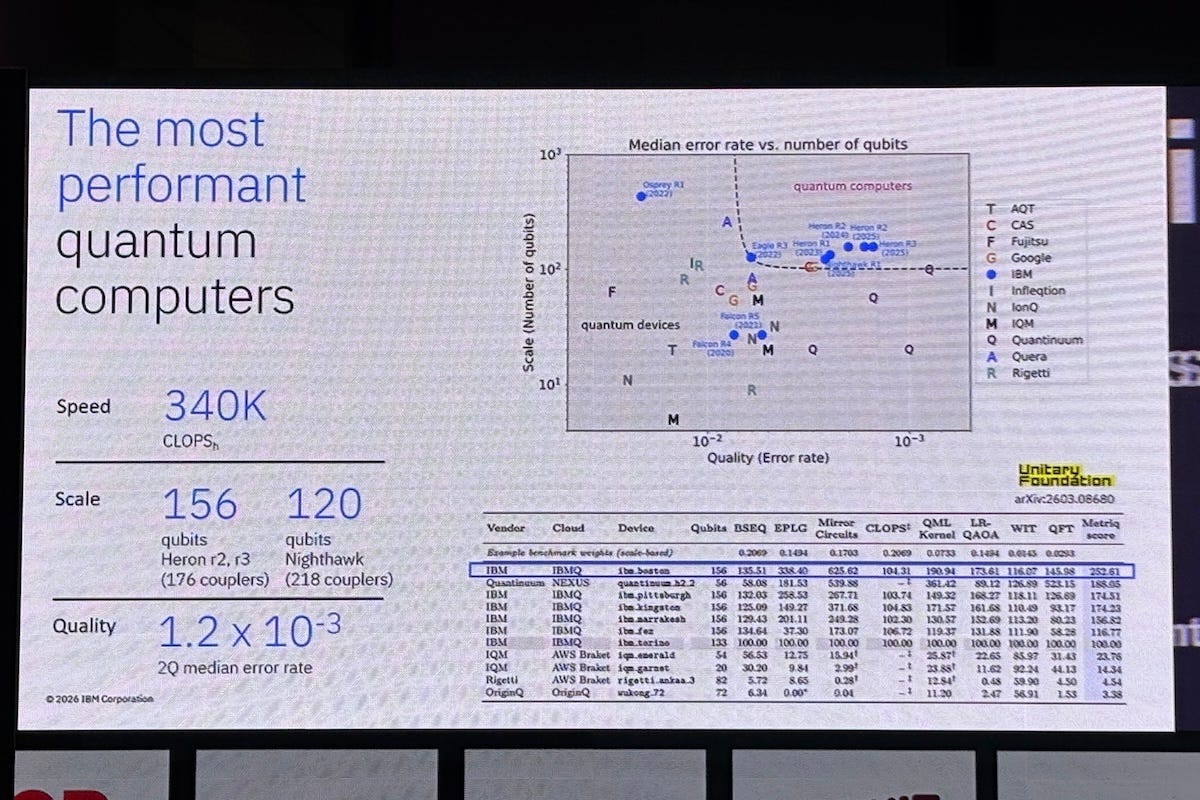
“We have to have scale, quality and speed across your device,” she said. “That is something that IBM has been focusing on since the very beginning.”
IBM’s public roadmap, first introduced in 2019, targets two major fault-tolerant systems: Starling in 2029 and Blue Jay in 2033. Both will intersect with known algorithms at established resource estimates. The current error-handling approach uses high sample counts with few qubits; future systems will require fewer samples and many more qubits.
“You won’t know the difference,” she said of the transition. “You will just continue to be able to execute larger and larger circuits, and you will continue to get more performance out of the system. It will all be under the hood.”
She closed with a data point she said deserved more attention than her allotted time allowed. Current IBM quantum systems, including the Nighthawk and Heron devices in System Two configurations, draw between 30 and 50 kilowatts. Starling is projected to require approximately one megawatt; Blue Jay under six megawatts.
“What are these systems going to demand, and how are they going to work in concert with our large data centers that we already have today?” she said.
Today’s data centers already consume hundreds of megawatts and are moving toward the gigawatt range. Pizzolato said the question of how quantum systems will integrate with existing large-scale data center infrastructure will grow in importance as the roadmap advances toward Starling and Blue Jay.