


Companies seeking to register with the U.S. Securities and Exchange Commission (SEC) during the Biden administration were subjected to enforcement actions simply for asking questions, a practice that one senior official now says was legally indefensible and could not, in good conscience, be continued.
The SEC’s crypto task force, created on January 21, 2025, under new chair Paul Atkins, has since overseen one of the sharpest reversals in U.S. regulatory history. The official at its center says the rollback was not politically motivated, but legally necessary.
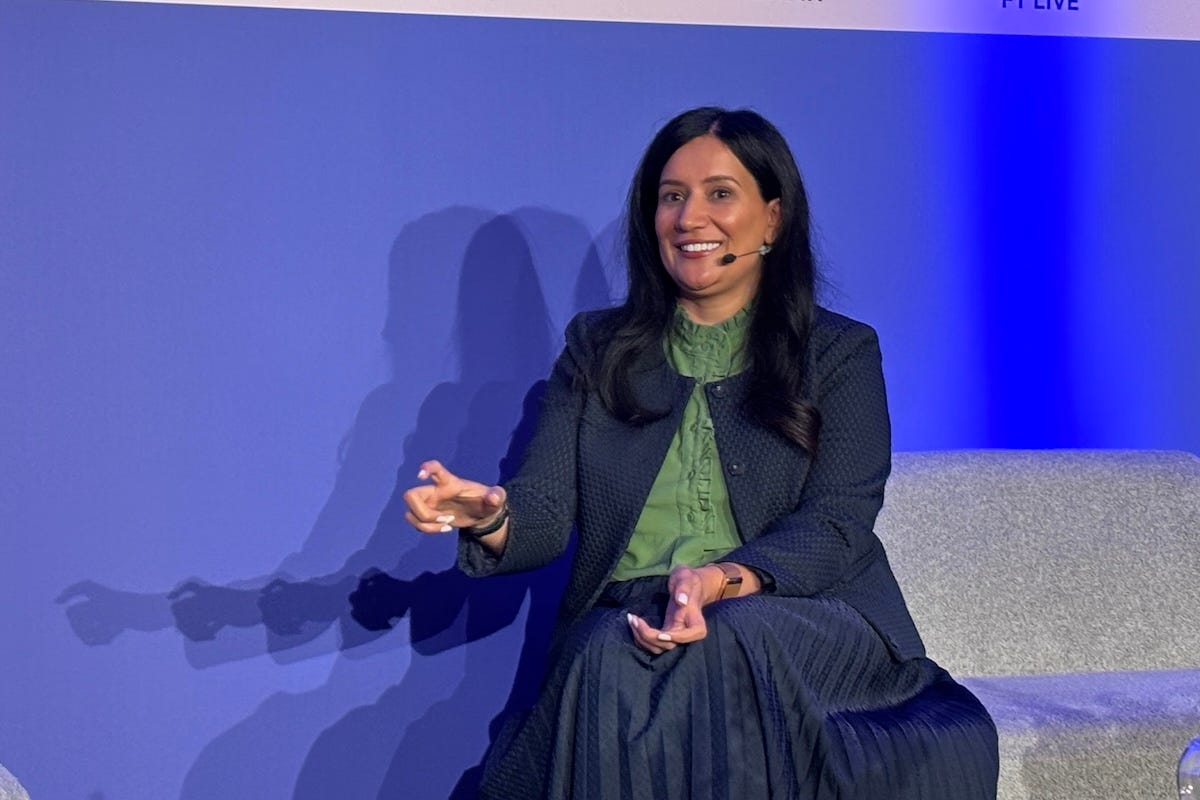
“I was part of meetings where people came in and said, we want to register, we want a pathway, and then an enforcement action is brought against them three months later, just for coming in and talking and asking questions,” said Sumeera Younis, Chief of Operations of the SEC’s Crypto Task Force.
“So not only have they not been given a pathway, now they’re being punished for activity that they don’t even have a way to properly conduct,” she said. “If the premise of all of those enforcement actions was something that was foundationally wrong, then it’s not right to keep pursuing those.”
The rollback has been sweeping. The SEC dropped or closed at least 12 crypto enforcement cases from early 2025, including major actions against Binance, Coinbase and Kraken.
The Coinbase case was dismissed on February 27, 2025, the same day SEC Commissioner Caroline Crenshaw issued a public dissent, coining the phrase “regulation by non-enforcement” and warning it ignored 80 years of established securities law.
Younis said the previous approach, widely described as regulation by enforcement, saw companies punished simply for seeking a registration pathway, before any viable legal route had been established for them to follow.
She pushed back on characterizations that the task force was staffed by crypto enthusiasts. Much of the press coverage of the enforcement rollback has been inaccurate, she said, partly because SEC staff are not permitted to speak to the press.
"There's this mischaracterization that the crypto task force is a bunch of crypto bros, but there's not a single ‘Patagonia vest’ [a branded fleece gilet popular among finance and tech bros] in our office," she said.
She has been at the SEC for a decade, previously working on fund registration before joining Commissioner Hester Peirce’s office, where she helped develop the conceptual framework for the task force ahead of the change in administration. Before the SEC, she worked in-house in the financial industry.
Howey still the law
Younis was speaking at the Financial Times Digital Assets Summit in London on May 13 in a keynote interview moderated by Jill Shah, the Financial Times‘ US trading and crypto correspondent. The discussion covered the SEC’s rebuilding of its relationship with the crypto industry, jurisdictional questions, investor protection and the divergence between US and UK regulatory cultures.
She applied three core criteria when recruiting task force members: at least five years at the SEC, an independently developed interest in crypto even when the agency was hostile to the asset class, and intellectual humility.
“I wanted people who, just out of their own curiosity, in an environment that was actually pretty hostile to crypto, were asking questions,” she said. “They wrote memos on their own accord. They’re already thinking about this, just out of intellectual curiosity.”
The team comprises lawyers specializing in distinct areas of U.S. securities law, including the Securities Act of 1933, the Securities Exchange Act of 1934, and the Investment Company Act of 1940.
The task force has held hundreds of industry meetings, likely more than 1,000 in total, and issued a public request for information comprising 48 foundational questions. Submissions were made public, allowing respondents to engage with each other’s arguments.
She said she had no idea how effective policy work could be done without engaging with industry.
“Your industry experience grows stale pretty quickly once you’re outside of it,” she said.
The Howey test is a four-prong framework established by a 1940s U.S. Supreme Court case involving an orange grove. It determines whether an asset constitutes an investment contract and therefore a security.
On March 17, 2026, the SEC and the Commodity Futures Trading Commission (CFTC) issued a joint statement providing interpretive guidance on five categories of crypto assets, assessing each against those four prongs: an investment of money, in a common enterprise, with a reasonable expectation of profits, derived from the efforts of others.
“The question that you triple underline is: what is a security? Because that led to a lot of the cases that were brought, and also a lot of the uncertainty in the marketplace,” she said. “If you don’t know what you’re dealing with, a security or not, you don’t know if you’re in our jurisdiction, the CFTC’s jurisdiction, or out of both.”
She said every one of the five categories in the March 17 statement was assessed against the Howey test, and those that failed on even one prong fell outside the SEC’s jurisdiction. The SEC was not trying to give crypto assets a free pass. Those categories simply were not securities, and the agency was not the regulator of everything in the world.
CFTC chair Brian Quintenz previously served as chief counsel of the SEC’s crypto task force, giving the two regulators an unusually close working relationship as they move in lockstep on crypto policy.
Blank page on tokenization
The task force has lost sleep over striking the right balance between investor protection and the creation of a regulatory environment where businesses can thrive, Younis said.
The roughly dozen members share the view that departures from previous rules must be deliberate and legally grounded, not a signal that businesses can act without constraint.
“I want an environment in which builders can build, but not at the expense of regular people who trust these markets to invest in,” she said. “None of us want investors’ lost assets on our conscience. None of us want a financial market event on our conscience.”
The task force’s output has been slow because of the rigor of its process. The team spends dozens of hours per week on policy work beyond its regular duties, and its internal diversity spans lawyers from different statutory backgrounds and professional experience.
“Some of this stuff is taking so long to get out the door because we spend dozens of hours every week just doing policy work, sitting there, really interrogating what we’re doing, and challenging each other,” she said.
On the differences between US and UK regulatory approaches, the two jurisdictions reflect fundamentally different national risk appetites.
She was largely unfamiliar with the Financial Conduct Authority (FCA) and His Majesty’s Treasury (HMT) until around a year before the interview. As an immigrant to the US, she said American social mobility and the openness of its capital markets stem in part from a higher tolerance for risk.
She acknowledged recent UK signals from officials including Chancellor Rachel Reeves, indicating a desire to rebalance toward growth.
“You do have to take on a little bit more risk for growth, but that doesn’t need to be reckless risk, and it doesn’t need to be something that allows investors to become vulnerable to exploitation,” she said.
She identified tokenization as the area she is most excited about, describing it as a space where virtually every jurisdiction is starting from scratch with its regulatory framework.
“Most jurisdictions have a blank page in front of them in terms of the regulatory framework around tokenization,” she said. “I think it’s an opportunity for the two greatest financial markets in the world to work together.”
Younis confirmed she is relocating to the UK and expressed hope of contributing directly to US-UK regulatory collaboration on tokenization, bringing some of America’s risk appetite to this side of the Atlantic.