



Energy decisions at one of the world’s most visited botanical estates are increasingly being made by data, not habit.
Sub-metering down to the half-hour is starting to reveal leaks and inefficiencies that went unnoticed for decades. Baseline reporting is steering investment away from upgrades that sound obvious but don’t actually move the needle.
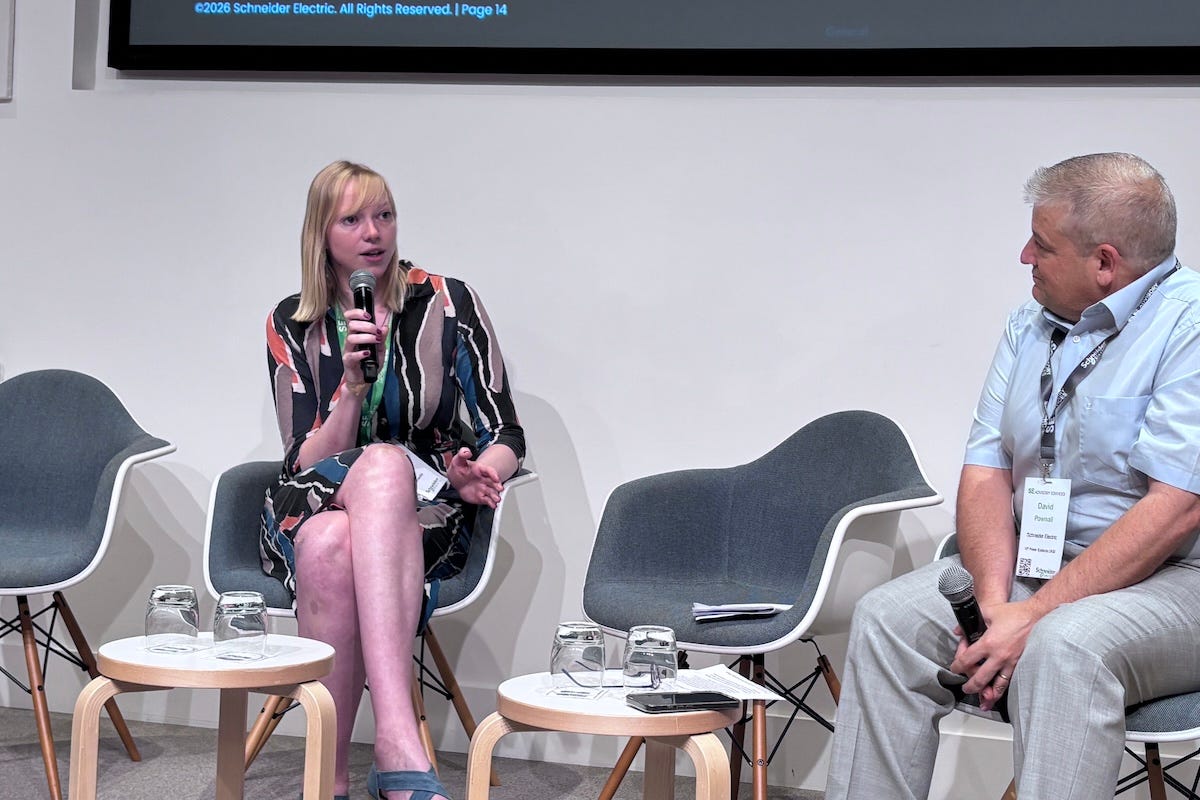
“Almost within days of half-hourly water meters, we’ve been finding huge leaks,” said Rachel Purdon, head of sustainability at the Royal Botanic Gardens (RBG), Kew. “That has been a nice case study to demonstrate the rapid payback on that understanding. One of the baseline reports found that our power quality wasn’t as bad as we thought. We probably shouldn’t prioritize [replacing our voltage optimization units]. That’s really good learning.”
The finding meant Kew could redirect budget earmarked for replacing that equipment toward areas of the site that needed it more.
Purdon said Kew’s most significant recent step was completing the decarbonization of the Temperate House, its largest public glasshouse, by switching from gas boilers to heat pumps funded through public-sector grants. She said gas boilers are usually left alone for decades, but an electrified system needs ongoing attention or bills rise.
“Electrification, switching out a gas and oil boiler with an electric source of heat, is not job done,” she said. “There’s a huge opportunity for optimization.”
She said protecting Kew’s living and dried plant collections requires guaranteed energy resilience, which the estate designs around what it calls “N+1” backup capacity. Historically, that meant oil tanks backing up gas boilers, and the site is now shifting that redundancy to electrical systems as part of its wider electrification push.
“That’s clearly what we like to lead with, which is data-led decision-making, and you can only do that by baselining,” said David Pownall, vice president of power systems for the UK and Ireland (UK&I) at Schneider Electric, who moderated the conversation with Purdon.
Purdon said that six years ago, Kew could not answer basic questions about energy or water use per building. Finer-grained metering has since revealed quick wins, building momentum for further investment.
The estate also includes about 50 listed buildings, adding extra constraints to its decarbonization work, she said.
Even so, the estate has increased its solar generation fivefold across both of its sites in the past five years.
“If we can decarbonize the Palm House, nobody has an excuse,” Purdon said, citing a line her director uses to describe Kew’s role as a public exemplar.
She said the estate is roughly equivalent in energy terms to about 2,000 UK households. She added that Kew’s next steps focus on training staff to manage its newly electrified systems and expanding sub-metering across the estate.
Kew, a UNESCO (United Nations Educational, Scientific and Cultural Organization) World Heritage site spanning roughly 800 acres and 300 buildings, formally partnered with Schneider Electric in September 2025 to support its decarbonization strategy. A recent midpoint review found the estate on track to hit its science-based target by 2030.
From ambition to delivery
The Kew Gardens partnership was one thread in a broader Schneider Electric Advisory Services session at London Climate Action Week (LCAW) on June 25.
The event was anchored by E3G (Third Generation Environmentalism) in partnership with the Mayor of London. It opened with a keynote speech from Schneider Electric UK&I president David Hall, followed by a fireside chat with chief sustainability officer Esther Finidori, moderated by Elizabeth Meager, deputy editor of Sustainable Views at the Financial Times.
Hall told the room that the industry has moved past debating targets. He said the test now is whether companies can deliver consistently while under pressure, without destabilizing the systems they depend on.
“Climate ambition doesn’t live in strategies; it doesn’t live in pledges,” Hall said. “It lives and dies in how real systems perform every hour of every day.”

He said the real gap is not between companies that care about climate and those that don’t. He said it lies between ambition on paper and execution in practice, because systems built for a different era are being pushed beyond their original design as demand grows.
“The organizations that are going to be measured as leaders by 2030 won’t be those that set the most ambitious targets today,” he said. “They will be the ones who delivered against them.”
“It’s as hard to reduce CO2 (carbon dioxide) as it is to reduce costs,” said Finidori. “Everyone seemed to think you could cut emissions by 10% every year. Of course not.”
She said the realization is now collective across the industry, as companies move from setting five-year targets to proving they can hit them.
Schneider closed its own five-year sustainability program at the end of 2025 and has just launched its next one, which will lean further into supplier engagement and a marketing-led push to demonstrate that sustainable products carry commercial value as well as environmental value.
“It is about delivering right now, by organizations willing to be honest about where they are, decisive about where to start and disciplined about how they make progress,” Hall said.
Hall said most of the transition will not come from new construction.
“Retrofitting and upgrading live environments is where the majority of real emissions reduction will be delivered this decade,” he said. “What determines whether progress happens is intelligence, which is not more data but clear, usable insights that drive decisions across the energy landscape.”
At Tottenham Hotspur Stadium, energy use is continuously monitored across the site with real-time data.
Hall said the venue has shifted from reactive maintenance to predictive operations, using data to anticipate issues before they disrupt live events, without compromising reliability during matches.
Numbers behind the transition
Finidori said one lesson from Schneider’s past five years was harder to learn than the operational ones.
Five years ago, the company began redesigning its product materials and packaging to be more sustainable, driven largely by its own research and development engineers, without a matching commercial strategy.

“We collectively forgot about offer-level sustainability, that is, what you can actually do that translates into marketing value you can sell to your customer,” she said. “Customers don’t care that you have the best eco-design framework. They’re asking, in practice, what’s different with what you’re selling to me?”
She said that without a marketing case to justify the investment, the value was never captured once the added cost appeared on the profit-and-loss statement.
Finidori said Schneider has cut its own scope one and two emissions by 82%, including more than 40% on scope one alone through electrification of its sites. She said those projects rarely pay back within two or three years, but make sense once future energy prices and resiliency are factored in.
“We estimate we have over 20% of our shares in the hands of ESG (environmental, social and governance) dedicated fund investors. That’s 20% of the top of the market cap of the company,” she said.
She said Schneider applied the same approach to its suppliers, whose emissions fell 56% over five years.
“We need good, strong regulation on climate and sustainability, and we need Europe to keep being a leader in that space,” Finidori said. “When it’s done well, regulation does help transform economies.”
She said Schneider spent a year assessing how the EU Deforestation Regulation (EUDR) applies to its roughly 40 billion-euro business, only to find that it affects about 200,000 euros in packaging procurement.
“What good have we done to the world? Nothing,” she said.
The EU’s Packaging and Packaging Waste Regulation (PPWR) has a similarly narrow impact on Schneider: its most significant requirement is redesigning packaging for more than 500,000 product references simply to add a logo.
Not all regulations have frustrated her. Finidori said the Corporate Sustainability Reporting Directive (CSRD)'s biggest benefit was placing oversight of ESG reporting with the board’s audit and risk committee, giving sustainability data the same governance scrutiny as financial data.
She said that a single principle mattered more than the rest of the directive’s complexity combined.
“In French, we have a saying: the road to hell is paved with good intentions,” Finidori said. “I think that’s what we have today, and we need to find a way out of it.”
She said sustainability has become entangled in geopolitics, pointing to the latest COP (Conference of the Parties) agreement as an example of the resulting friction.
For the first time, she said, China pushed to include language stating that climate policy should not be used as a weapon in trade disputes, reflecting its objection to the carbon border tariffs the European Union has been developing.
She said Schneider now finds it harder to publicly champion regulations it supports, wary of being read as opposition.