


Companies bringing robots into the workplace need to be candid with staff about which jobs will disappear if they want workers to trust the machines.
Workers have accepted new tools before, from the typewriter and the calculator to e-commerce. Robots powered by artificial intelligence (AI) are different because they can copy both how people think and how they move. That makes the fear of replacement harder to dismiss and creates a trust problem for employers.
“Humans have this fear, and that’s where that kind of threat comes in. It’s not just mimicking them cognitively, but physically as well,” said Laura Bishop, AI and cyber security digital sector lead at the British Standards Institution (BSI). “So it’s like the double threat.”
“Organizations that are going to do well in this space are those that talk about the risks, that are open with their employees,” she said. “Speak about how shifts in their job might happen, but the benefits of it, and keep those lines of communication open.”
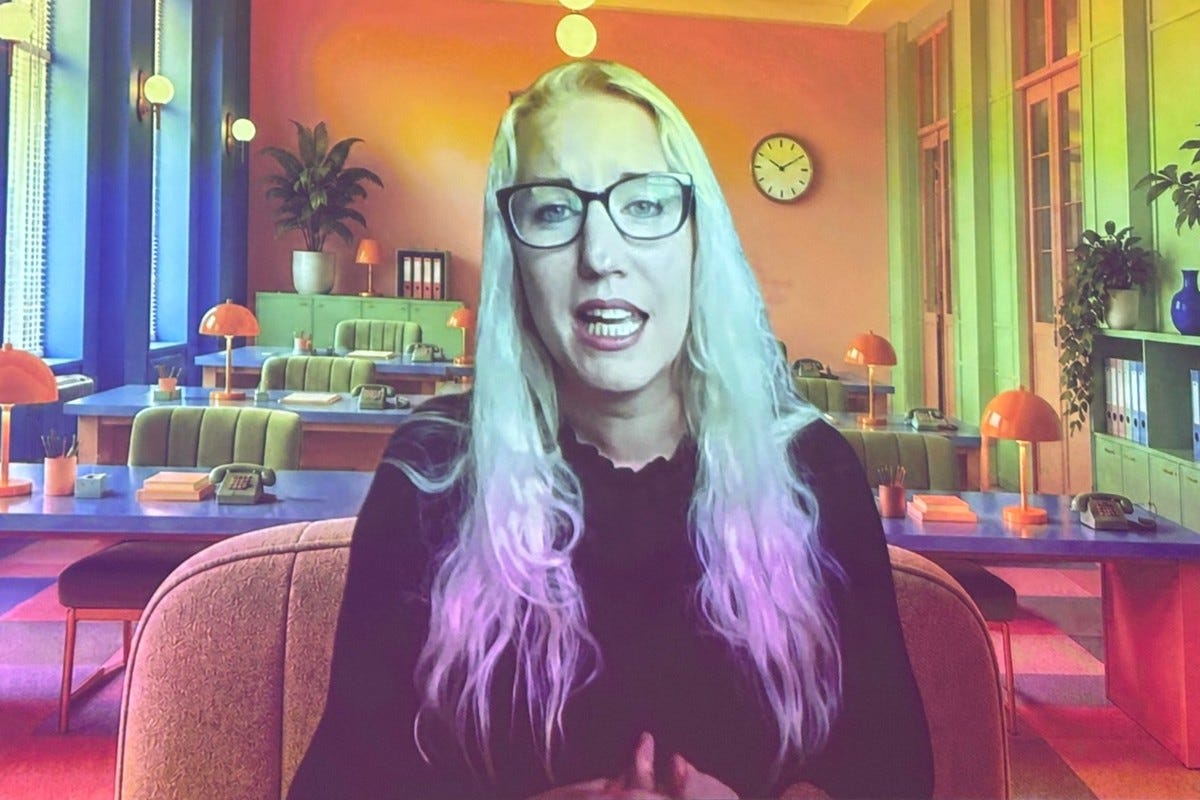
Bishop, a psychologist who advises the UK government and Parliament on AI risk, said every technology is eventually adopted once it becomes socially acceptable.
Robotics, unlike AI, is not new, and people adopt technology they find useful, easy to use and unthreatening, she said.
“At the start of 2025, if someone asked you if you were using Copilot at work, you would be ashamed to say yes,” she said. “By the end of the year, you were ashamed to say no because then you looked unproductive.”
“Some jobs will go, particularly heavily administrative jobs,” said Louisa Finlay, Kier Group's chief operating officer. “Does that mean people need to lose their job if they’re willing to reskill and be curious? There are other jobs available.”
Kier builds and maintains UK roads, schools, hospitals, prisons and water networks. It sees automation as a productivity opportunity within its growth agenda.
Finlay said staff can get excited about automation when managers point to specific examples of the tedious, unpleasant work it will remove, as long as they are completely honest about what will change.
“The humanoid form factor that everybody is thinking about is kind of practical because it mimics the behaviors, so you can anticipate what the robots do,” said Roland Scharrer, senior partner in the digital and analytics practice at consultancy Kearney. “On the other side, it’s a little bit of a threat because when I see that humanoid doing my job, that is the counterbalance when it comes to adoption.”
From paperwork to planning
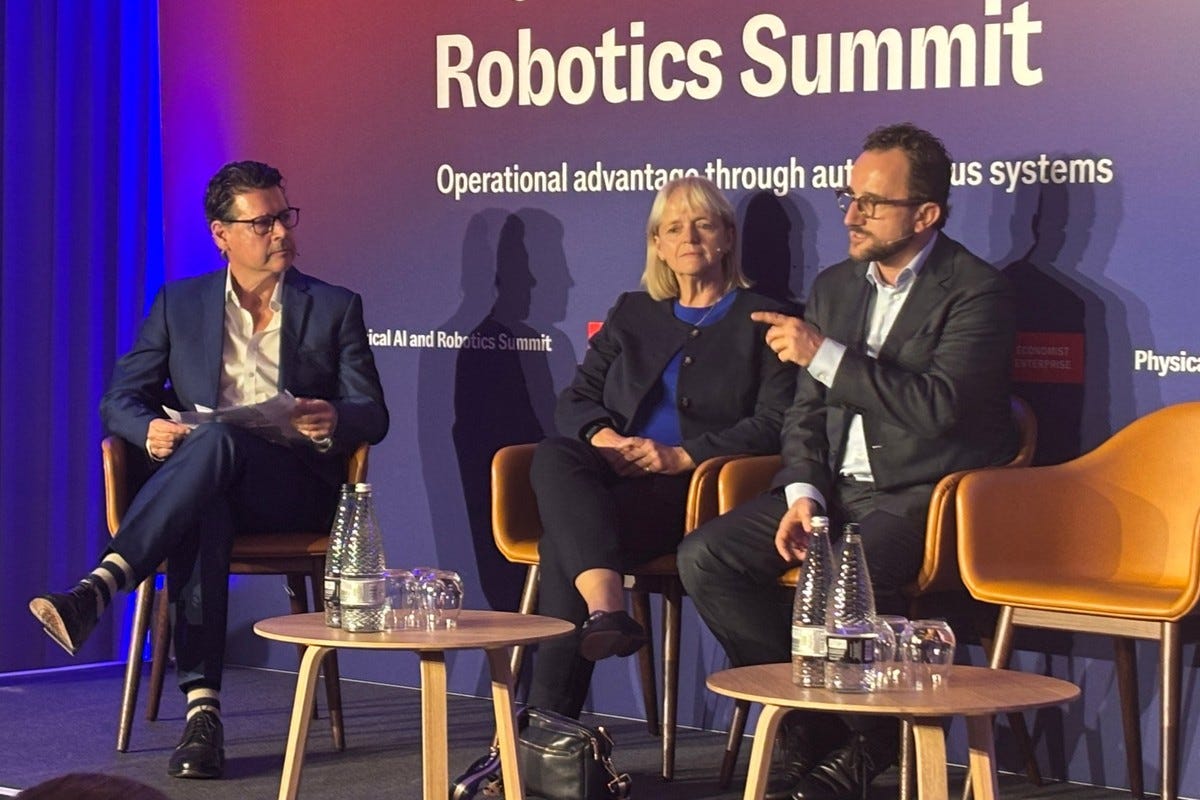
The panel took place at the Physical AI and Robotics Summit, organized by Economist Enterprise in London on October 13. Greg Williams, global head of technology and innovation thought leadership at Economist Enterprise, moderated the discussion on how humans and robots can work side by side.
Finlay said finance staff can hand over administration and reports to focus on risk, opportunities and mergers and acquisitions.
“Our HR (human resources) professionals are going to be doing a lot less paperwork and a lot more skilled workforce planning,” she said. “If we use more autonomous vehicles, operatives can be part of planning the work, doing the logistics for the work, working out the plan that we can then use robots to deliver, rather than them having to be outside in the cold or less good environments.”
She said Kier already uses basic AI to strip out administrative tasks and show staff what is possible. In her view, most jobs will adapt rather than vanish, and the most exciting future roles will bring intelligence, innovative ideas and curiosity rather than simply checking a machine’s work.
“I believe heavily it’s humans in charge, and it’s not just humans; it’s humans at the helm,” Finlay said.
Scharrer said his own work has shifted from white-collar AI adoption to the blue-collar side, at airlines and tier-one automotive suppliers. He said dark warehouses run only by robots are relatively easy to manage, unlike robots working alongside fire brigades in dangerous, time-critical situations.
“It gets complex as soon as you have humans and machines interacting, and at a certain stage, they have to work as a team,” he said. “That is something where we have just started to evolve, and we have to find a new way of integrating human-machine work in such a way that the human feels confident and the machine can be used at its best where necessary.”
A computer engineer by training, he recalled that programming a robot by hand 20 years ago was a painful exercise.
Bishop said the shift in how people perceive robots may be smaller than expected, as humans have long secretly operated many robots, a practice known as “Wizard of Oz” testing. She said the harder task now is building trust as digital twins and simulations interact with the physical world.
“People have been perceiving robots to be intelligent for a lot longer than we realize. They’ve been Wizard of Oz-ed for quite some period of time,” she said.
Who carries the risk?
Scharrer said three parties share the risk of a robot’s mistakes:
the supplier
the operator
the board that deploys it
“The worst thing that can happen is if you’re giving somebody the accountability but no possibility to influence,” he said. “It doesn’t make sense to do finger-pointing. The important thing is to figure it out at the beginning.”
A former insurance underwriter for autonomous cars, he said workers overseeing robots must be able to override and stop them, and that all parties must agree up front which risks they carry and which they pass to insurers, measured in money and bodily injury.
He said the danger lies less in the AI than in the machinery.
Bishop said many questions remain unanswered, such as how a driverless car should choose between hitting a child and hitting three older people. She said people worldwide are holding off on making a decision, and warned that human skills degrade when they aren't maintained.
“The one thing we do know is that the responsibility can’t be on the human. We’re cognitive misers. We’re really lazy,” she said. “If we hand something over to a system, we will back off and back off until the very last minute, and then we will take handover, and that’s a dangerous point.”
BSI’s AI committee, made up of about 140 experts in psychology, law, human rights, technology, government, and academia, is working on these questions, and its standards are open to public consultation.
“On the one hand, it can’t be humans, and on the other hand, it can’t be solely the machines,” Scharrer said. “Do the humans have a possibility to stop the robot, and are they fast enough, or do we hand over even the oversight of these machines to some entity that is not us anymore?”
He said airlines are deploying robots in ground operations, where workers loading baggage breathe tarmac fumes every day.
“These are harmful places. These are safety-related places. You can see movements of robots into safety- and danger-related areas, and that is something from an employee point of view very much appreciated,” he said.
Safety is the starting point at Kier, Finlay said. The company already uses autonomous vehicles, robotics in demolition, and drones to keep people out of harm’s way, and is moving more work into factories to raise productivity.
She said workers trust robots more when the technology solves a problem they identified themselves. Many Kier operatives learn visually, not from paper.
“If people identify something that is difficult, and then they can bring in a robot or technology to help them solve it, quite often because it’s that solution, they trust it,” she said. “People adopt it when it’s their own solution.”
Scharrer cited a Stanford University diving robot with hands and a head, co-designed with divers who communicate through hand signals.
Bishop urged companies to take part in upcoming AI and robotics safety standards. Finlay said the debate over accountability will run for years and is likely to change over time.