


Robotics for healthcare and space applications is emerging as one of the strongest areas of momentum in the automation economy, offering near‑term commercial traction and long‑term structural growth. While headlines continue to focus on AI infrastructure, meaningful advances are accelerating in quieter corners of the robotics market.
These shifts mark a new phase for the sector, where practical deployment, cost efficiency, and performance gains are shaping investment priorities. Adoption is rising across surgical systems, autonomous mobility, and orbital robotics, creating clear pathways for scalable innovation.
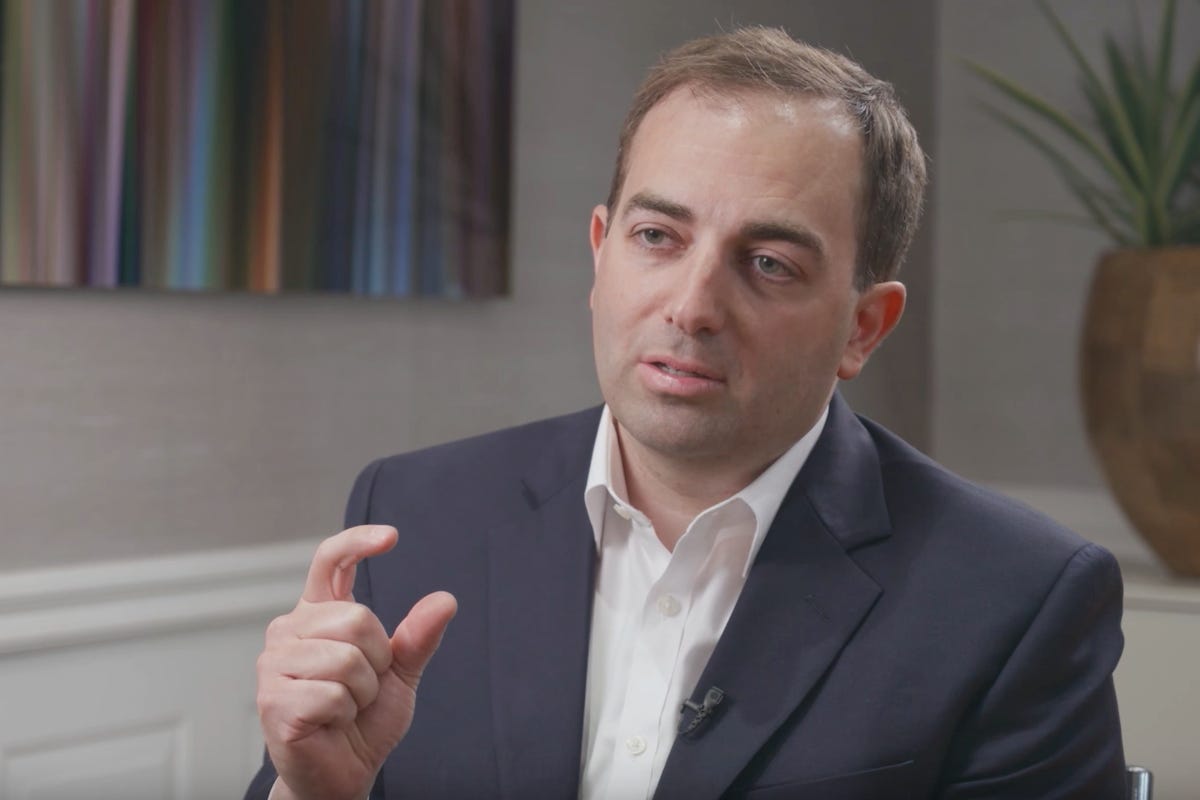
“Healthcare robotics is doing really well and has a lot of potential by integrating AI into the system,” Jonathan Cohen, Chief Executive and Chief Investment Officer of Robocap Asset Management, told TechJournal.uk in an interview.
Space‑focused robotics is also emerging as a fast‑moving segment, supported by falling launch costs.
“The cost of sending one kilogram to space has dropped from $50,000 a decade ago to less than $1,000 today,” he said.
“Space robotics can be a robotic arm in a space station, or it can be satellites that can be used for telecommunication, observation, exploration, or even defense. So it is a very broad thing that is beyond the imagination in science fiction of humanoid robots,” said Cohen.
Robocap has increased its research focus on aerospace automation over the past year, reflecting rising commercial demand and nation‑state investment. The sector’s intersection with telecommunications — particularly in low‑earth‑orbit networks — is expected to drive new revenue streams for robotics suppliers and component manufacturers.
Robocap’s investment universe also includes some of the sector’s most recognized names. Cohen noted that one of the firm’s early high‑conviction positions was Nvidia, which it began buying in 2017 when the company was still primarily associated with video‑game graphics. He viewed Nvidia as one of the strongest ways to gain exposure to AI acceleration long before generative‑AI models reached mainstream attention.
Healthcare Robotics
Healthcare robotics continues to deliver strong, consistent growth. Unlike the volatility seen in consumer‑facing AI applications, surgical and clinical automation technologies benefit from recurring revenues and long adoption cycles by major hospitals.
“If you think of surgical robots, for example, surgical robots would have no legs because they don’t need any, and they could have forearms because they’re quite handy for the surgeon,” said Cohen.
He referenced robotic surgical systems, where instrument replacement, training services, and maintenance collectively account for around 85% of manufacturers' total revenue. This supports stable business models with predictable operational cash flows.
Cohen added that integrating AI into surgical workflows is accelerating innovation, enabling systems to augment precision, improve safety, and support clinical decision‑making.
The healthcare robotics market remains undervalued in media coverage relative to its financial performance. Continuous innovation — from teleoperated surgery to robotic diagnostics — is creating new competitive moats. Cohen said the category is poised for further expansion as hospitals seek efficiency, accuracy, and reduced recovery times.
Autonomous Vehicles
Autonomous vehicles have reached a pivotal point.
“Everybody was saying a lot about autonomous vehicles back in 2017, with some disappointments with the first accidents,” he said. “But now the technology is ready.”
Although early expectations for rapid deployment were unrealistic, he said the technology has now achieved reliability metrics that surpass human performance.
Insurance industry data indicates that autonomous systems are “10 to 20 times safer than humans, according to large insurance companies,” placing the remaining challenge squarely on commercial scalability rather than technology.
Significant advances in fleet‑level deployments are expected over the next five years, particularly in logistics, ride‑hailing, and industrial transport. He said that while regulatory frameworks continue to evolve, the commercial incentives for automation are strong, given the combination of safety, efficiency, and reduced operational costs.
He also noted that robotic taxis and autonomous delivery systems are expanding test operations in multiple geographies. However, he cautioned that some early‑stage platforms, particularly those developed in specific markets, rely heavily on remote control rather than full autonomy — a sign that technological maturity still varies widely.
Cohen’s path into robotics investing stems from more than two decades in thematic asset management. After graduating in Management with a major in Finance from the University of St Gallen, he began his career at Bedrock SA in Geneva and London, later joining Goldman Sachs as an Associate Investment Professional.
He went on to serve as CIO of Huet & Cie BV before leading the US team at London & Capital as Senior Portfolio Manager. His early hands‑on experimentation with drones reinforced his conviction that automation and AI would underpin a new industrial revolution. This conviction ultimately led him to establish Robocap in 2015, with initial assets of $4 million.
Robocap, now marking its 10th anniversary with AUM of $200 million, has expanded in step with the rising global adoption of robotics and AI. Conceived as a boutique, specialist investment firm, it maintains a pure‑play focus on listed robotics and AI companies.
By investing only in publicly listed firms rather than venture‑stage or pre‑IPO startups, Robocap targets businesses with proven revenue models and clearer paths to profitability. Its advisory board — comprising leading academics and engineers in AI, drones, surgical robotics, space systems, and humanoid robotics — provides the technical insight that shapes its thematic investment decisions.
Robocap operates three specialized strategies:
Robocap UCITS Fund – a pure‑play listed‑equity strategy focused on robotics, automation, and AI, typically holding 25–40 companies selected from a global universe of about 350 names.
Robocap Partners Fund – a Cayman/Delaware master‑feeder structure that pursues absolute returns and allocates to companies with at least 40% of revenues tied to robotics, automation, or AI.
Robocap AI Cyber Security Certificate – an actively managed certificate investing in companies applying AI to cyber defense, driven by cloud expansion, cyber‑talent shortages, and the rise of AI‑enabled attacks.
Robotics Frontier
Humanoid robots remain at an early stage of commercial readiness.
“A number of the Chinese humanoid robots we have seen are not really autonomous. From what we saw, they tend to be remotely controlled,” he said.
He explained that engineering challenges — including durability, battery performance, and locomotion — still limit commercial deployment. For Robocap, humanoid robots are not yet an investable category. The firm plans to monitor the space over the next few years rather than take early positions.
Cohen noted that “five years from now, it should become more interesting,” once reliability improves and more apparent competitive advantages emerge.
Competition in humanoid robotics is expected to intensify between emerging Chinese manufacturers and established U.S. and European firms. While early models may find limited use cases, long‑term potential remains significant, from manufacturing support to hazardous‑environment operations.
Beyond robotics, Cohen identified silicon photonics as a foundational technology for the next generation of AI data centers.
“Within the AI chips, an area which is really of interest to us is the networking aspects of those AI data centers,” he said.
He said networking hardware in these facilities accounts for “about two‑thirds of the energy consumption,” creating urgency for more efficient interconnects.
He projected that the shift from copper‑based connectivity to fiber optics will accelerate rapidly as AI workloads grow. Silicon photonics enables faster data transmission, reduced energy loss, and higher operational density — all critical for sustaining AI training and inference at scale.
Cohen added that the technology is becoming strategically crucial for hyperscalers and semiconductor manufacturers, positioning it as one of the most attractive emerging segments in the AI hardware supply chain.
For the year ahead, Robocap’s priorities center on performance, continued identification of emerging technological trends, and disciplined portfolio construction, while also expanding investor engagement. The strategy is strengthened through collaboration with global robotics specialists and extensive engagement with companies across continents.