Genomics is on a collision course with its own computational limits. The volume of DNA data that must be processed to deliver personalized medicine is growing faster than classical computers can handle, and a world-leading research institute believes quantum computing is the only credible answer.
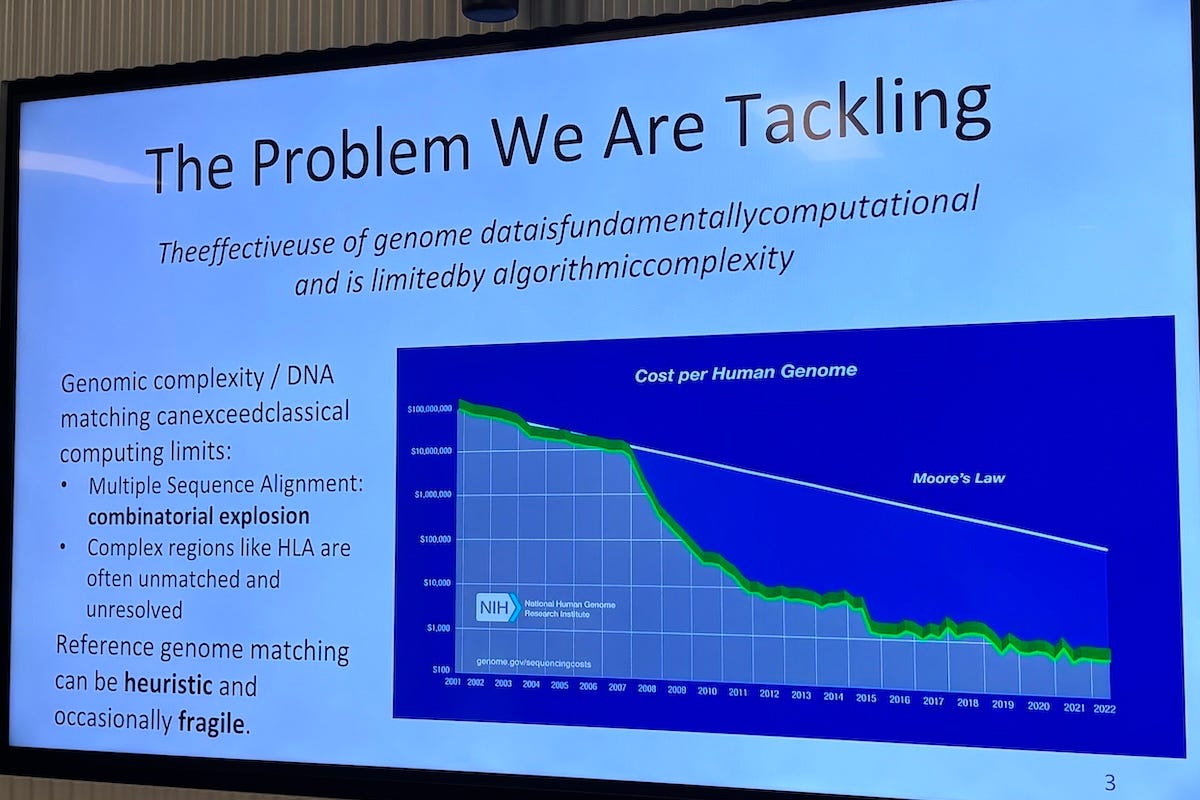
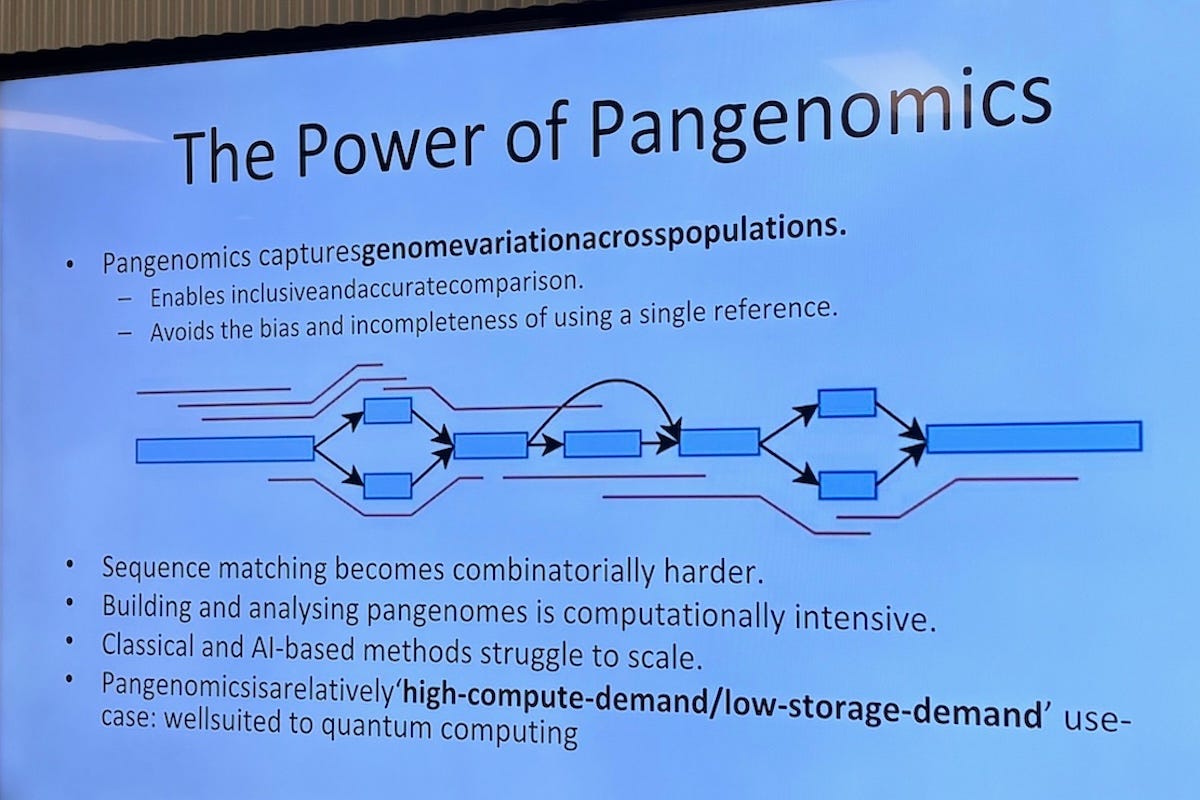
For most genomic workloads, classical methods remain sufficient. But as medicine moves toward whole-genome sequencing for individual patients, projected to cost as little as $50 per person, the matching problems involved become too large and too complex for heuristics-based approaches to handle reliably.
“Genomics eats Moore’s Law for breakfast,” said James McCafferty, chief information officer of the Wellcome Sanger Institute. “So much of the classical work in genomics is based on heuristics and can be very fragile. When you get into the world of precision medicine, where you can’t be forever applying heuristics, then you need to be thinking about new technology.”
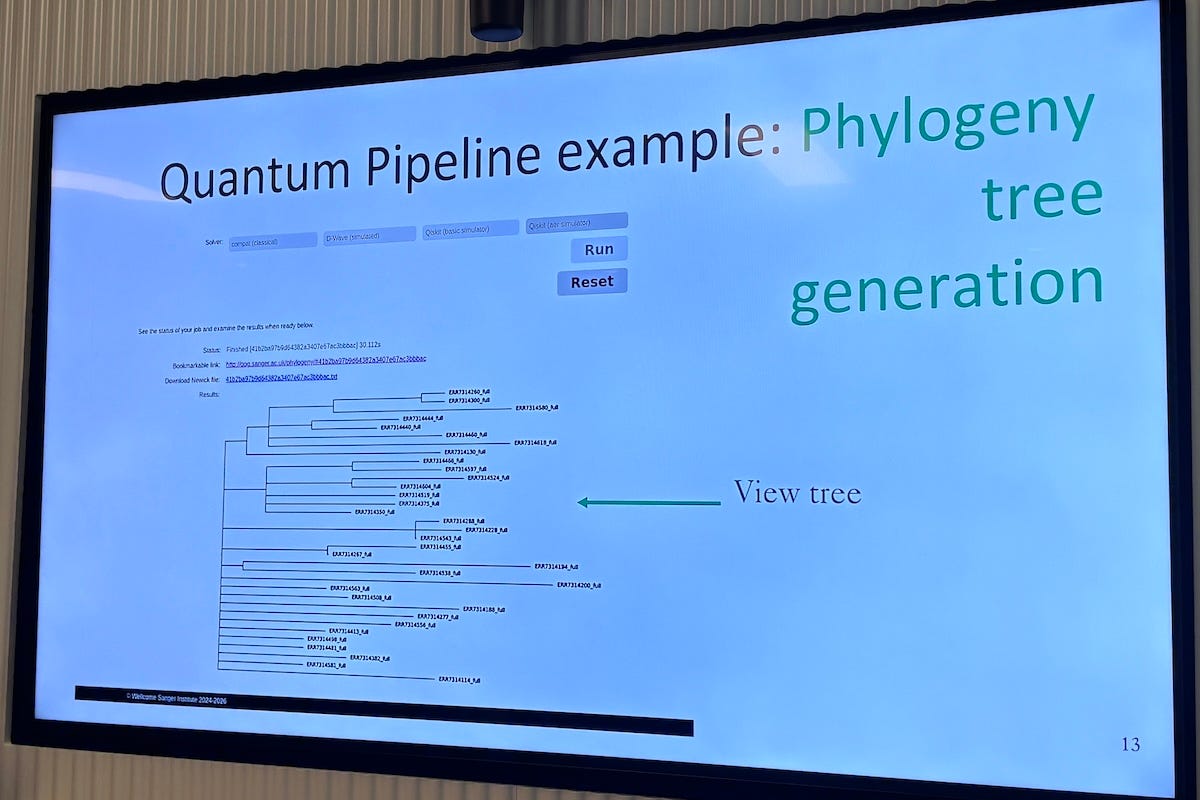
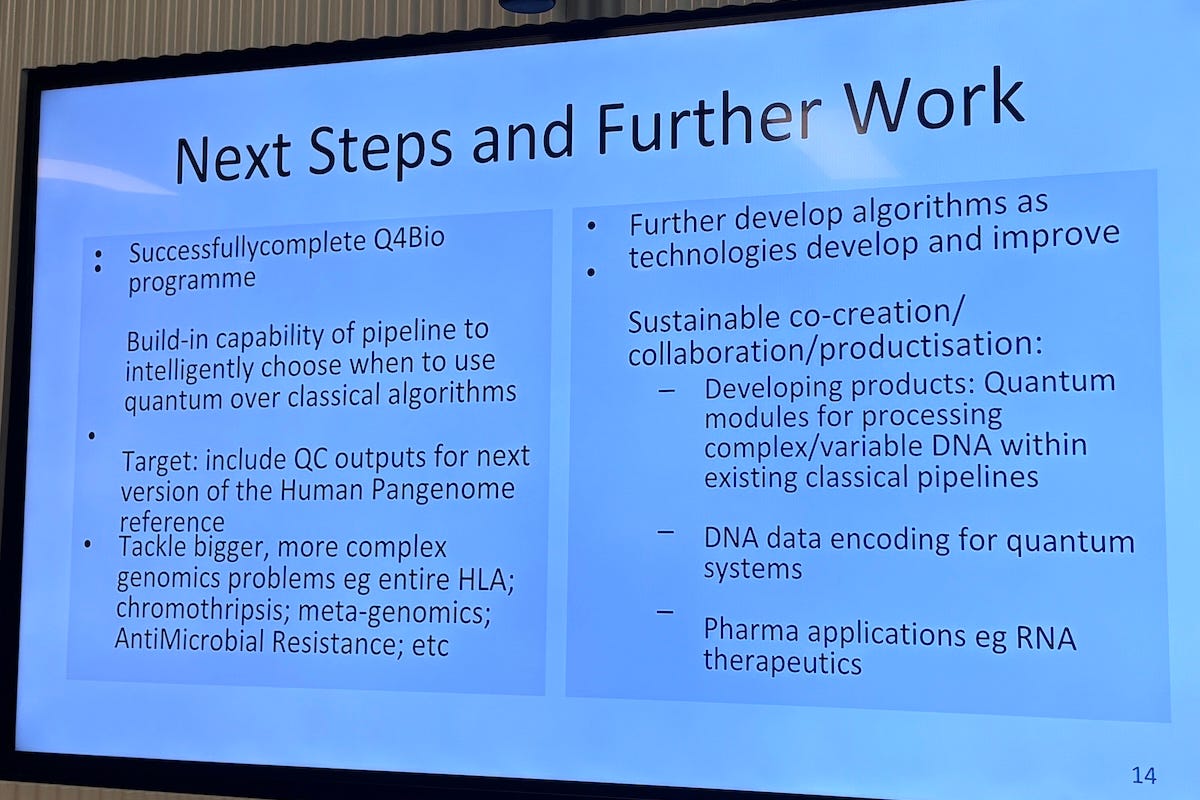
The Wellcome Sanger Institute has already loaded the hepatitis D genome onto a quantum computer, a first for the field, and is working progressively toward more complex targets: the SARS-CoV-2 spike protein and, ultimately, the human leukocyte antigen region, which encodes the entire human immune system across approximately 60 million DNA bases.
“There is no field called quantum genomics, but we are going to create that field, and we are going to develop the fundamental algorithms that allow us to execute through some of these most difficult problems,” McCafferty said.
He said one goal is to build intelligence into the pipeline so that classical algorithms know when they have reached their limit and when to invoke quantum processes instead. He added that cancer is the institute’s most significant long-term target, given that the disease is almost entirely driven by genetic mutations.
Scaling toward a million qubits
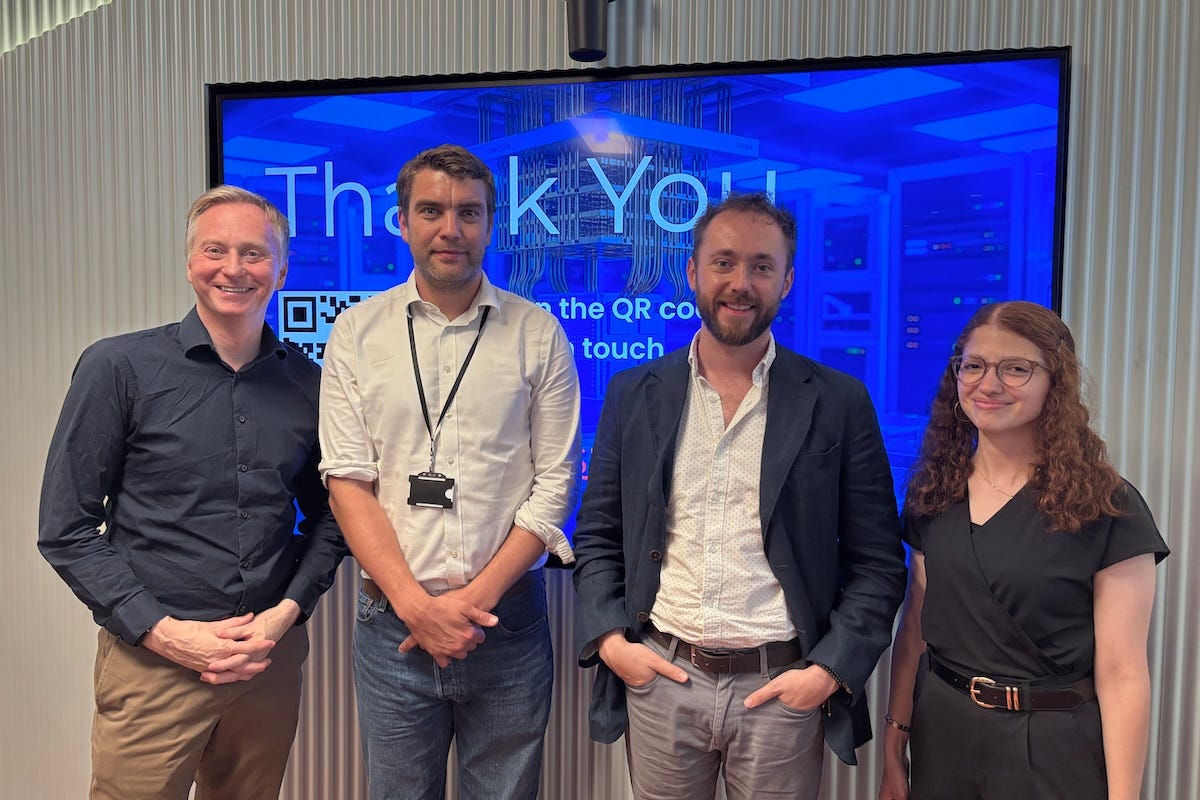
The presentations were delivered at the QBase Real World Use Case Showcase, held on June 1 in London and organized by EdenBase Ltd. The event was moderated by Dr Eloisa Angeles, partner at EdenBase, and brought together five quantum leaders to demonstrate practical applications of quantum technology across sectors.
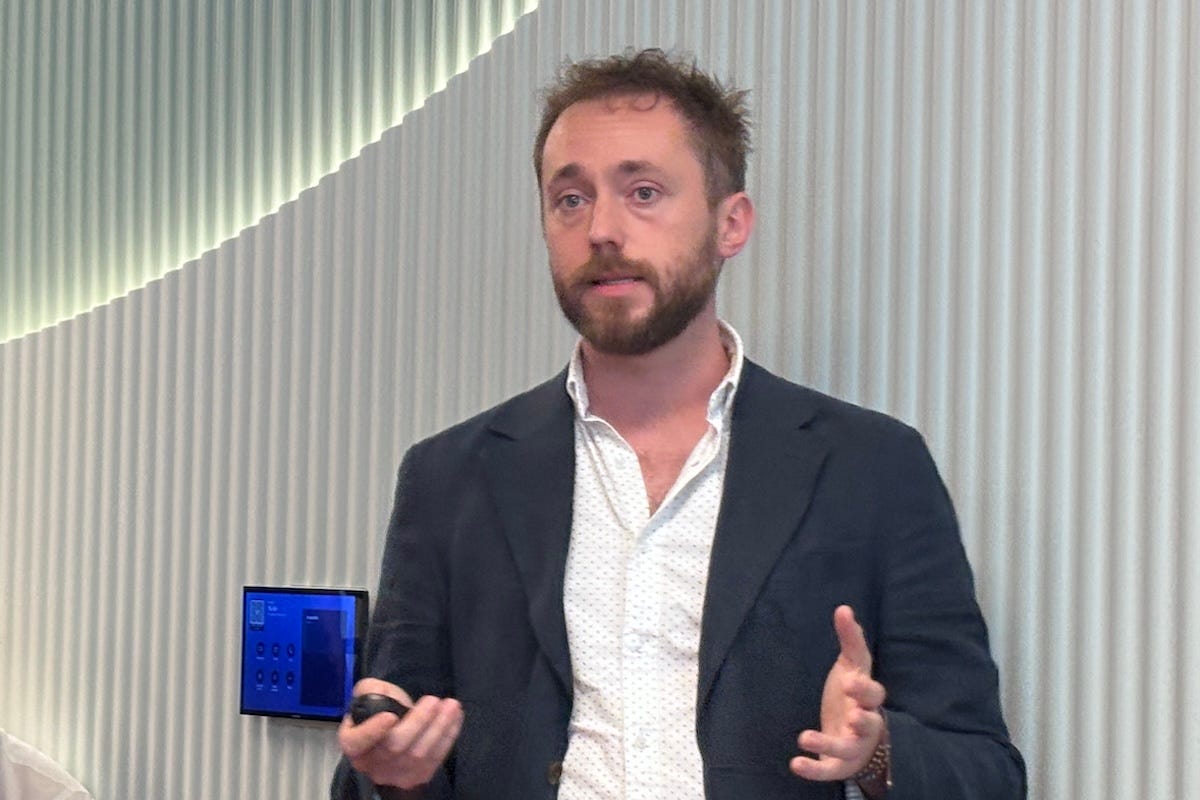
Mark Webber, head of quantum algorithms at Universal Quantum, opened the session with a frank assessment of where the industry stands.
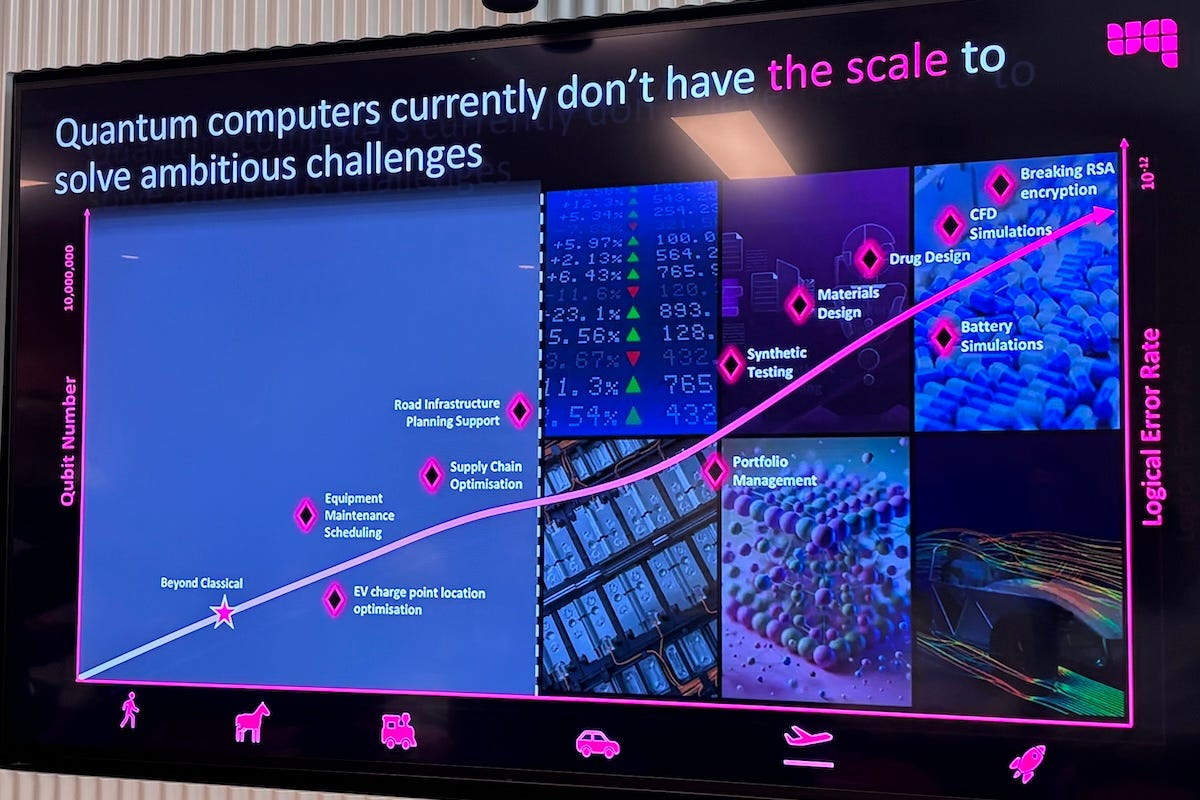
Today’s machines carry between 100 and 1,000 qubits; the applications that matter most require 100,000 or more. Yet resource estimates are falling. The number of physical qubits needed to break RSA encryption has already dropped from an early estimate of 50 million to approximately 100,000, as algorithmic and error-correction techniques have improved.
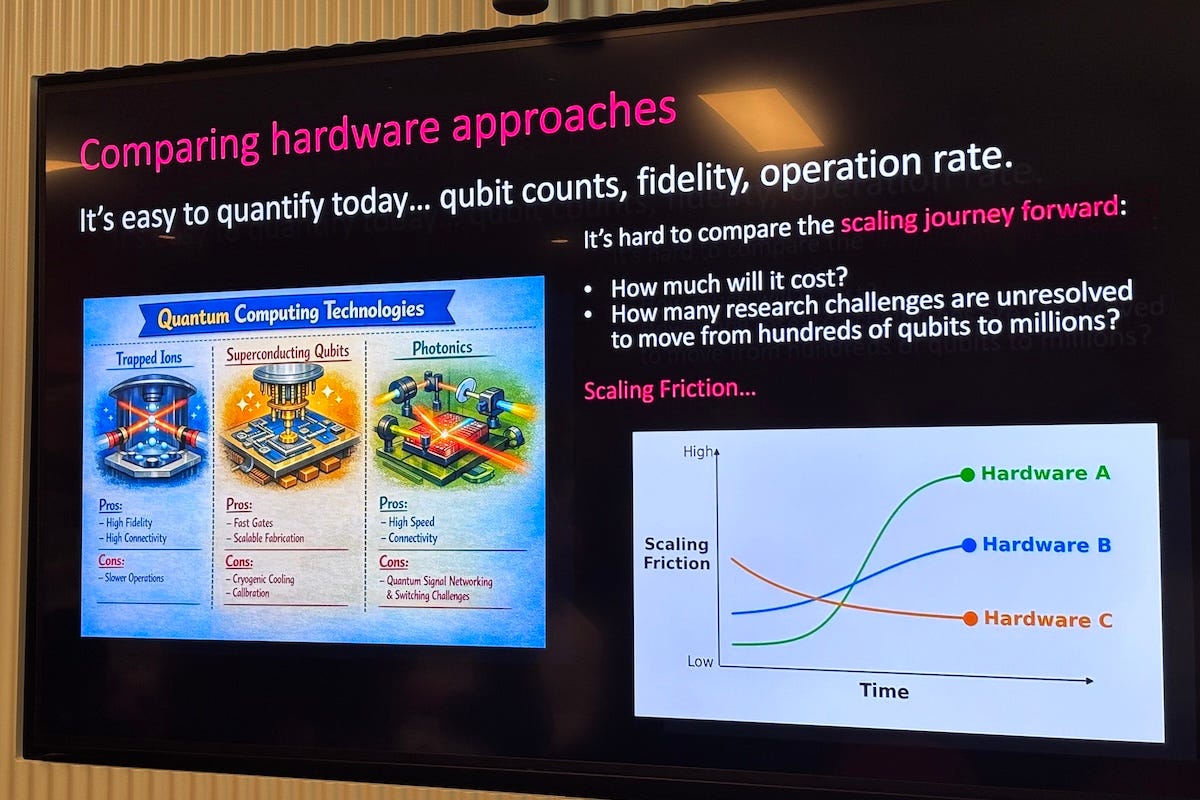
“We are not yet at the scale to solve these problems in a way that provides an industry or research advantage,” Webber said. “But the hardware is developing very rapidly, and hardware platforms focused on scaling feel that they can get to this scale relatively quickly.”
Universal Quantum builds trapped-ion machines and has focused from the outset on reducing what Webber called scaling friction. The company, which has more than 100 staff in the UK and Germany, collaborated with Rolls-Royce and River Lane on a computational fluid dynamics (CFD) project to optimize airflow through aircraft engines. The approach runs the linear component of the problem on the quantum computer while retaining a classical optimizer in a hybrid loop.
“Quantum computers work best on linear problems,” he said. “In the case of CFD, there are relatively straightforward ways of mapping this to a quantum computer. The challenges of getting the data in and getting it out are where the key work has been focused, and solutions are now relatively well understood.”
Quantum inside the data center
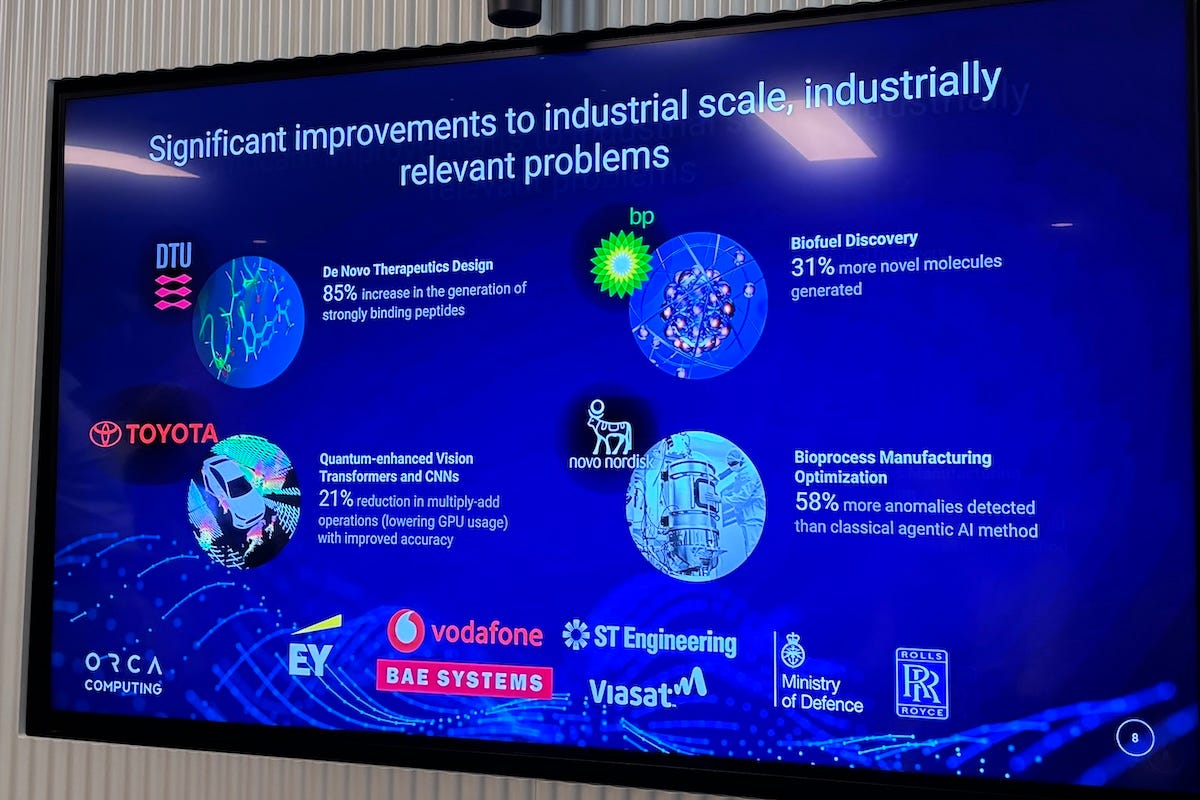
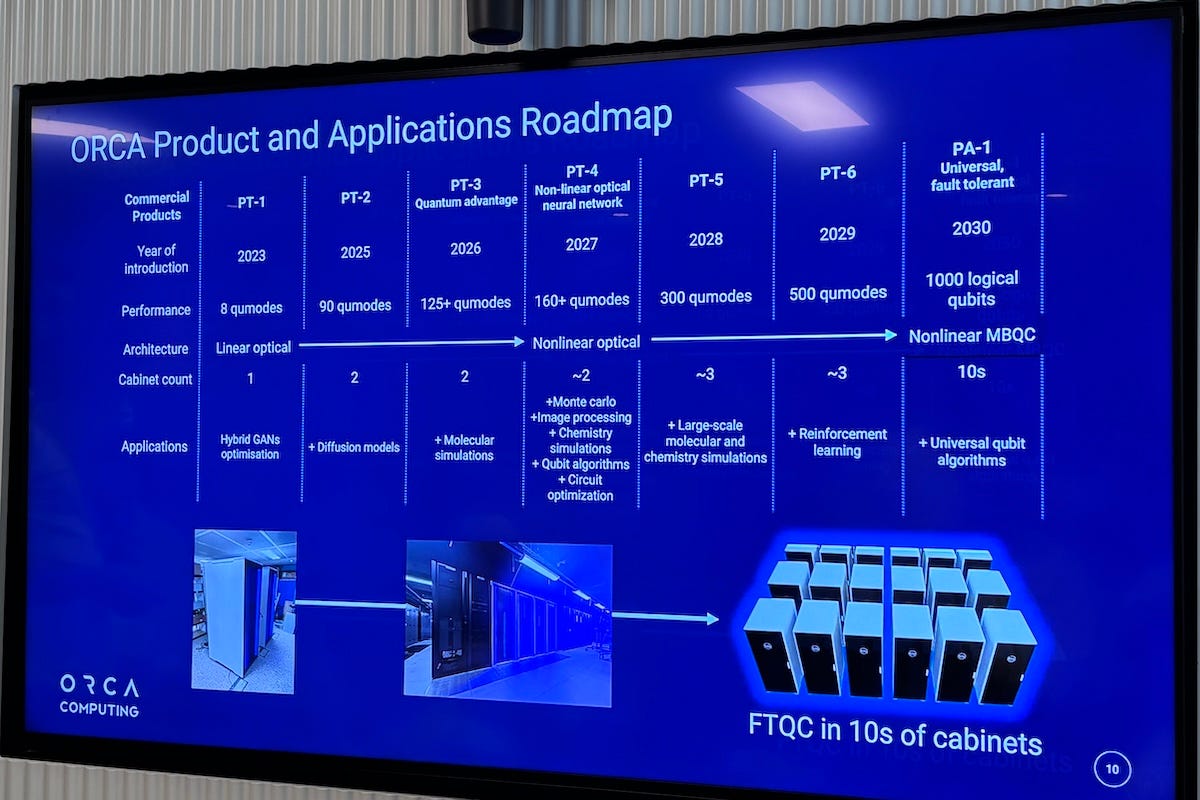
Richard Murray, chief executive and co-founder of ORCA Computing, said quantum’s most immediate opportunity lies not in replacing classical computers but in being embedded within them. ORCA builds photonic quantum computers using off-the-shelf telecommunications components, operating at room temperature and installable inside an existing data center in approximately six hours.
“No computer that has ever been built operated in isolation,” Murray said. “Our observation is that quantum will not be any different, especially when you are looking to unlock the most near-term applications.”
He disclosed that ORCA recently installed one of its systems within the Toyota data center, a commercial data center in Japan.
“This hybrid future is not so much future; it is about what you can do today,” Murray said.
The company is embedding small quantum subsystems within classical generative artificial intelligence (AI) models, demonstrating results in generating new peptides for chemistry, image-data pattern recognition and cybersecurity.
“What you have to do is provide the tools so that machine learning engineers can do quantum through a well-organized software stack, without worrying too much about it,” he said. “They are already in demand. They cannot take a sabbatical to go and do a PhD.”
During the Q&A session, Murray addressed the geopolitical pressures bearing down on the industry. He said the US government has injected approximately $1 billion into IBM and is taking equity positions in domestic quantum firms, while France restricts quantum procurement to French companies. Trade restrictions have caused components sourced from China to the US to double in price overnight.
Murray said the industry is operating in what he described as a massive commercial, geopolitical and security race.
“Strangely, we are trying to build some tech in a world where half of the discussion is about geopolitics,” he said.
Finance optimization benchmarked
Irene Papaefstathiou, quantum solutions lead at Qoro Quantum, brought the discussion into financial services. Classical computers are hitting practical ceilings in areas such as portfolio optimization, stochastic risk modeling and fraud detection, she said. Finance practitioners routinely solve proxy models rather than the actual problem, because the real version is too computationally demanding.
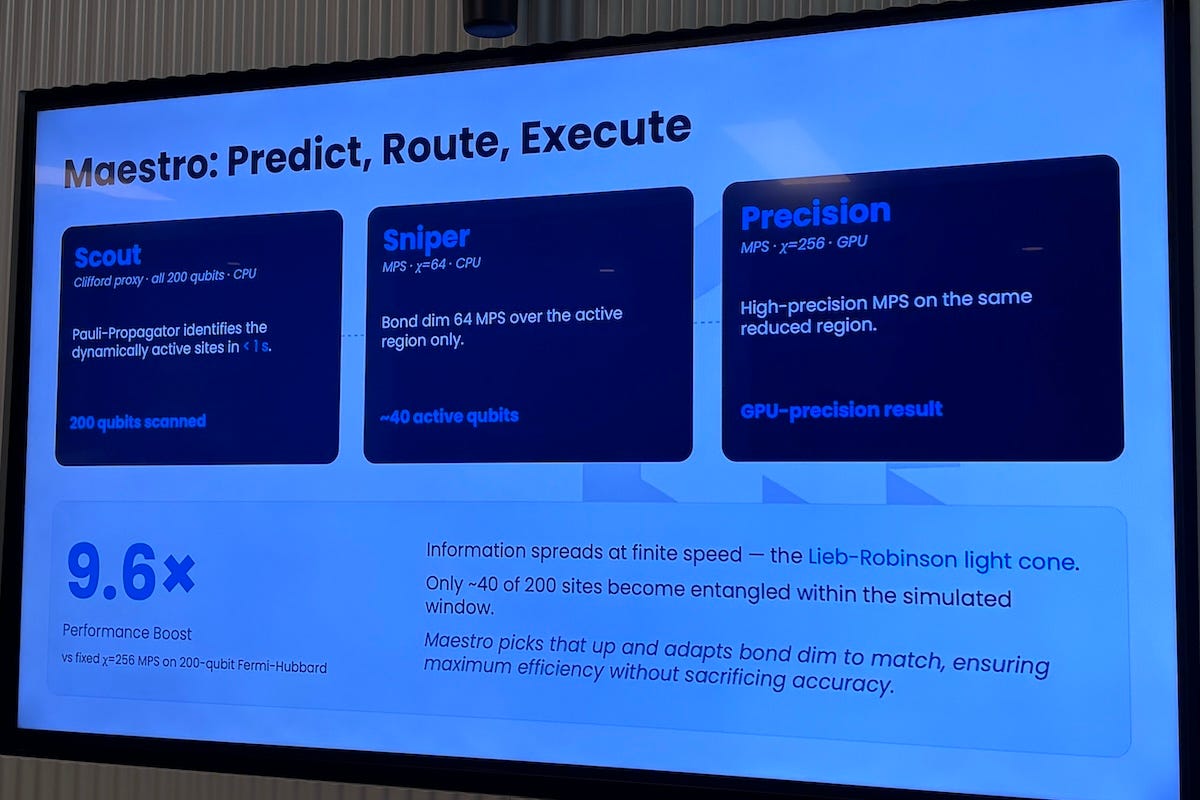
“It is clear that classical computation is hitting some walls in interesting problems in finance,” said Papaefstathiou, who previously worked on quantitative applications in finance at the quantum team of Moody’s. “You only need researchers to pick the problems they want to study, and then Maestro picks the simulation method that is most efficient. It is just 20 lines of code instead of thousands.”
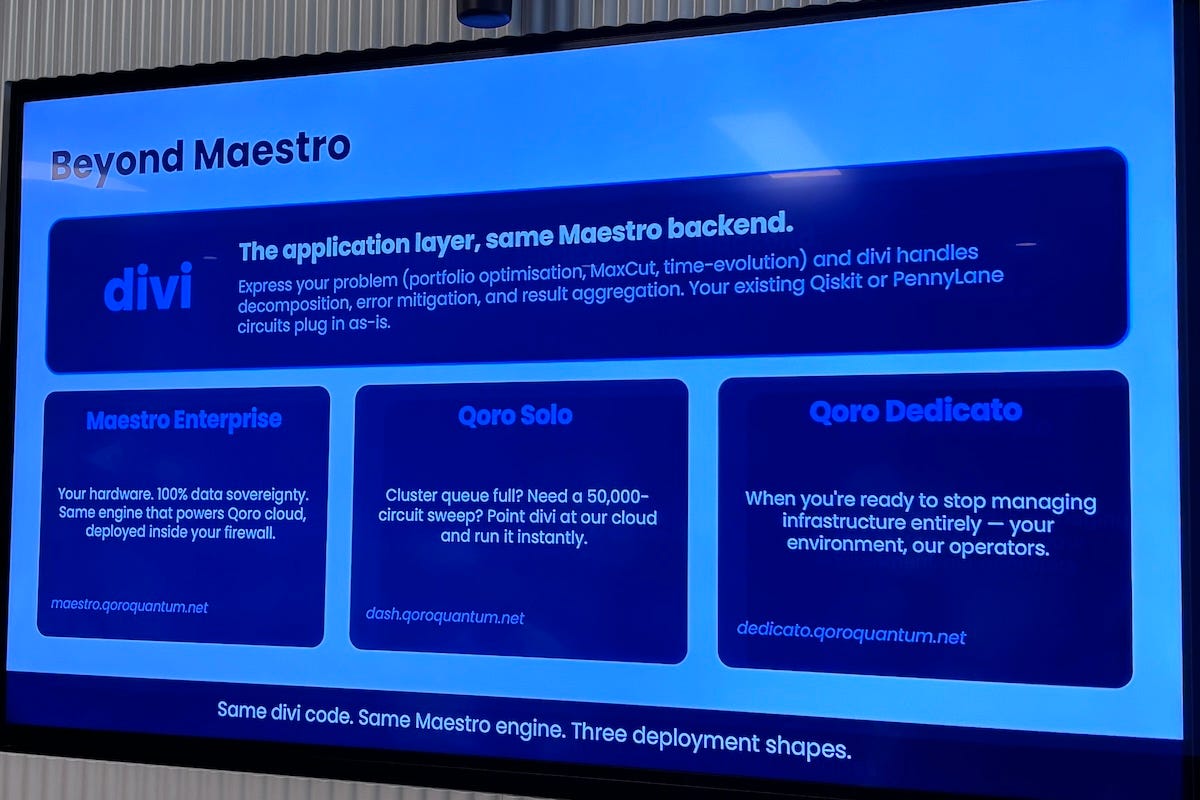
Maestro is Qoro Quantum’s execution platform, which allocates computations across CPUs, GPUs and QPUs without requiring users to specify how. In collaboration with Partners Computing and a central bank, the platform addressed a liquidity settlement problem by enabling banks to settle transactions instantaneously.
Without optimization, banks must hold 50 to 70% more liquidity than necessary. Qoro’s approach outperformed both simulated annealing and the central bank’s own heuristic solver across a specific parameter range.
Sensing what lies beneath
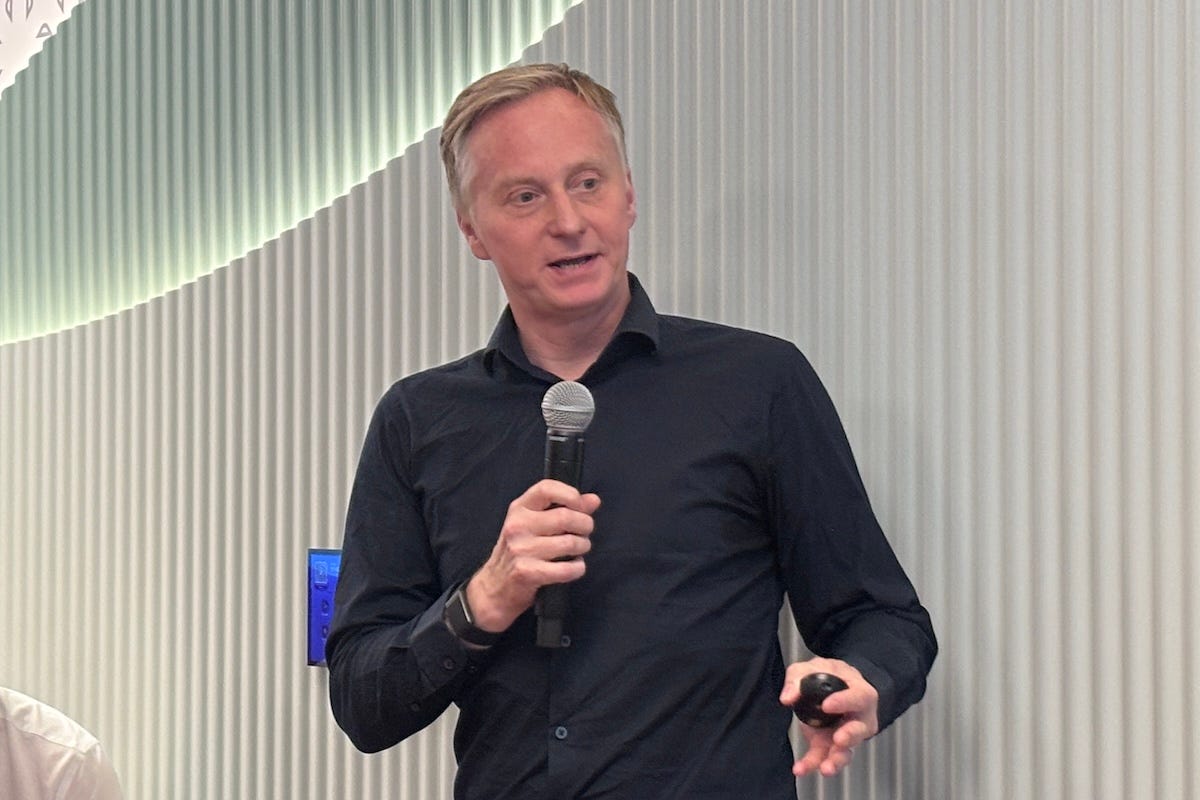
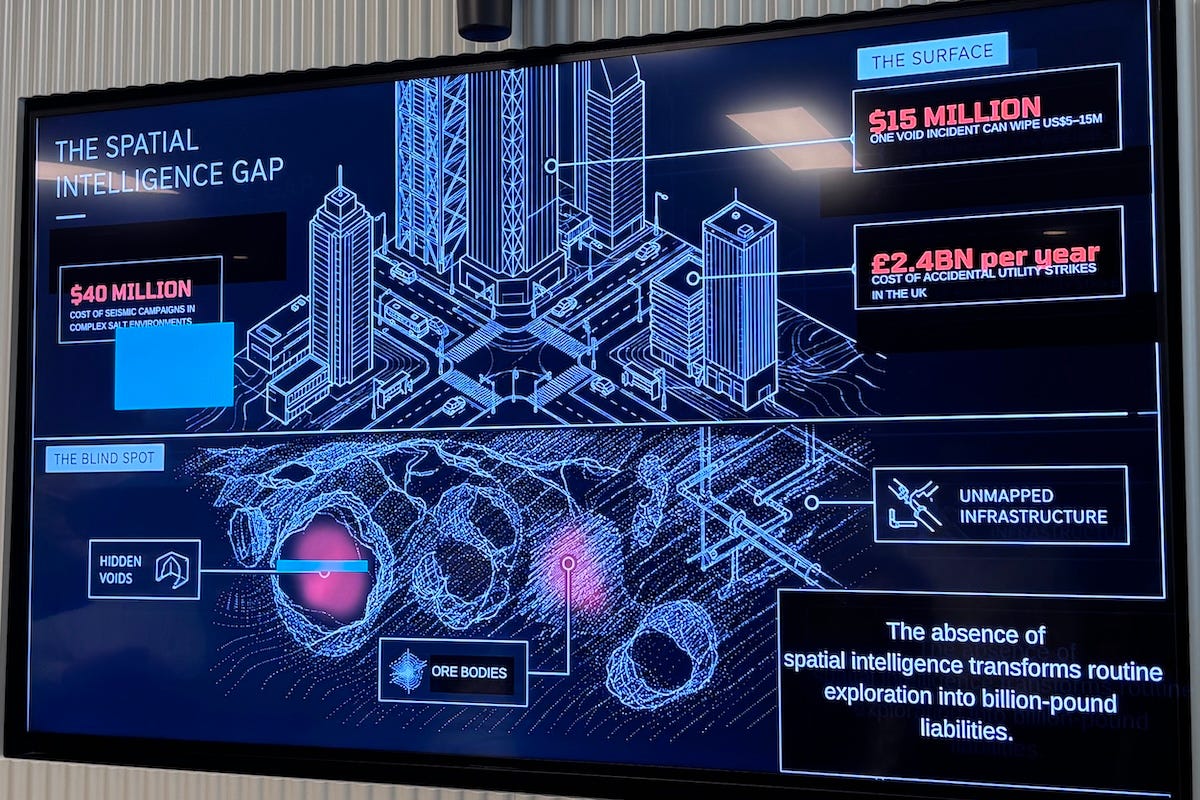
Tony Lowe, chief executive of Delta.g, offered the most commercially immediate use case of the afternoon: finding objects underground without drilling. Accidental utility strikes, the result of digging without knowing what lies beneath, cost the UK £2.4 billion a year.
Current underground sensing technologies, including ground-penetrating radar and magnetometers, are decades old, in diminishing returns and produce high rates of false positives and false negatives.
Lowe said he is not a quantum physicist but an operator, and that however impressive the technology, it means nothing unless it solves a real customer problem. He said his sole measure of success is whether quantum can deliver results today
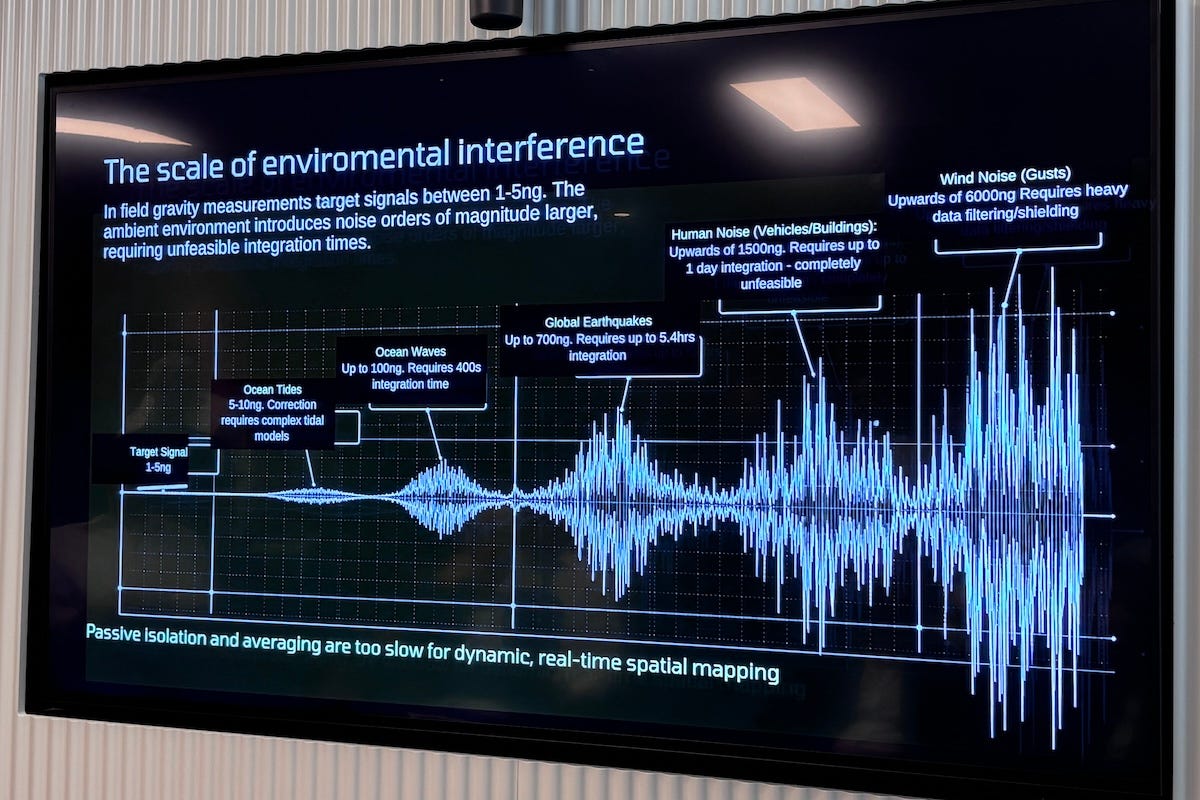
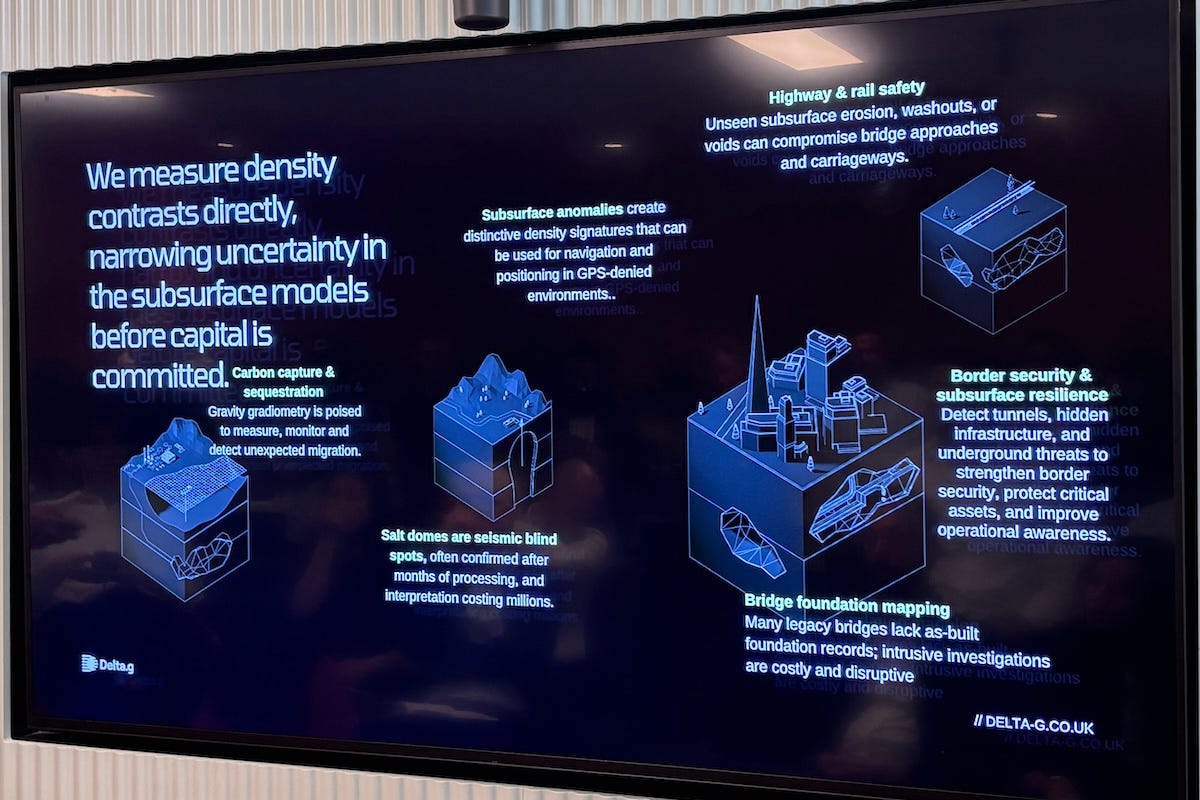
Delta.g’s quantum sensor cools rubidium atoms to temperatures colder than space, places them in a quantum superposition, then drops and measures them to detect gravitational density contrasts underground. Lowe described it as “noise-canceling headphones for underground survey,” eliminating environmental interference at source rather than measuring through it. The system is passive, unspoofable and requires no re-baselining.
The company is working with Saudi Aramco, BP, Shell and BAE Systems, and has delivered programs for the UK Department for Transport through National Rail and National Highways.
Lowe noted that Delta.g won a US government bid that was subsequently canceled and relaunched as a US-only bid, reflecting a broader pattern of protectionism that he said UK quantum firms must navigate.
He said his personal mission is to show that quantum can be useful in the near term, and that early industrial successes will strengthen the case for continued scaling.
“I personally have a vision that quantum will discover near-term applications,” he said. “On the back of significant industrial successes, we then have a system that keeps scaling.”
Closing the event, Eric Van der Kleij, partner at EdenBase and co-founder of QBase, said the willingness of competing quantum companies to share a platform was itself a sign of progress, describing the dynamic as co-opetition that he believes will help the entire industry move forward.