



Artificial intelligence (AI) is giving old-fashioned spy tricks a dangerous new edge, quietly reshaping the modern cyberattack.
Deception has always depended on exploiting trust, but AI has changed the scale of what’s possible. Systems that can scrape someone’s address, family details and finances in seconds give attackers a head start no human researcher ever had.
“When we talk about deception today, we’re basically talking about the human piece of it,” said Jonna Mendez, former Chief of Disguise at the CIA. “When we’re looking at artificial intelligence and looking at the potential it has to compromise a lot of human relationships, it becomes very important.”
Mendez learned to exploit that human piece decades before AI entered the picture, when the CIA staged a live, televised tracking exercise against the FBI on the streets of Washington DC, with Mendez and her husband playing the targets.
“It was important that we win, and we did,” she said.
The exercise required the pair to deliver a document to a decoy contact waiting in Georgetown while FBI agents tried to intercept them. They split up outside a hotel, forcing the agents to guess which of them was carrying it.
“Who’s got the football? Who do you think they followed? Of course, they followed my husband,” she said. “I was the wife; that was their mistake, so I turned into this old man. I smoked that cigar, I fooled the FBI.”
“Before AI, we had the capability to do a lot of background work on a particular individual,” she said. “AI can scoop up all the information about that person, information we would never have been able to use otherwise.”
She said the goal never changes: convince someone to hand over what nobody else can provide.
Later in the question-and-answer session, a reporter asked what the solution to deepfakes might actually be. She pointed back to the idea of trust.
“This whole idea is based on trust,” she said. “The way to protect yourself is to do the same thing we do. Look for the soft spots, for how they’re convincing people to talk to them. That’s where you need to dig and figure it out.”
“Young people are going to save us in the end because they’re so savvy,” she said.
Mendez joined the CIA in 1970 and spent decades living and working undercover across Europe, the Far East and South Asia.
She served in the agency’s Office of Technical Service, an equivalent to the fictional Q of the James Bond films, before rising to Chief of Disguise. She is a founding member of the International Spy Museum in Washington DC and has written several bestselling books about her career.
Field work still matters
Mendez was speaking at Infosecurity Europe 2026, a three-day cybersecurity conference in London organized by Reed Exhibitions Ltd. The keynote, titled The Deception Playbook, was introduced by Ciaran Martin, former chief executive of the National Cyber Security Centre.
Martin, now a fellow at Oxford and the SANS Institute, called deception the root of most cyberattacks.
In the Q&A, one attendee asked whether field officers are still needed now that cyber threats dominate. Mendez said the basics have not changed.
"That's one of the bottom lines," she said. "We always said you can't do it from an armchair. You've got to get up and cross borders. What kind of documents you use is always up for grabs. The idea that you can make a twin is kind of an interesting idea."
She linked the same theme to Moscow, the toughest posting for disguise work.
"I found no other country that uses disguise as extensively as we do, especially in Moscow, because I don't know another country that is so smothered by surveillance," she said.
The tools for finding and turning a source, however, have barely changed since the Cold War, she said. The starting point is always the same question: why do people betray their countries in the first place, over and over again, throughout history?
"History is full of traitors," she said. "Some traitors in one country are heroes in another."
She pointed to the Rosenbergs, executed in the United States for passing nuclear secrets to the Soviets, who are honored with a statue in Cuba.
Mendez said intelligence officers have distilled the reasons people betray their countries into a single acronym, MICE:
Money, straightforward payment for information
Ideology, a belief system strong enough to turn someone against their own government
Compromise, blackmail using information a target does not want exposed
Ego, resentment from people who feel overlooked or unappreciated by superiors
"There are a lot of disgruntled people in the world, people who didn't get the promotion they were sure they deserved, people who hate their boss," she said. "That's prize territory."
She said once a target with useful access has been identified, the challenge is approaching them without raising suspicion.
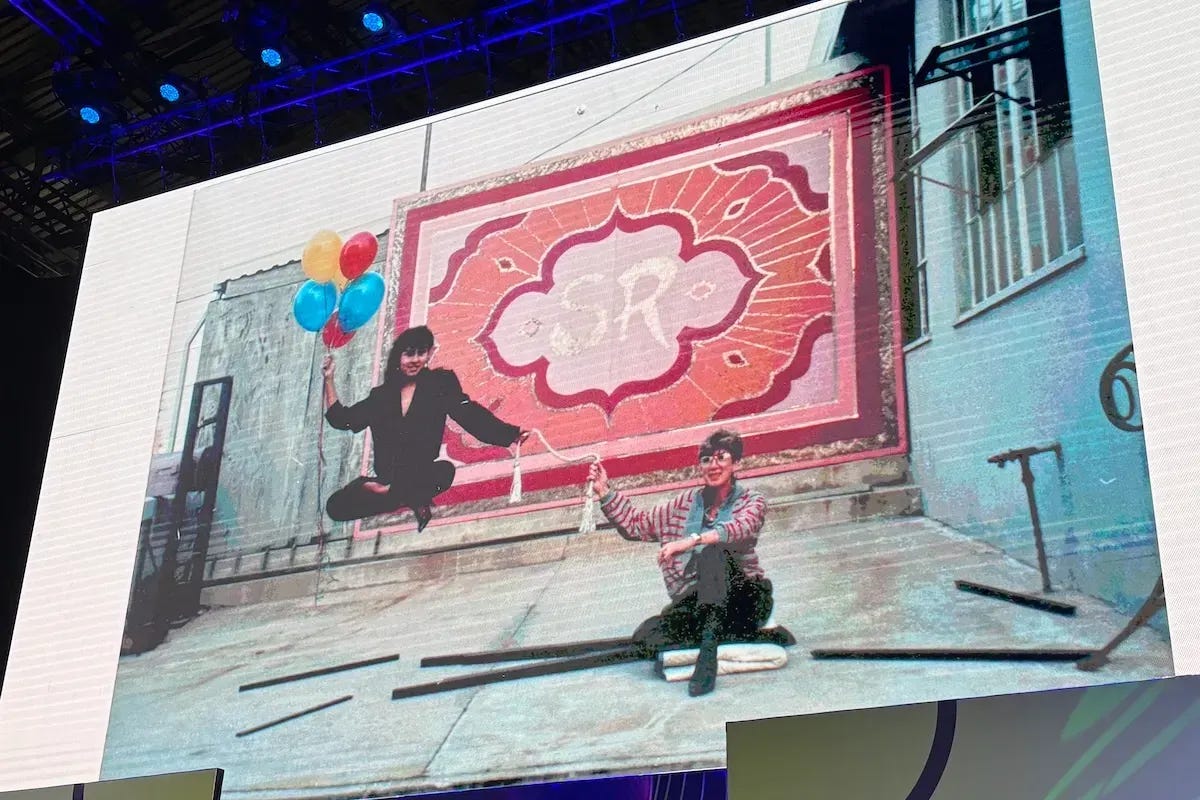
"You can't just go and ask him. You can't walk up with a lot of money. Nobody's going to do that," she said. "This is where this idea of targeting and deception comes in."
She said officers build a detailed profile of a target's life, home, family and finances before making any approach, work that has become far easier to do at scale now that artificial intelligence can aggregate personal data automatically, pulling together in minutes what once took field officers weeks to assemble.
When Hollywood met Langley
"My husband had a sense of humor," she said. "He took out ads in The Hollywood Reporter and Variety announcing a new movie going into production called Argo."
Tony Mendez, her late husband, led the operation, later known as the Canadian Caper, that used the fake film to rescue six American diplomats hiding in Tehran after Iran's 1979 revolution. He set up a real production company, Studio Six, pitching Argo as a science-fiction film and sending a crew to scout locations as cover.
The wider hostage crisis, involving 52 other Americans, lasted 444 days, though the six in hiding were successfully rescued.
“His job was to earn their trust and show them he could get them out safely,” she said. “One of them did not want to go. One of them had a real problem with it.”
Hasbro, the maker of Scrabble, later gave each hostage a monogrammed set.
The rescue was dramatized in Argo, the 2012 film in which Ben Affleck played Tony Mendez and directed. It won the Oscar for best picture the following year.
Mendez’s own specialty, though, was disguise. She spent years developing tools that let CIA officers and assets change their apparent age, gender and ethnicity, skills she would soon put to a very public test at the highest level of the US government.
“We had invented a mask that animated, and I could be wearing it right now, giving this briefing, and you would not know,” she said.
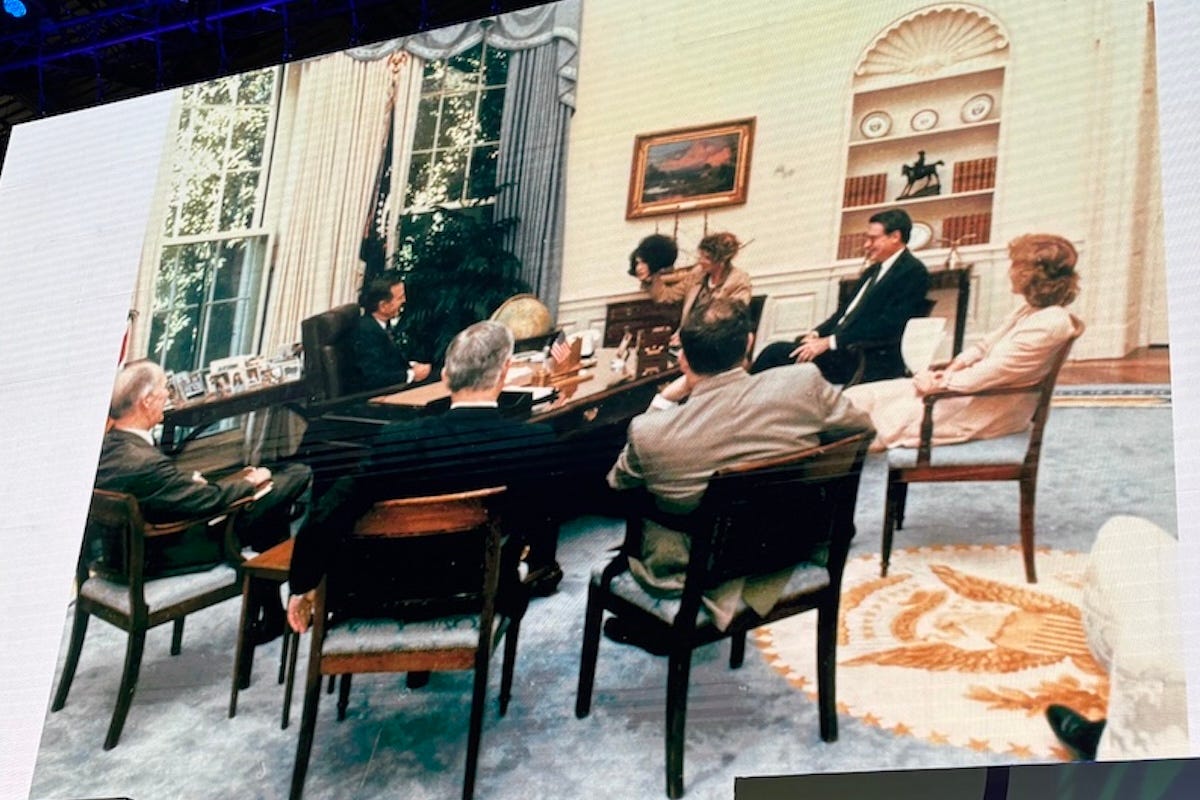
She demonstrated the mask to President George H.W. Bush, a former CIA director himself, in the Oval Office.
When she removed it mid-briefing, John Sununu, an aide in the room who had not realized she was disguised, was so startled that he let out an audible squeak, unable at first to process what he had just watched happen right in front of him.
"We could make your twin," she said. "We find someone your approximate size, we make the mask for him, and we take this whole thing to Moscow. Moscow was always the test bed."
In Moscow, a decoy wearing the mask of a surveilled US officer would leave a building in the officer's place, allowing the real officer to keep working inside undetected while the KGB tailed the wrong person for hours, convinced they still had eyes on their target.
Some of the unit's most effective tools were far lower tech.
"The pictures taken with that pen by our assets provided the best intelligence the United States government received during the Cold War," she said.
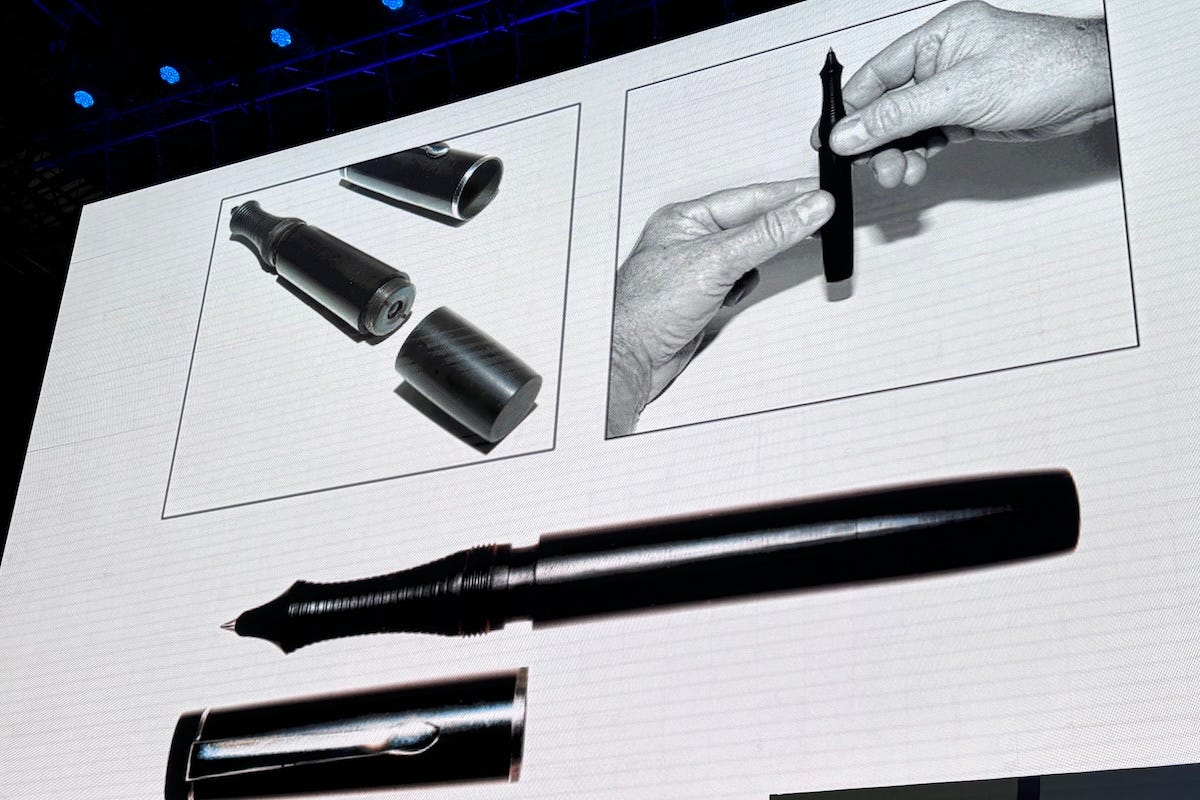
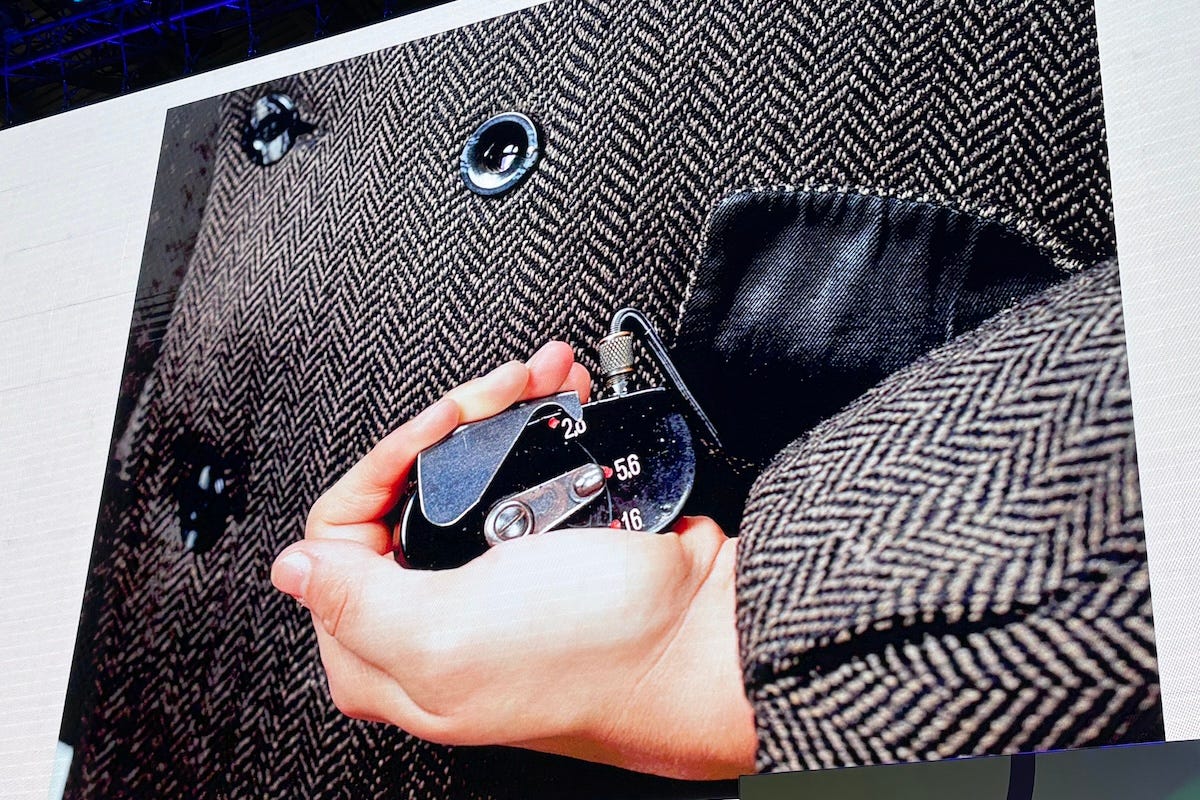
The device was a Tropel spy camera concealed inside a working ink pen, issued only to the most trusted assets who could get close enough to sensitive documents to use it. She personally loaded, unloaded and developed the film, which held up to 100 photographs per roll.
"It was so dangerous for us to meet with our intelligence targets that we did not meet with them," she said. "If they were caught with us, they would be arrested. They would be killed."
Officers instead used dead drops disguised as ordinary objects, including a hollowed walnut holding a one-time pad used to decrypt messages sent over shortwave radio, a technique that let assets communicate with handlers they could never risk meeting face to face.
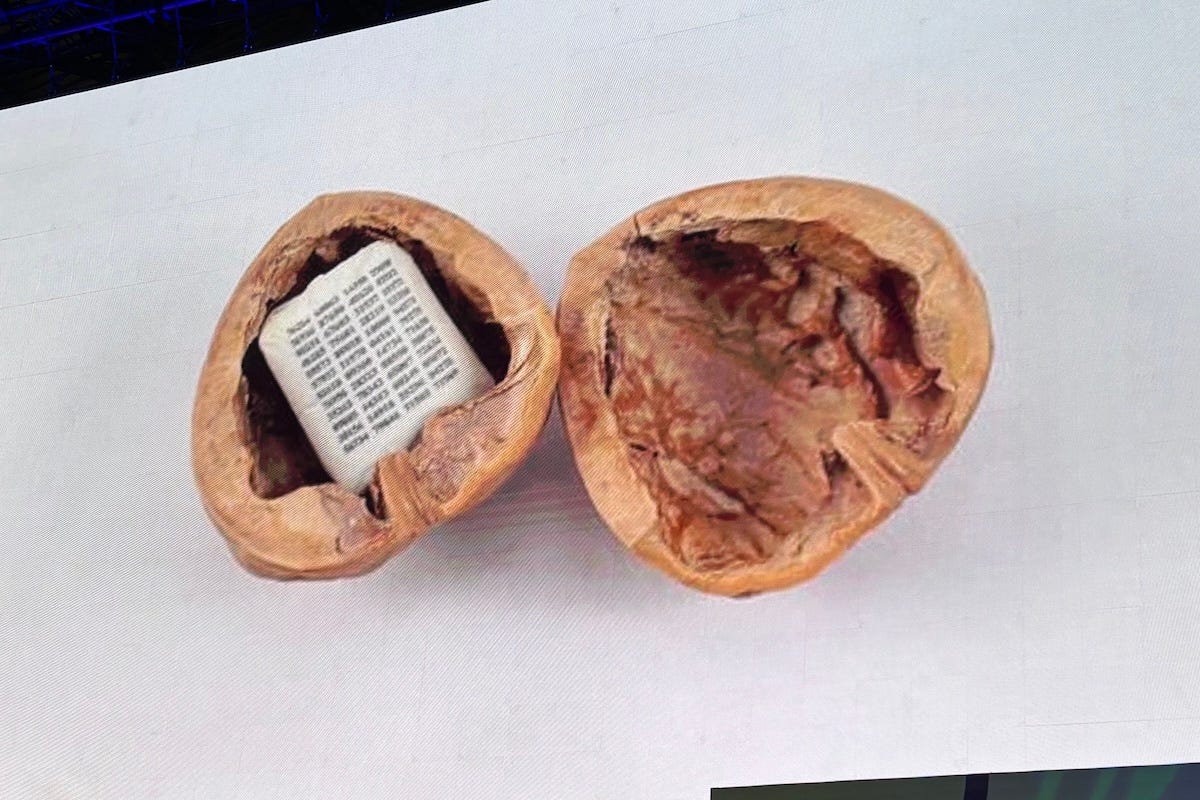
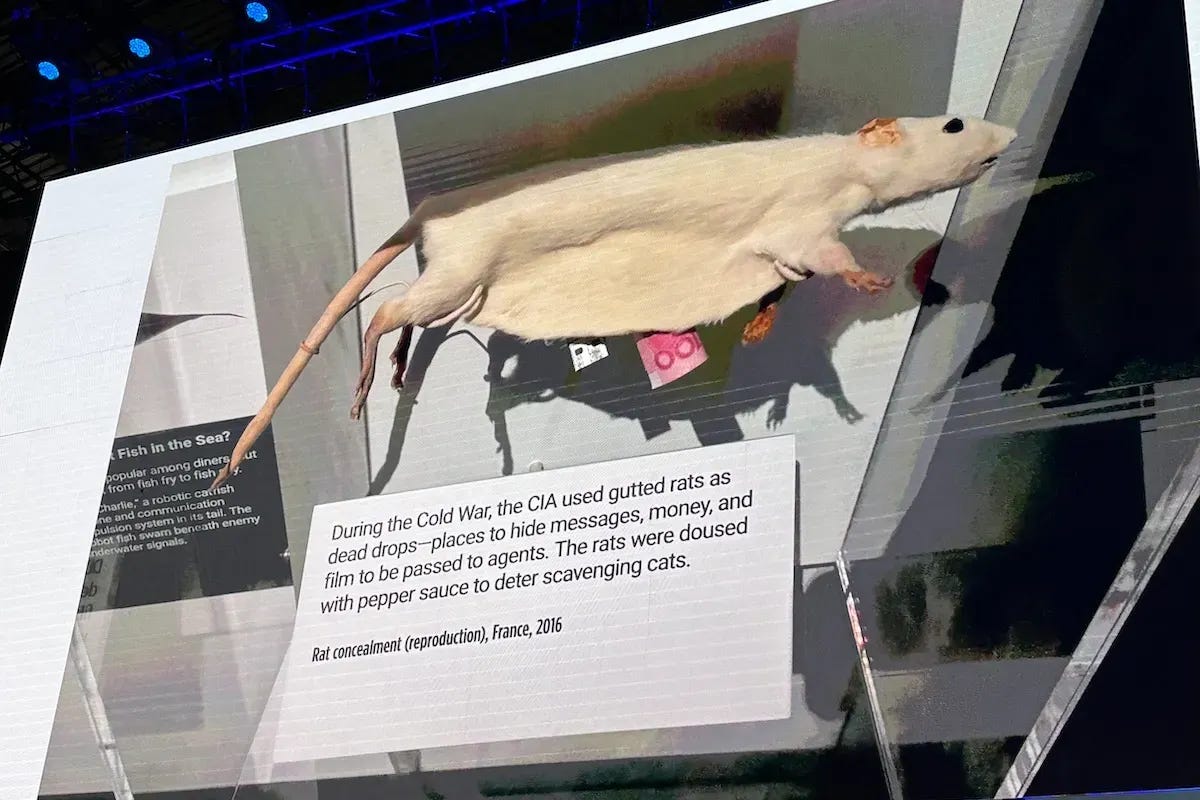
In Moscow, officers used the corpses of rats, treated to repel scavenging animals, to pass messages, film and money between contacts who could not risk being seen together.
Mendez said the tools of deception keep changing, from hidden cameras and dead drops to AI-scraped data profiles.
She said the underlying goal has not changed: defending against a vulnerability, whether it is exploited by a case officer or an algorithm, starts with understanding it.