


Knowledge workers are losing 11 hours every week not because they lack tools, but because they have too many of them. Despite four decades of investment in software, apps and automation, the most critical work in organizations still flows through people, and that, according to one of Europe’s leading artificial intelligence (AI) companies, is the real problem.
The bottleneck is not technology. It is agency.
Existing automation handles predictable, repeatable processes well enough, but breaks down the moment a business expands into a new region or changes a workflow. When that happens, humans are left to pick up the slack, checking that automations are working, transferring data between systems and validating outputs rather than doing meaningful work.
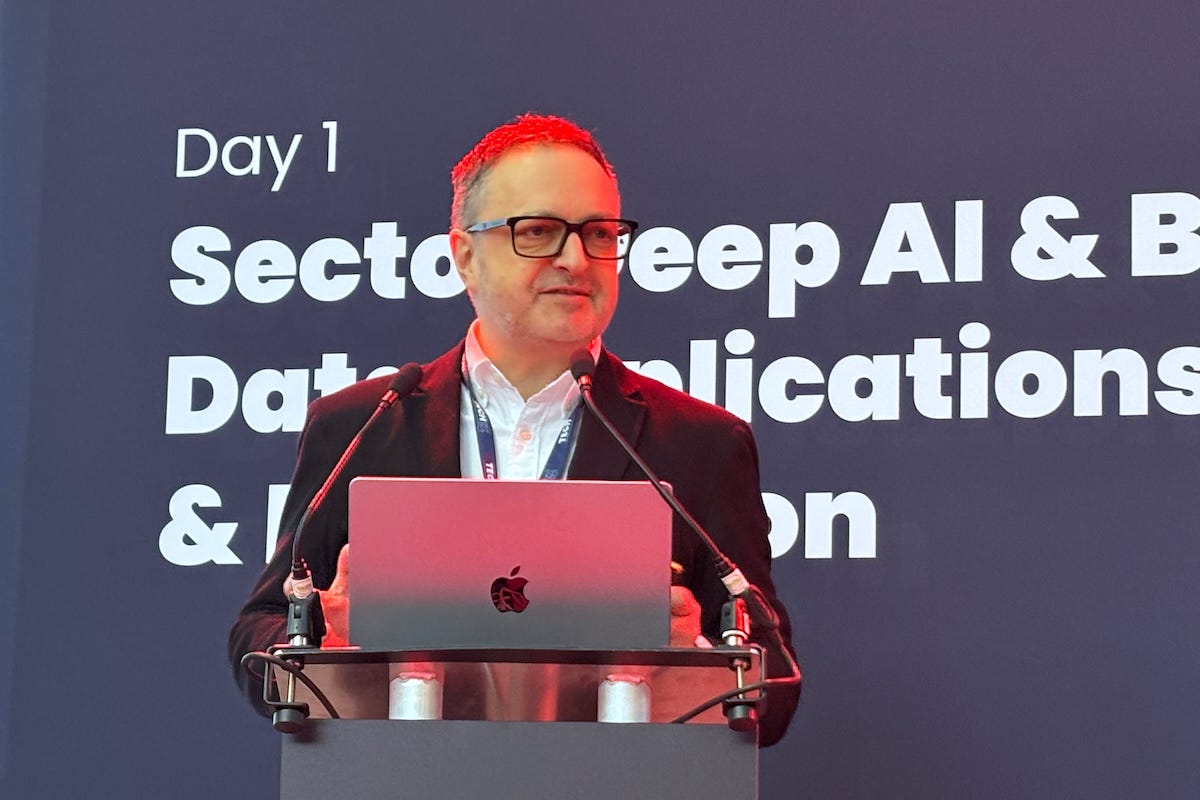
“It breaks when a process changes, or it breaks when our business expands into new regions, or we bring in new lines of business,” said Scott Ivell, VP of product marketing at DeepL. “There’s a heavy engineering effort required to keep these systems going, and it’s really too brittle for the world in which we find ourselves now.”
“Our view is this productivity gap, the automation gap, is an agency problem,” he said. “We have to move from this world of using software as a tool to using AI and agents as a coworker.”
Ivell said companies should not wait for their next CIO planning cycle, but instead identify human-intensive processes today and deploy agents immediately. The real competitive advantage, he said, will belong to companies with the most friction-free workflows, where humans stop acting as connectors between systems and become architects instead.
DeepL began as a language translation service and now describes itself as a global leader in applied AI, with over 100,000 enterprise users worldwide.
The Cologne-based company, which counts European heritage and compliance as core to its identity, initially focused on removing friction between languages. It has now turned its attention to a harder problem: the friction between humans and the work they are trying to execute.
Its latest product, DeepL Agent, positions AI not as a tool but as a digital coworker capable of reasoning, planning and acting across an organization’s existing systems, without requiring a single line of code from the people using it.
Nine minutes, four systems
The AI & Big Data Expo, part of the TechEx conference, took place in London. The session, titled "Say hello to your AI co-worker," made the case for agentic automation and included a live product demonstration. Ivell was joined on stage by Ire Adewolu, a senior solutions engineer for agentic AI at DeepL.
Adewolu demonstrated a workflow built for a customer success manager tasked with improving product utilization and revenue across a portfolio of accounts. The conventional approach of consulting a Salesforce expert, reviewing billing data and speaking to a business intelligence team typically takes four to five days. The DeepL Agent completed an equivalent task in under nine minutes.
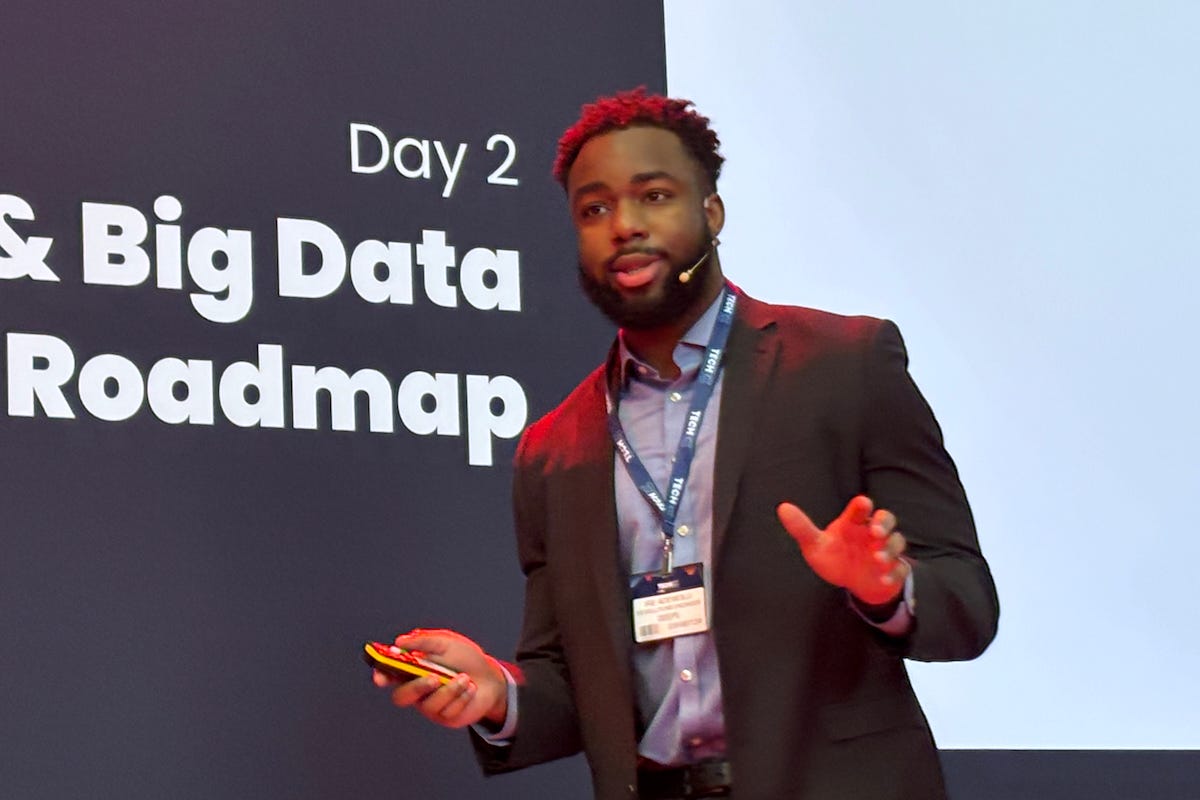
In the demo, the agent autonomously navigated three to four internal systems using existing single sign-on (SSO) credentials, without any manual development or API configuration. It accessed DeepL’s billing system and found that a customer had purchased 50 licenses but had only three active users, averaging 2.67 per month.
“The agent has seen that a customer has only three active licenses, but has actually purchased 50 licenses,” Adewolu said. “This really reflects that potentially the customer is not gaining value from the product, or maybe hasn’t been onboarded correctly, all of which will pose a significant churn risk.”
The agent then retrieved a relevant onboarding guide from DeepL’s support documentation, drafted a personalized email to the customer and proposed meeting dates by syncing with the user’s calendar, all without human intervention.
The agent is designed to draft rather than send emails by default, preserving a human review step before any customer-facing communication goes out. Users are notified when a draft is ready, and can either edit and send it themselves or authorize the agent to send it on their behalf.
The productivity case becomes clearer at scale. Manually reviewing 100 customer accounts across four or five systems each could take weeks. With sub-agents, which are parallel instances the system can spawn simultaneously, the same volume of work can be processed in minutes. Ivell said a single agent can launch 40 sub-agents to research, analyze and execute in parallel.
“Great humans do one task at a time,” Ivell said. “An agent can spawn 40 more sub-agents to work in parallel, do the research, do the analysis, execute simultaneously. This isn’t just fast, it’s a different dimension in unlocking productivity.”
Workflows can also be scheduled to run daily, hourly or weekly, or triggered via an API, removing the need for repeated manual prompting.
On a short leash
The prospect of an AI agent operating autonomously across enterprise systems raised immediate questions from the audience. Three attendees raised concerns about security, access controls and audit trails, a line of questioning that Adewolu and Ivell said reflects the exact design priorities baked into the product from the start.
“Humans need to move from doers to becoming directors, and success isn’t about giving up control either,” Ivell said. “It’s about having a human in the loop who provides the transparency, the audit trails, and human validation at critical junctures within the workflow.”
DeepL built its agent for compliance with the EU AI Act and ISO standards from the outset, not as a retrofit. Data is encrypted at rest and in transit, and the system operates on a minimum-AI principle: the agent handles the heavy lifting but stops to request human approval for critical decisions or when it is uncertain about the next step.
An audience member raised a concern about agents inheriting the same broad system access as the user operating them, including, in the case of a data scientist, the ability to drop tables in a database. Adewolu said access can be constrained at a granular level. DeepL uses an internal system called Phoenix to manage sensitive customer data, and the agent is given only read-only access to it.
Users can create dedicated service accounts with restricted permissions for each connected application, and the agent is trained to recognize which actions require explicit human sign-off before proceeding.
On audit trails, he said DeepL is developing watermarking for agent actions and already provides reports at the organizational level that show every interaction and every prompt, with timestamps and user attribution. This allows organizations to trace the basis for any decision the agent made, a capability critical for regulated industries where decisions affecting customers, such as insurance underwriting, may need to be explained after the fact.
DeepL Agent also works without pre-built integrations. It opens its own browser and navigates systems as a human would, including those behind a virtual private network (VPN) or firewall, requiring no coding and no lengthy IT rollout.
“True disruption shouldn’t require an 18-month IT project that you need to roll out globally from your CIO,” Ivell said. “The most successful agents operate on your existing stack to navigate the systems that may not have APIs.”
Commands can be issued in any language, making the technology accessible to non-technical staff across multilingual organizations. DeepL said the winners of the next few years will not be the companies with the most AI tools or the most advanced integrations, but those with the most friction-free workflows, where humans have stepped back from acting as connectors between systems and taken on the role of architects instead.