Fusion is no longer defined by distant timelines. It is now measured in hardware, assembly progress and clearly stated milestones.
Inside one of the most closely watched projects in the sector, the shift from concept to construction is already visible. What was recently an empty facility is now a dense engineering environment, signaling that execution — not theory — is driving momentum.
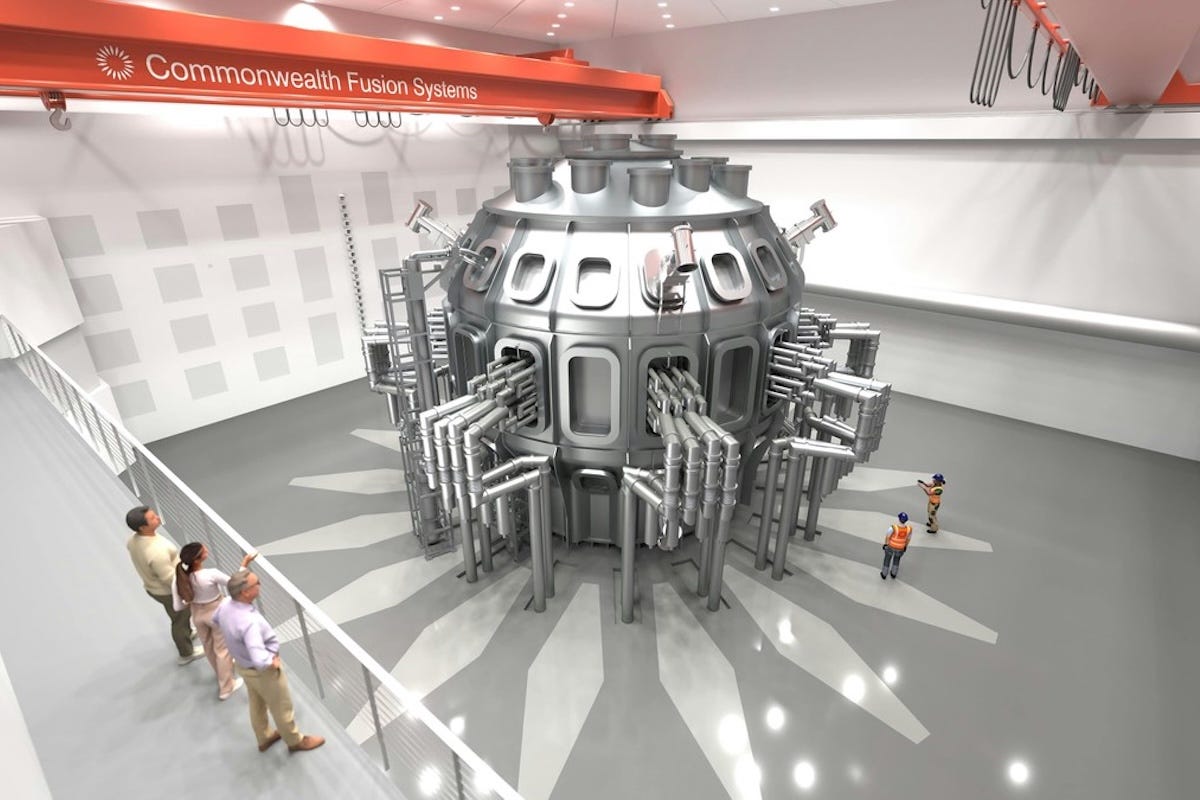
“We’re about 75% complete with the full construction of SPARC. The device itself is coming together. There is a room that is swarming with hardware and people putting things together,” said Brandon Sorbom, co-founder and chief science officer of Commonwealth Fusion Systems (CFS). “We’re aiming for first plasma in 2027 and then getting a Q greater than one as fast as humanly possible.”
If Q (the fusion energy gain factor) is greater than one, it means the reactor produces more fusion energy than it uses to heat and confine the plasma. This condition is also known as a state of net energy gain.
He said the buildout has accelerated over the past year. The tokamak hall, once an empty shell, now contains critical subsystems, including toroidal field coils and vacuum vessel segments. Engineering teams are working across multiple systems simultaneously, moving the project toward full integration.
He added that magnet development, a core technical challenge, has largely been validated. Most toroidal field coils have been built and tested. Work continues on poloidal field systems. This staged validation reduces risk progressively rather than deferring it to the final operation.
CFS is a US-based fusion company developing high-field tokamak systems in partnership with the Massachusetts Institute of Technology. The company focuses on turning decades of fusion research into commercially viable power, with SPARC as its first demonstration system and ARC as its planned grid-scale power plant.
ARC refers to an “affordable, robust, compact” fusion power plant, while SPARC refers to the soonest/smallest possible ARC.
SPARC is designed to prove net energy gain. Reaching that point would establish fusion as a practical energy source and is widely seen as the moment the industry moves from research to real-world application. The system is being built on a 60-acre campus in Devens, Massachusetts, by a multidisciplinary team spanning physics, engineering and industrial trades.
As a tokamak, SPARC uses strong magnetic fields to contain a superheated plasma until fusion occurs. Its use of high-temperature superconductors (HTS) allows for stronger magnetic fields and a more compact design than earlier machines. The project also serves as a stepping stone to ARC, a follow-on power plant concept targeting around 400 megawatts of modular, grid-ready power in the early 2030s.
The program is structured to reduce risk as it scales. Multiple subsystems are built and tested in parallel, allowing integration challenges to be addressed early rather than at final commissioning. This approach supports faster execution and a more predictable path from demonstration to commercial deployment.
From SPARC to ARC
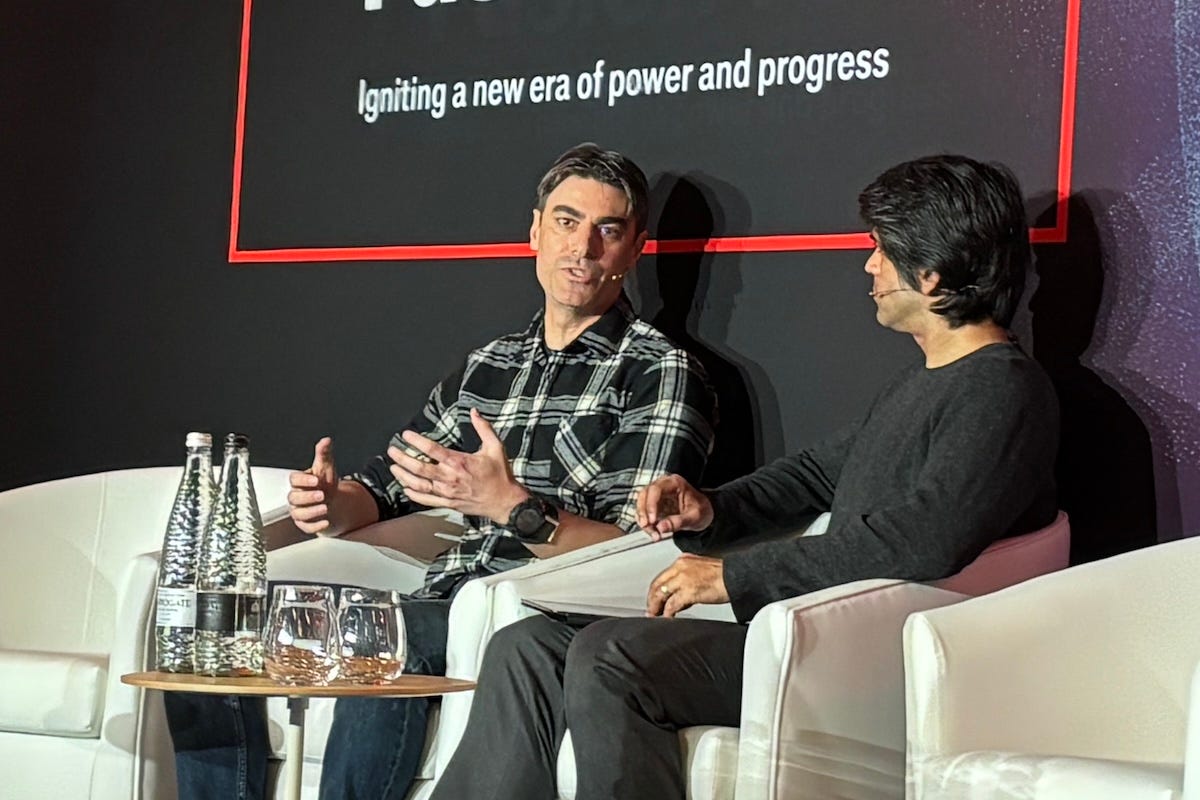
The discussion took place on April 14 at Fusion Fest in London, organized by Economist Impact. It was moderated by Alok Jha, science and technology editor at The Economist, and focused on the path from experimental systems to commercial fusion energy.
Sorbom outlined a structured roadmap that extends beyond SPARC toward a grid-scale system.
“We published the physics basis of SPARC several years ago before we even started constructing the device,” he said. “We’re going to be publishing the ARC physics basis. That’s the power plant that will be coming after SPARC.”
This approach reflects a deliberate sequencing of science validation followed by engineering execution. By publishing the scientific foundation before construction, the company ensured that its design rests on peer-reviewed principles rather than internal assumptions.
The same model is now being applied to ARC, which is positioned as a commercial-scale fusion power plant. Its physics basis has completed peer review and is expected to be published, marking a step toward industrial deployment.
The transition from SPARC to ARC also represents a shift in objectives. While SPARC focuses on demonstrating net energy gain under controlled conditions, ARC is designed to operate as a continuous power-generating system that can integrate with existing energy infrastructure. This requires not only validated physics but also robust engineering, operational stability and cost control.
Alongside the technical roadmap, the company has adopted a transparency-driven strategy to build credibility. “The single most important thing we can do right now is to publish and be transparent with the entire community,” Sorbom said.
“There’s a myth that if you publish, your technology will get stolen. I would say that’s categorically false.”
He said the company has published more than 50 peer-reviewed papers, creating a body of work that the scientific community can evaluate independently. This allows external experts to validate performance claims and reduces uncertainty for stakeholders.
That validation is particularly relevant for capital raising.
“When investors come, you can say: don’t just take our word for it. Take the word of the community,” he said.
Publishing also supports recruitment and external validation. Engineers and scientists are more likely to join organizations where they can contribute to peer-reviewed research, while published results allow independent experts to review performance and build trust with investors and the broader scientific community.
The combination of a defined roadmap and open validation framework positions the company to move from demonstration to commercialization with greater credibility.
Scaling execution
As development progresses, execution increasingly depends on industrial strategy and participation in the ecosystem. Sorbom said the company is expanding beyond reactor development into the broader fusion supply chain.
“We’re going to be part of the supply chain. We can be part of this ecosystem in more than just being a fusion player,” he said.
The move is driven in part by internal capabilities, particularly in magnet technology. Once developed, these systems can be applied beyond a single project, enabling the company to supply components to other fusion developers.
“Once we developed this technology, we said we could actually be part of the supply chain in this ecosystem,” he said.
The wider sector is also becoming more structured. Industry associations and collaboration networks now connect developers, investors and suppliers, reflecting early-stage industrial organization rather than isolated research efforts.
Execution speed remains a defining factor. The company selectively relies on external partners where possible.
“A lot of outsourcing comes down to finding an adjacent industry that can do 90% of what you need, and then teaching them the last 10%,” Sorbom said. “But there’s nobody out there that we could go out to and just buy magnets from, so we had to develop that ourselves.”
This hybrid model balances control with speed. Core technologies are developed internally when no supplier exists, while other components are sourced from adjacent industries. For example, complex structures such as vacuum vessels can be outsourced and adapted for fusion requirements. This allows the company to move faster by building only what it cannot source externally.
Risk assessment is framed in practical terms.
“There’s science risk, which is whether the plasma physics behaves, and then there’s engineering risk of building a system that does what physics says is possible,” Sorbom said.
“For tokamaks, it’s much less science risk and more on the engineering risk.”
This distinction shifts attention toward system integration, manufacturing and operational reliability. Component-level testing, particularly for magnet systems, is used to reduce uncertainty before full deployment.
As systems scale, integration becomes the primary challenge. Coordinating multiple subsystems — magnets, vacuum vessels and power systems — requires precise engineering and rigorous validation. Any delay or mismatch at this stage can affect overall timelines, making early-stage testing critical.
The next phase will depend on translating SPARC’s results into a repeatable model for ARC. Success will hinge on scaling engineering execution, strengthening supply chains and maintaining the pace of development toward commercial operation.