


Aging network equipment has become a security risk for UK organizations as attackers use artificial intelligence (AI) to compromise older systems more easily, pushing companies to upgrade their networks to strengthen defenses and meet the heavier demands of AI workloads.
The pressure has grown since Anthropic unveiled Claude Mythos Preview, a model the company says has found more than 10,000 high-severity flaws in widely used software.
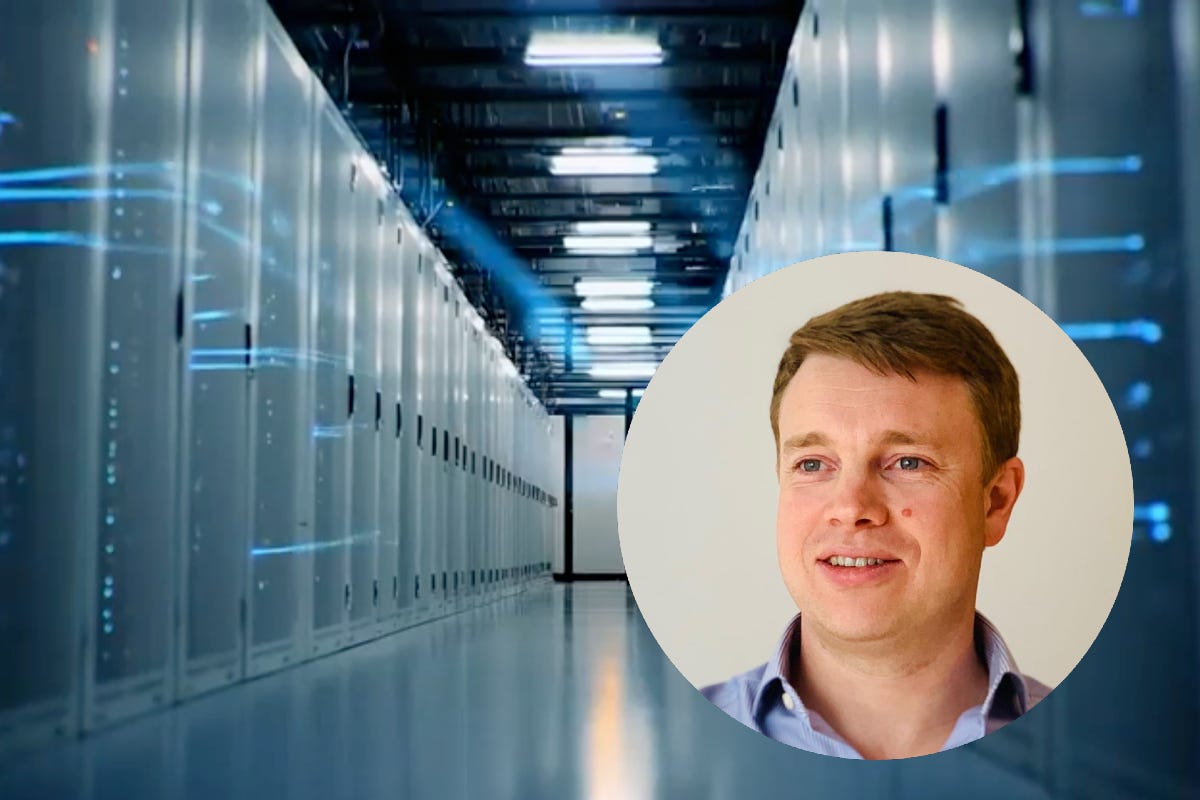
“The other very relevant concern a lot of our customers have in the post-Mythos era is around the security risk they are facing. Older networking kit has now become a risk factor as it’s open to compromise more easily with AI-equipped threat actors,” Rob Lay, chief technology officer of Cisco UK and Ireland, told TechJournal.uk in an email interview.
He said many customers are therefore upgrading old technology, as newer equipment can significantly reduce that risk. Those upgrades now bring security and AI plans together.
“But equally, we need to help ensure that those new customer networks are built with what they want to achieve with AI in mind,” he said.
His warning came as Cisco published its Relentless Defense Report on September 30, based on a survey of 8,000 security practitioners in 30 markets. Its findings include:
91% of UK organizations suffered a material, business-disrupting cyber incident in the past 12 months, and more than a third of those involved an AI-enhanced attack
88% of UK organizations cite at least one significant AI-related security concern, led by AI systems being compromised or manipulated by attackers (47%) and sensitive data exposure through AI use (45%)
64% of UK organizations cannot update security controls within 24 hours of a new threat being identified
Fewer than half (47%) of UK organizations consistently apply comprehensive security controls to non-human entities such as AI agents, service accounts and automated systems
Just 39% of UK organizations have extensively deployed AI for security investigations
Only 54% of organizations globally are very confident they could detect and respond to a compromised AI agent
Cisco, based in San Jose, California, supplies networking, security and data center infrastructure to businesses worldwide.
Agents never switch off
Security is not the only pressure on UK networks. Cisco research found an AI agent performing a task can generate up to 450% more network traffic than a human doing the same job.
“The biggest change with agentic AI is the sheer volume and consistency of traffic it creates. We’re moving away from the peaks and troughs we’ve traditionally designed around to something much more constant,” Lay said.
“When people traditionally think of AI infrastructure, they think of the data center, moving data between GPUs (graphics processing units). But agentic changes the game. Now all your campus and branch networks, where your workers actually operate, need to be able to cope with that bandwidth demand as well.”
He said redundancy has long been a basic data center requirement that AI does not change. What matters now is knowing where AI workloads will sit and making sure the network has capacity where it matters.
The report suggests defenders’ hardest problems are organizational, not technical. Its findings include:
Around six in 10 struggling practitioners said coordination, approvals and access to data would do more to improve their defenses than new technology
47% of UK organizations say their security, network and information technology (IT) teams operate as one team with shared visibility and tools, against 41% globally
39% of UK organizations say their security metrics are too technical to influence executive decisions
About 40% of respondents spend more time collecting and correlating data than tackling the threat itself
The report scored organizations out of 100 on how completely they protect their environment and how quickly they respond. The UK averaged 67, above the global 64, and 12% of UK organizations qualified as the top group Cisco calls “Relentless Defenders,” against 8% globally.
Compared with other organizations, Relentless Defenders were:
Far more likely to run a single coordinated security team (83% vs 37%)
More likely to apply consistent controls to AI agents and non-human identities (86% vs 37%)
More confident they could detect and respond to a compromised AI agent (77% vs 51%)
Nearly twice as likely to see incidents fall after raising security spending
Scaling across data centers
Lay said there is no single answer to whether older data centers should be upgraded or replaced, as it depends on the facility, the power available and what an organization is trying to run. Space and power are tight in and around London, and planning and other external factors add complexity.
He said upgrading existing sites is the only practical option for some operators, and the meaning of scaling a data center is changing.
“Traditionally, you could ‘scale up’ by putting more devices into a rack, or ‘scale out’ by adding more racks. We’re now increasingly talking about ‘scaling across,’ meaning effectively connecting one data center to another,” he said.
Links running at 400 or 800 gigabits per second mean two facilities need not sit next door to each other. Some organizations are also moving AI closer to users with edge systems that pack networking, security, storage, compute and software into one modular unit for sites that are not data centers.
Others are exploring modular micro data centers housed in shipping containers beside buildings, with the heat they produce fed into the buildings’ heating systems.
“I don’t think the future is simply a choice between retrofitting an old data center or building a huge new one. We’re going to see a much broader mix of models, much more intentionality from customers about where they run their workloads, and the network is what allows those different pieces of infrastructure to work together,” he said.
Inside the data center, rising GPU density means far more bandwidth, power and heat in each rack, pushing operators toward liquid cooling. Lay said a single liquid-cooled networking system can now deliver the bandwidth that previously required six, showing how quickly density is rising.
Connectivity has to keep pace. Links of 1.6 terabits now connect servers and GPUs, while newer 400G optics can reuse existing multimode fiber, so operators don't always have to rip everything out and start again.
"This isn't simply a case of putting liquid cooling into a data center. You have to look at the system as a whole because the silicon, switching, optics, cabling, power and cooling must all scale together," he said.
Skills are the other constraint. He said AI is changing the skills organizations need as well as their technology. Networking, cybersecurity and infrastructure skills remain essential, but people increasingly need to understand how AI workloads behave and what that means for the infrastructure underneath them.
He said organizations need to build skills alongside infrastructure if they want to take AI from experimentation into production. Cisco says it has trained more than 600,000 people in the UK and Ireland through its Networking Academy.
The next test is whether skills can keep pace with networks rebuilt for always-on AI agents and AI-armed attackers.