The Canadian Armed Forces is accelerating a broad modernization of its space domain capabilities, but its most urgent challenge is not satellites in orbit. It is how those space-based systems connect to the military’s wider digital architecture and ultimately serve the warfighter.
As Ottawa expands investment under the North American Aerospace Defense Command (NORAD) modernization and new defense spending commitments, senior leadership is confronting a structural problem. Space capabilities have evolved faster than the digital foundation designed to absorb their data, manage command links, and distribute intelligence across domains.
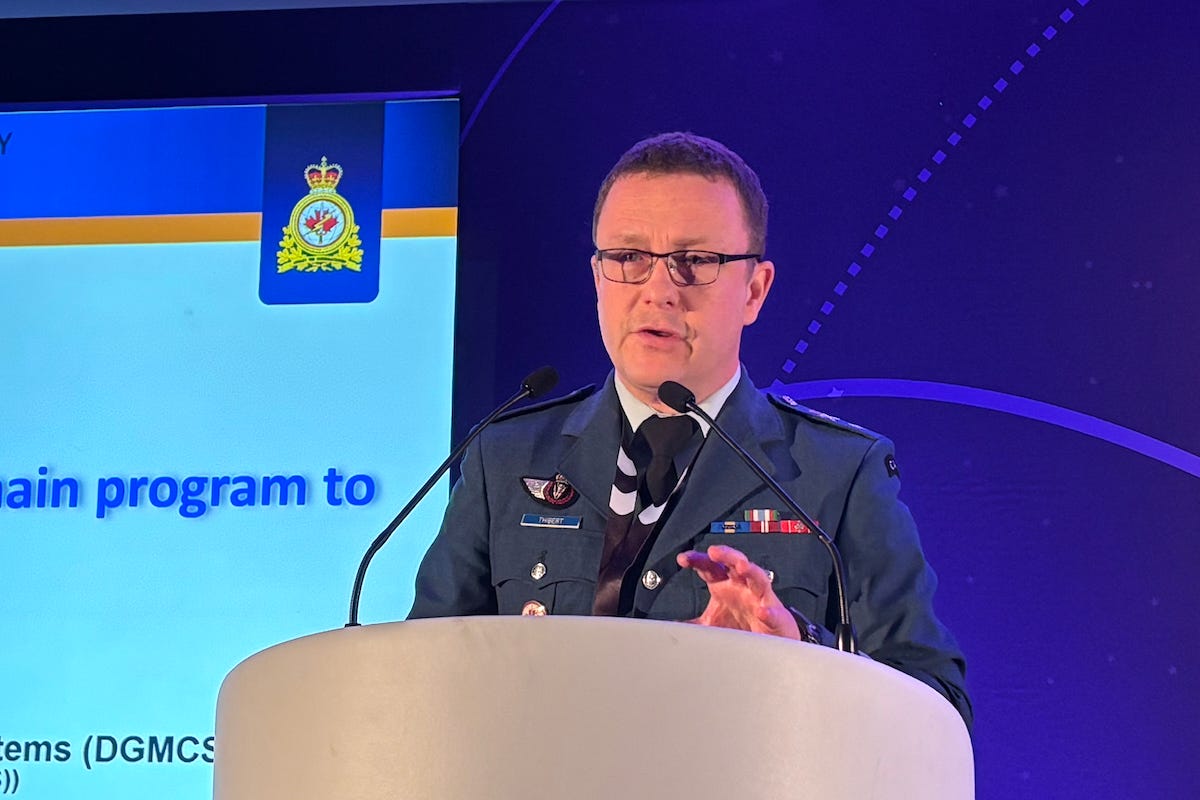
“How do we integrate space-based capabilities into our digital foundation? A lot of our projects right now are not looking at that particular requirement as part of their scope,” said Brigadier-General Justin Thibert, Director General Military Communications and Space Systems at the Canadian Armed Forces (CAF).
He added that they are doing great things from both a space segment and a ground segment perspective, but often do not consider the warfighter at the center of the capabilities they deliver.
“We need to start to rethink the way we’re building solutions to be a lot more user-centric. If we’re not, then we need to adapt what we’re delivering to make sure that in the end the warfighter out there is enabled,” he said.
The admission underscores a shift inside Canada’s military space establishment. Rather than treating satellites, ground systems, and user terminals as separate procurement lines, Thibert is advocating a systems-of-systems approach that embeds space into joint, pan-domain operations from the outset.
Inside DISC 2025
Thibert outlined the strategy at the Defence In Space Conference (DISC) 2025 in London. The session was moderated by Andy Rayner, founder of Rayner International Space Solutions (RISS), and focused on how the CAF’s space domain program will meet emerging threats.
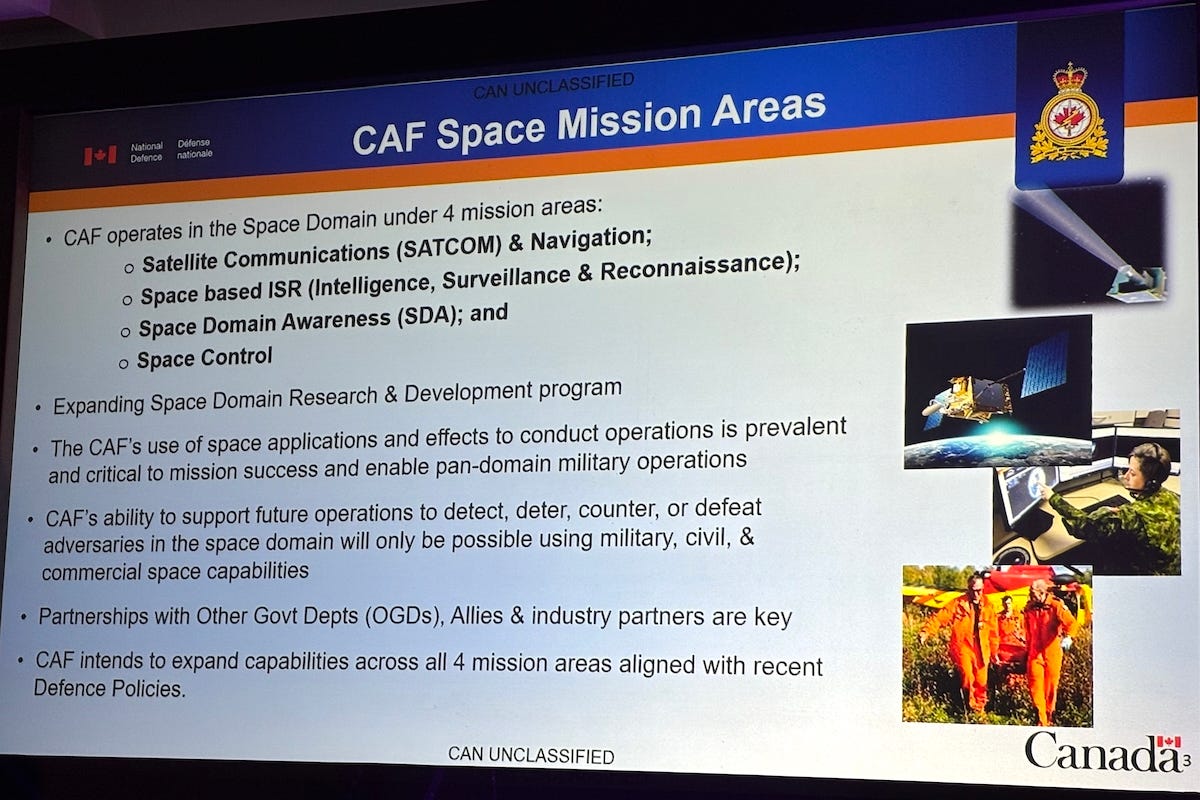
Thibert is responsible for implementing space domain capabilities across the CAF, including sustainment. While the Royal Canadian Air Force serves as the requirements owner, Thibert’s office oversees delivery and integration across four mission areas:
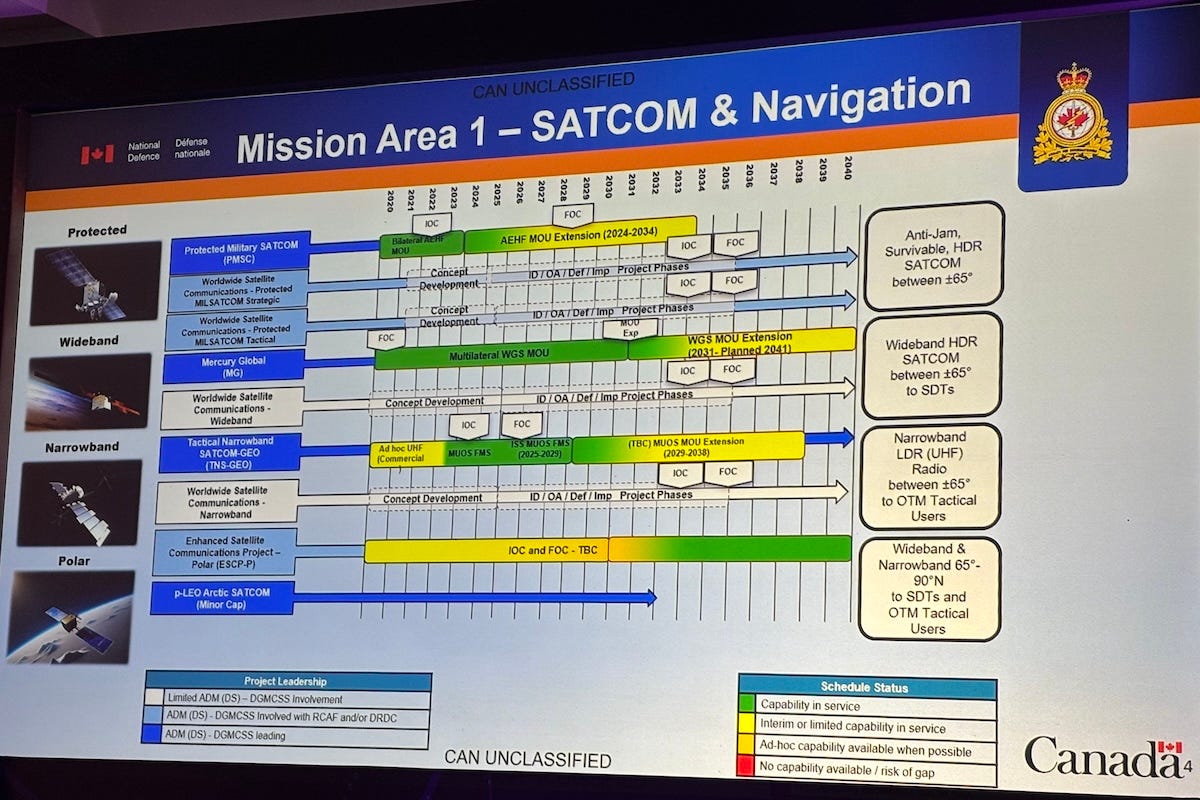
satellite communications (SATCOM) and navigation;
space-based intelligence, surveillance and reconnaissance (ISR),
space domain awareness (SDA); and
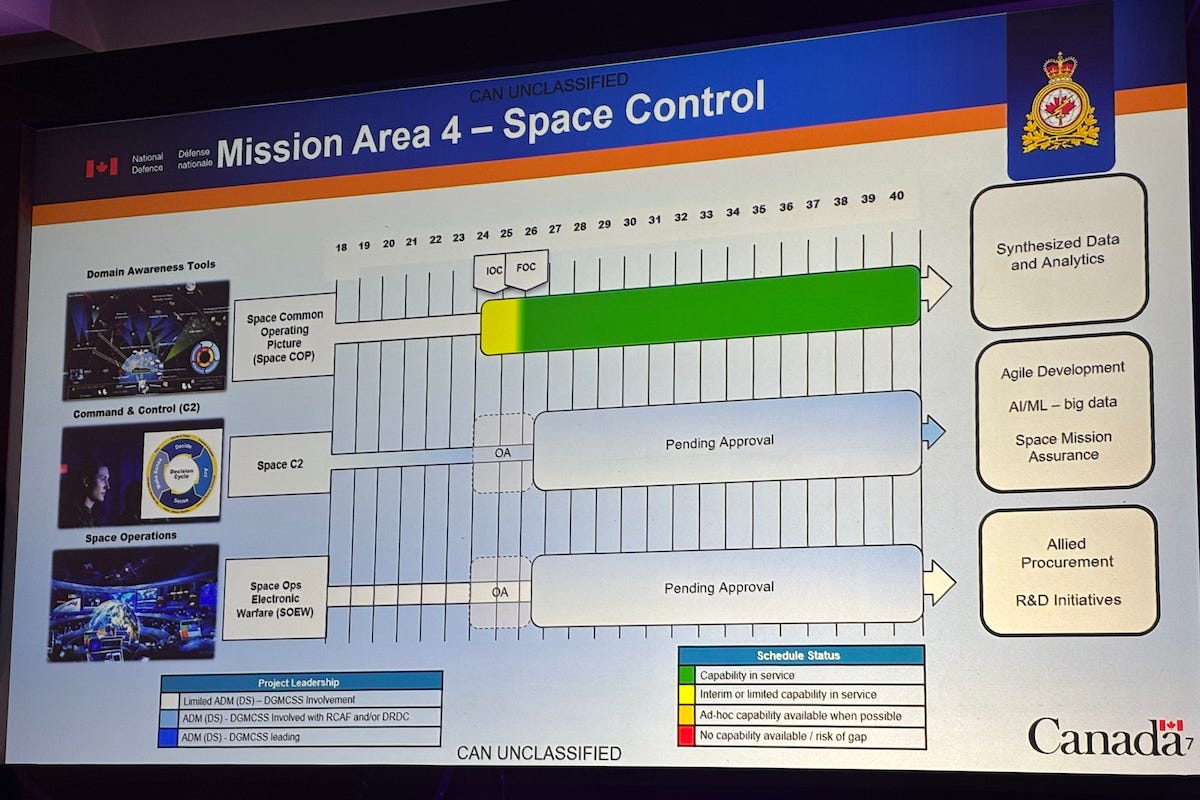
space control
He framed the modernization drive around evolving operational threats.
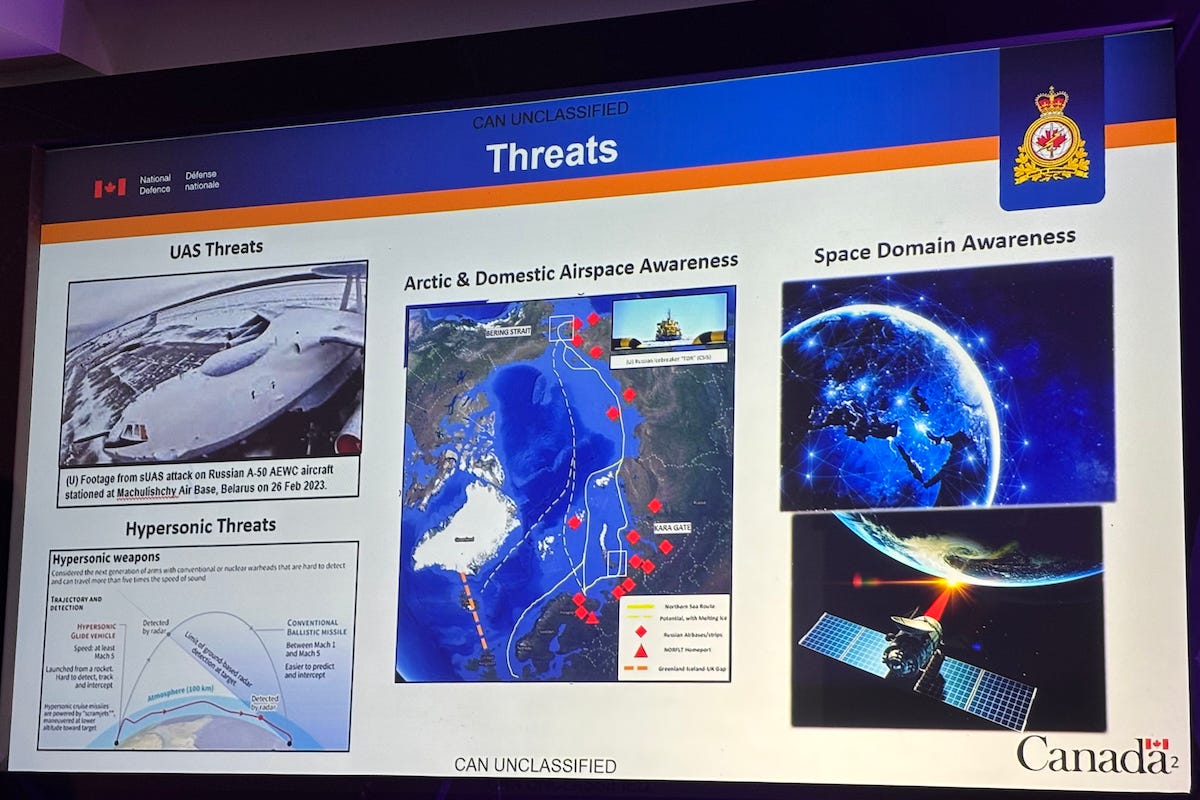
“We must be able to properly detect and counter evolving technologies such as UAS (unmanned aerial systems or drones), which are being used more and more in modern warfare, and the evolution of technologies like hypersonic weapons, which are becoming faster and can travel longer distances at lower altitudes,” he said.
For Canada, those concerns are amplified by geography. The Arctic remains vast, difficult to access, and increasingly strategic. Space-based capabilities, he said, are essential to improving domain awareness across air, land, sea, and the polar region.
Arctic push
A centerpiece of the effort is the Enhanced SATCOM Project – Polar, which Thibert said will deliver secure narrowband and wideband satellite communications across Canada’s High Arctic. The move complements the Advanced Extremely High Frequency (AEHF) satellite system, in which Canada is an international partner. AEHF provides secure, jam-resistant communications with continuous coverage guaranteed between 65 degrees north and 65 degrees south latitude.
The Polar program is intended to extend assured connectivity beyond that northern boundary, where traditional geostationary coverage becomes less reliable.
Canada is also pressing ahead with technical narrowband Geostationary Earth Orbit (GEO) capabilities and aims to reach full operational capability next year. At the same time, Ottawa has extended global SATCOM arrangements out to 2041.
The acceleration aligns with the government’s recent commitment to increase defense spending to meet NATO’s 2% target, potentially accelerating several timelines.
Beyond communications, the surveillance portfolio is undergoing significant renewal. Canada’s Sapphire satellite, the country’s first operational military satellite, launched in 2013, is approaching the end of its operational life.
“Our existing Sapphire capability is currently past its end of life and slowly degrading, and that is why we are pressing hard on advancing the Surveillance of Space 2 (SofS 2) project,” he said.
The follow-on program includes both ground and space segments, with procurement activity advancing and draft requests for proposals expected to move forward as early as 2026.
Institutional friction
While new satellites and sensors dominate headlines, Thibert identified internal structural friction as equally pressing.
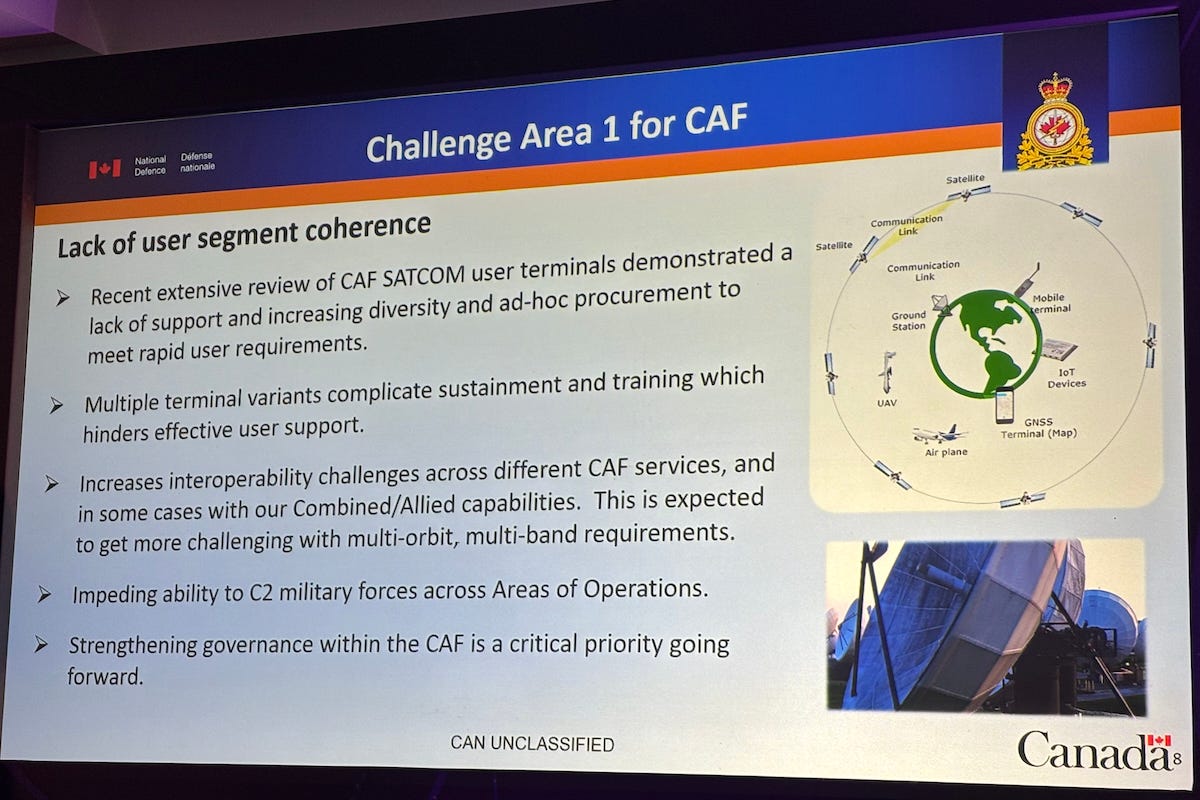
One challenge is user-segment fragmentation.
“We currently have in our inventory more than 70 different types of user terminals. That creates sustainability challenges and interoperability challenges across our force and with our allies and partners,” he said.
The proliferation complicates logistics, training, cybersecurity, and coalition operations. Thibert signaled a shift toward multi-orbit, multi-frequency terminals capable of supporting multiple services, rather than maintaining siloed hardware for each program.
Another strain lies in the growth of operational centers.
“The growing number of operation centers creates not only a sustainability issue, but also a resourcing issue, because most of these operation centers require 24/7 support from a manpower perspective,” he said.
As multiple space and digital programs deliver their own command facilities, the risk of duplication increases. Thibert acknowledged that his own portfolio contributes to that expansion and called for programmatic consolidation to create a more integrated pan-domain view.
Cybersecurity is also moving from afterthought to design principle. Drawing on his cyber operations background, Thibert noted that earlier space discussions often underweighted cyber requirements. That balance is now shifting toward secure-by-design architectures.
Yet the digital foundation gap remains his principal concern.
He said the CAF has no strategic plan to properly integrate information generated from space-based capabilities into its digital foundation, and that SATCOM is often not treated as an integral part of that architecture.
The issue is not simply technical. It is institutional. Projects frequently achieve initial or full operational capability from a hardware perspective. However, they often do so without fully embedding data flows, user interfaces, and operational integration into the broader command structure.
Thibert suggested that traditional milestone models may be ill-suited to rapidly evolving technologies. Instead, he advocated a more iterative, spiral-style approach that brings operational users into the process earlier and more continuously.
Systems mindset
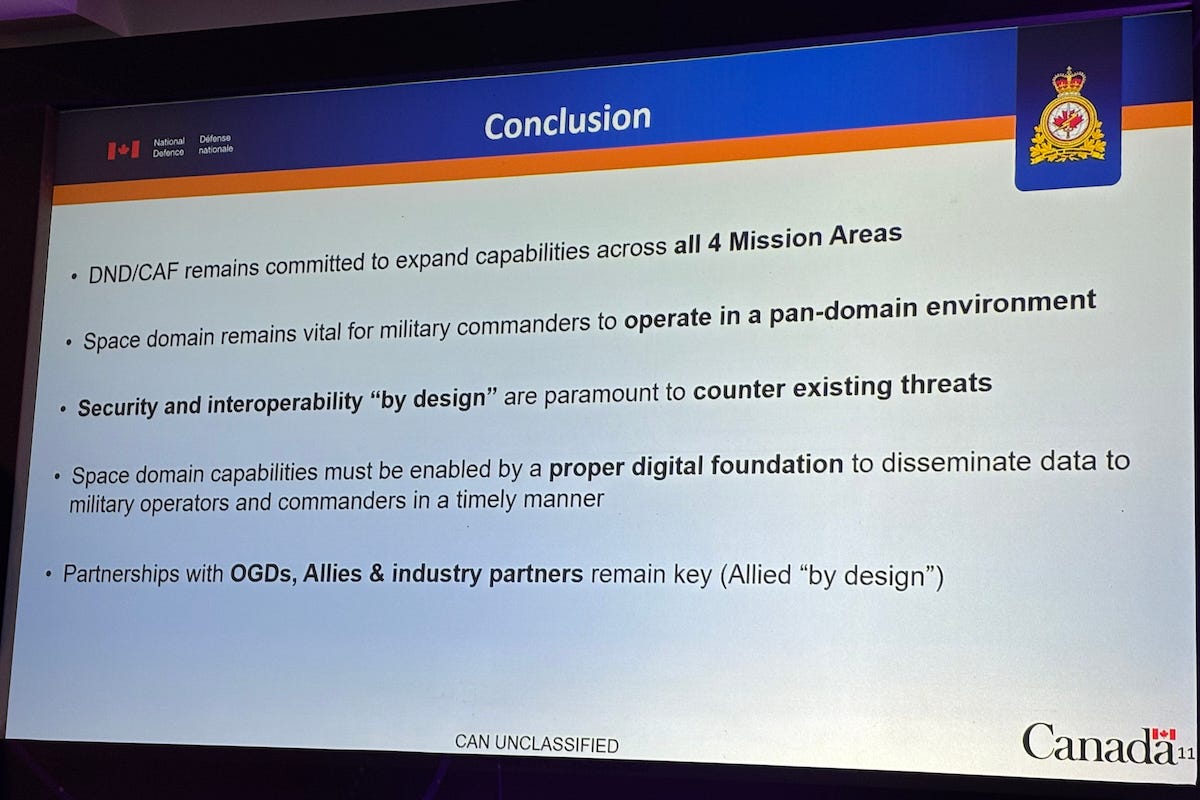
Looking ahead, Thibert emphasized that Canada’s space capabilities cannot be built in isolation. Partnerships with the Canadian Space Agency, NATO allies, NORAD counterparts, and industry are central to accelerating delivery and ensuring interoperability.
He described space as a “team sport,” requiring collaboration across government departments, military services, allied nations, and private-sector partners.
He also stressed that space systems must be treated as part of a broader ecosystem rather than standalone platforms. The objective is secure, interoperable integration by design, enabling commanders to operate seamlessly across domains in contested environments.
If Canada succeeds, the payoff will extend beyond satellite resilience or Arctic connectivity. It will lie in the ability to translate space-derived data into timely decisions across air, land, sea, cyber, and polar theaters.
For Thibert, the transformation ultimately comes down to a simple metric: whether the warfighter is truly enabled.
The hardware is advancing. The procurement machinery is moving. The next phase will test whether digital integration can keep pace with orbital ambition.