Self-driving cars are usually sold as a software problem. For one of the world’s biggest carmakers, the harder problem now is not the technology. It is the regulators.
The company’s autonomous system already blends lidar, cameras and infrared sensors into a single stack built into every car, rather than leaning on one type of sensor the way some rivals do.
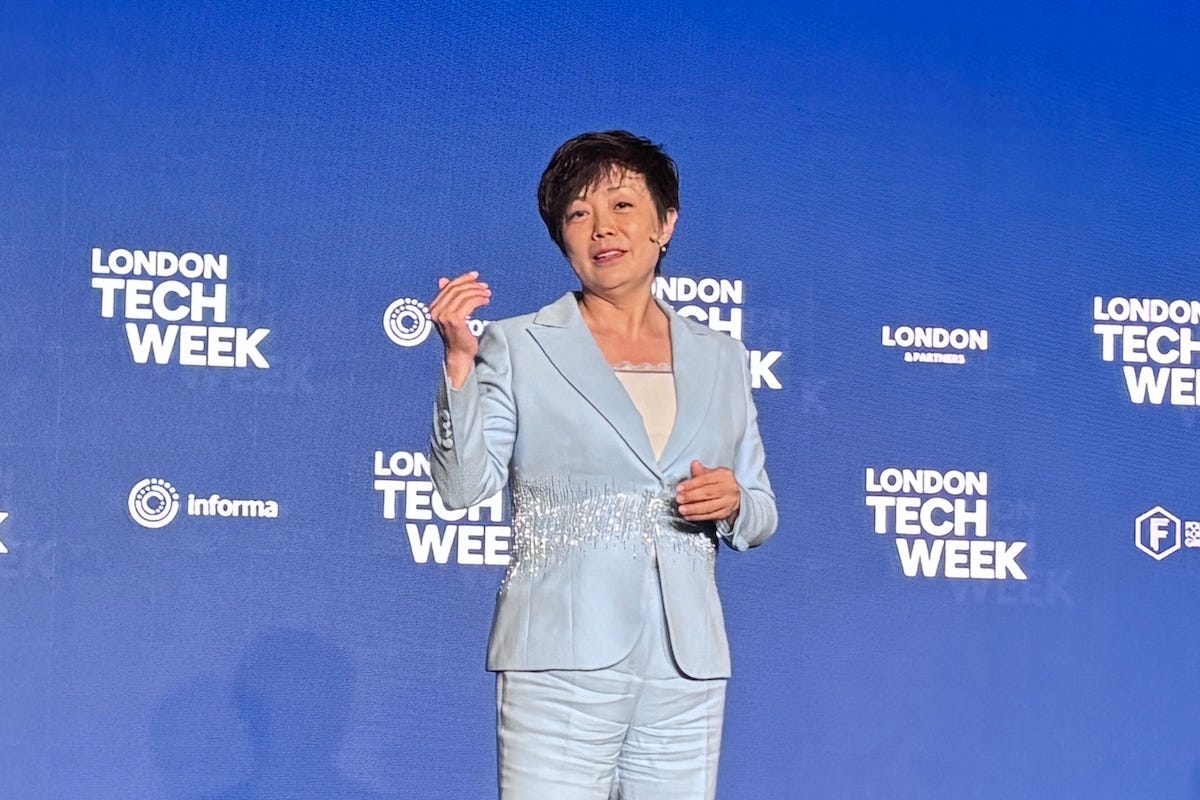
“Our God’s Eye combines hardware, software and artificial intelligence into one integrated driving system designed to make mobility safer, smarter and more accessible,” said Stella Li, EVP and CEO of BYD Americas, Europe, Middle East and Africa. “If you want to be the hero of yourself, a Formula One driver, you have autonomous drifting capability.”
Everyday features built on the system already include automated parking, Li said, while the Z9 GT adds the autonomous drifting mode for track driving.
She said Chinese regulation currently caps the technology at Level 2-plus autonomy, but that Beijing is expected to approve Level 3 rules in July 2027. She said BYD’s hardware is already built for Level 3 and Level 4.
She said BYD is working with European regulators on approval timing, while the technology itself is already ready. More than 3.15 million BYD cars already use some level of the feature, generating over 200 million kilometers of driving data every day.
BYD also builds a voice assistant, called BYD Super Agent, into its DiLink AI Intelligent System, with memory that improves the more it is used.
“You can talk to them, and they will talk to you naturally, like you have a very good conversation with your best friend,” she said.
She described the assistant scheduling a trip, checking the news or stock market and opening the windows by voice, handling several requests at once and connecting to services outside the car. She pictured a future version that switches on the air conditioning and a rice cooker as soon as it senses a driver heading home.
BYD is the world’s largest maker of new energy vehicles. Li said more than 5,000 software engineers work on autonomous driving alone, with more than €12.7 billion invested in the technology so far, and that data from those cars keeps improving the system.
Faster than a fill-up
Li made the comments during a session called The Role of AI in Driving Sustainable Mobility at London Tech Week in June. Founders Forum Group and Informa organized the event jointly, with support from London & Partners and Tech London Advocates.
BYD installed its first flash charging station in London, at the parking lot of the company’s own office there.
“A lot of people ask whether 1.5 megawatts of capacity brings a big crash to the grid,” she said. “But we have a secret, because we are not just a car company. We combine flash charging with battery storage.”
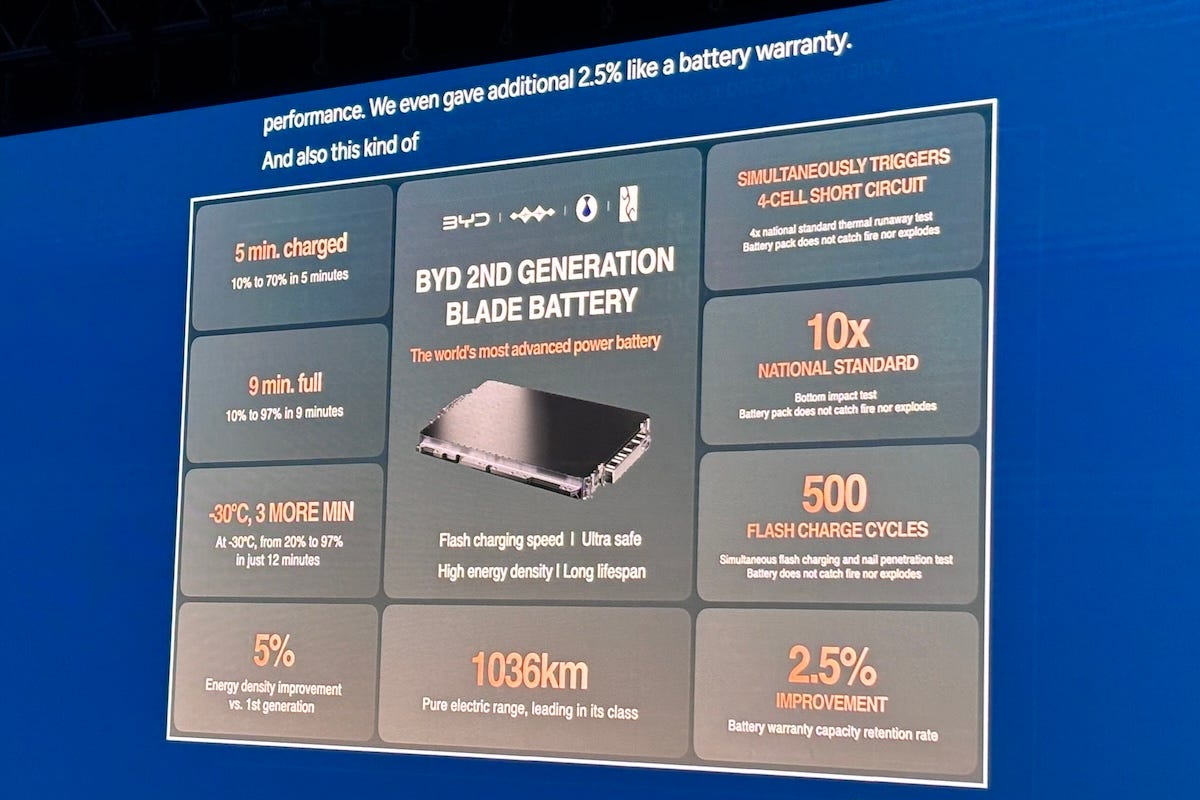
Branded “Ready in 5, Full in 9, Cold Plus 3,” the system charges a battery to 70% in five minutes and to 97% in nine, adding about three minutes in extreme cold.
Li said the charger itself is designed to be simple: light enough to lift with one hand, unlike the heavy cables used by many rival systems.
She said each site needs only a modest 100-kilowatt grid connection, because an on-site battery buffer stores electricity in the evening and discharges it to power the car at peak hours, smoothing the load on the local network. BYD has installed more than 6,100 flash chargers worldwide so far, and aims to have about 20,000 running in China alone by the end of the year.
BYD signed a deal with Sinopec, China’s largest gasoline station operator, just days before the London event, agreeing to add chargers at many of its fuel stations nationwide. Its target outside China is to install 6,000 flash chargers across Europe by the first quarter of next year.
BYD’s answer to lingering range doubts is a new plug-in hybrid, the Dolphin G.
The hybrid system, which BYD calls DM-i, runs on electric power for daily trips and uses a combustion engine for longer journeys, delivering what the company says is the lowest fuel consumption of any hybrid on the market.
The Dolphin G also comes with Google’s Assistant, Maps and Play Store built in, part of what Li called BYD’s openness to outside technology partners.
“This will really be the disruptor, using this new technology to really challenge the combustion-engine car industry,” Li said.
She said a single charge plus a full tank of gasoline can carry the car more than 1,000 kilometers, enough to drive from London to Zurich, a distance of 941 kilometers, without stopping.
From startup to giant
BYD’s scale today contrasts sharply with its roots. The company started more than 30 years ago with 20 employees and $350,000 in investment.
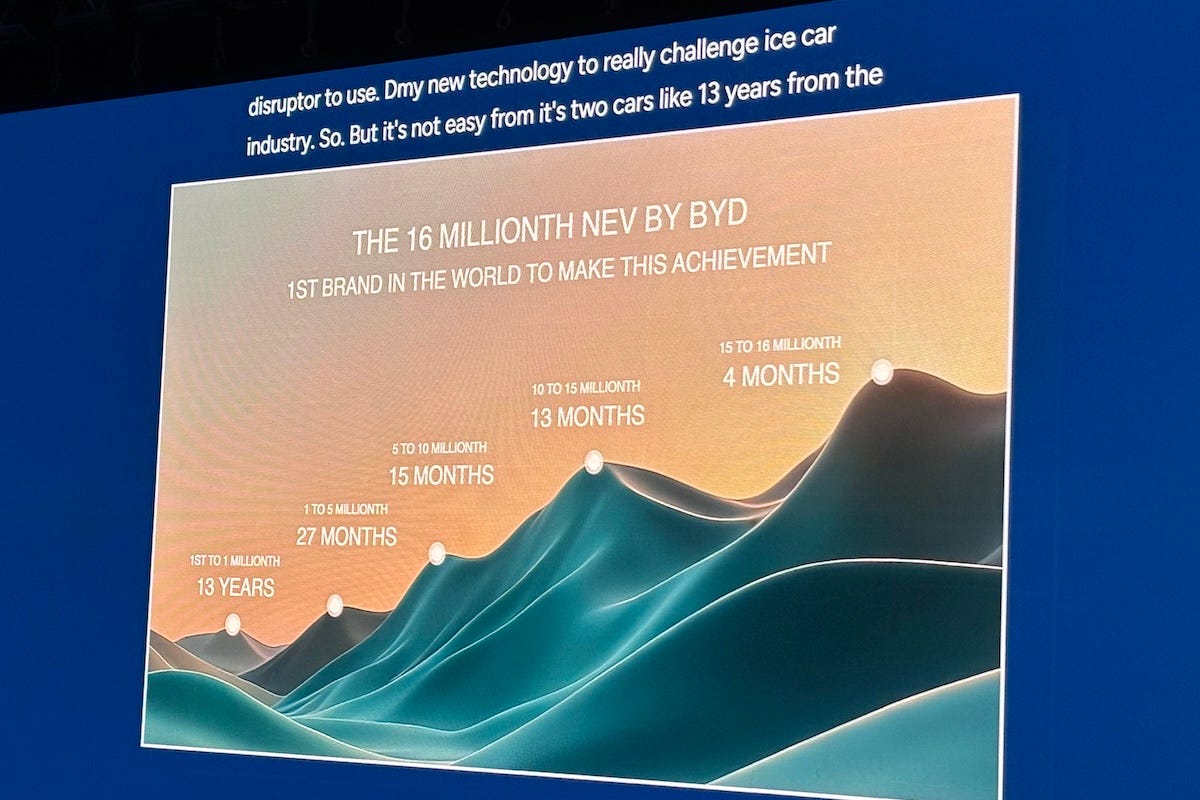
BYD’s growth accelerated as it went. It took 13 years to sell its first million new energy vehicles, then each subsequent million came faster: 27 months, then 15, then 13, before the most recent million took just four.
She said BYD became the first carmaker in the world this year to build 16 million new energy vehicles in total.
The company now spans four industries: passenger vehicles; rail transit, including the Sky Rail and Sky Shuttle monorail systems it operates in China and Brazil; renewable energy, including solar panels and battery storage; and electronics.
Li said BYD frames its ambitions as three connected dreams: generating electricity from solar power, storing it in batteries and using that energy to power electric vehicles. The company’s roots in batteries and electronics mean it still supplies about 80% of the world’s tablet computer screens.
She said the company employs about 120,000 research and development engineers, who file an average of 52 patent applications a day. BYD has submitted more than 71,000 patents and been granted 42,000, according to Li.
BYD’s push upmarket has produced some of its most attention-grabbing engineering. Its Yangwang brand’s U9 Xtreme, a 3,000-horsepower electric car, set the record this year for the fastest production car in the world, reaching 496.22 kilometers per hour.
“Our crazy engineers came to us and said, ‘I need to produce a car with 3,000 horsepower.’ We said, ‘Yeah, go ahead, do that,’” Li said.
Yangwang is BYD’s flagship performance brand, built around SUVs and sports cars that Li said are the fastest in their category.
Li described this as a multi-brand strategy that runs from mass-market electric and hybrid models up through the premium Denza and ultra-luxury Yangwang brands, designed to give every price tier access to BYD’s newest technology.
BYD’s premium Denza brand launched in Europe in April with the Z9 GT, a car whose flash-charging battery and 1,036-kilometer range are fronted in marketing by the actor Daniel Craig. Denza followed in July with the Bao 5, a hybrid SUV built for off-road driving, unveiled at the Goodwood Festival of Speed.
Much of this is underpinned by BYD’s Blade Battery, a cell design the company says resists catching fire even when punctured. Li said the second-generation cell has passed 500 flash-charge cycles combined with simultaneous nail-penetration testing without catching fire or smoking.
She said the new cell also improves energy density by 5% and warranty capacity retention by 2.5% over the first generation.
Other BYD models use what the company calls its e-platform 3.0 chassis technology, which Li said lets some vehicles float briefly in floodwater or absorb pothole impacts. A separate four-motor “e4” platform lets a car rotate on the spot in what Li called a “tank turn.”