The UK could unlock £35 billion in productivity gains by 2030 if businesses move beyond basic artificial intelligence (AI) tools and embed advanced AI into core workflows, according to research commissioned by Amazon Web Services (AWS).
The finding points to a widening gap in Britain’s AI economy. Many organizations are already using AI, but far fewer have reached the stage where the technology is shaping decisions, redesigning processes and supporting new products.
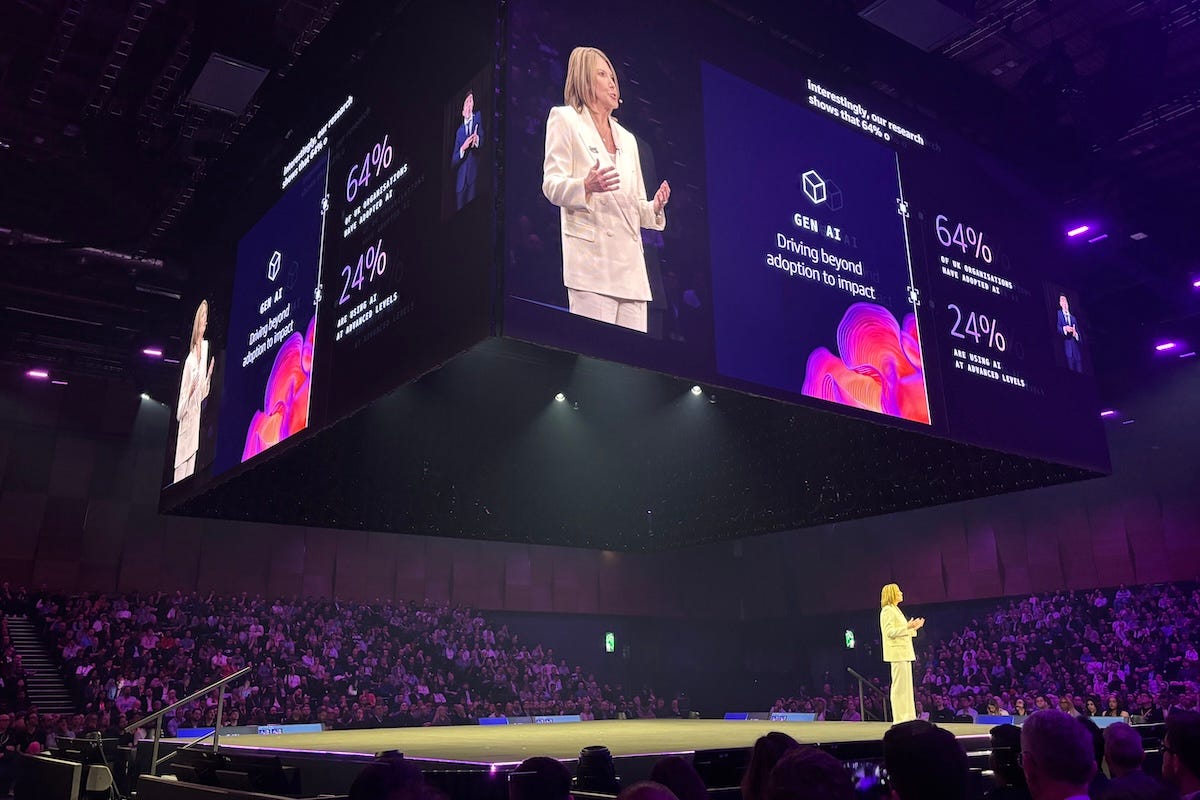
“Now, interestingly, our research shows that 64% of UK organizations have now adopted AI, up from 52% only a year ago,” Alison Kay, vice president for UK and Ireland at AWS, said in an AWS event. “That’s the equivalent of one UK business adopting AI every 40 seconds.”
“Our research shows that the UK could unlock £35 billion of productivity gains by 2030 if basic adopters moved to advanced AI by leveraging generative AI, agentic systems and automation,” Kay said.
The report, conducted by Strand Partners and commissioned by AWS, says UK AI adoption is ahead of the European average of 54%. It says 68% of adopters report productivity gains and 72% expect AI to increase their ability to grow in the coming year. Another 79% say innovation timelines have accelerated.
But adoption alone is not delivering the full economic prize. Most organizations still use AI for basic tasks, such as summarizing documents or answering simple queries through off-the-shelf chatbots. Only 24% of adopters have reached the advanced stage. At that point, AI becomes part of core business processes and decision-making.
The difference is material. Advanced AI users report average efficiency gains of 68%, compared with 40% among basic users. The report says the value rises when organizations use AI to redesign workflows, accelerate decisions and create new products and services.
Kay said companies cannot build advanced AI on outdated foundations. Modernization is not only a migration from old systems to cloud infrastructure. It also means breaking down monolithic platforms, reducing technical debt and making data accessible, queryable and actionable.
Skills are the other constraint. The report says 49% of organizations cite AI and digital skills shortages as the main challenge for AI adoption, up from 46% in 2025.
“Science is only powerful when it’s in the hands of people who know how to use it,” she said. “Our research shows that almost 50% of UK organizations cite skill shortages as the biggest single barrier to their ability to adopt AI.”
She said AWS is investing in training and support programs in the UK and Ireland. Its Skills to Jobs Tech Alliance aims to prepare at least 100,000 learners with AI skills by 2030, with more than 60,000 students already trained in cloud and AI skills.
From prompts to agents
The remarks came during AWS Summit London on April 22, where executives and customers discussed “The Age of Agents.” The event focused on AI agents moving from experimental tools into software development, enterprise modernization and business operations.
Francessca Vasquez, vice president of Professional Services and Agentic AI at AWS, said agents are changing how work is done inside Amazon. Legal teams use them to synthesize complex regional requirements. Account managers use them to generate international expansion strategies on demand.
“AI agents are taking this one step further,” Vasquez said. “What used to take years can now be done in days and sometimes even minutes.”
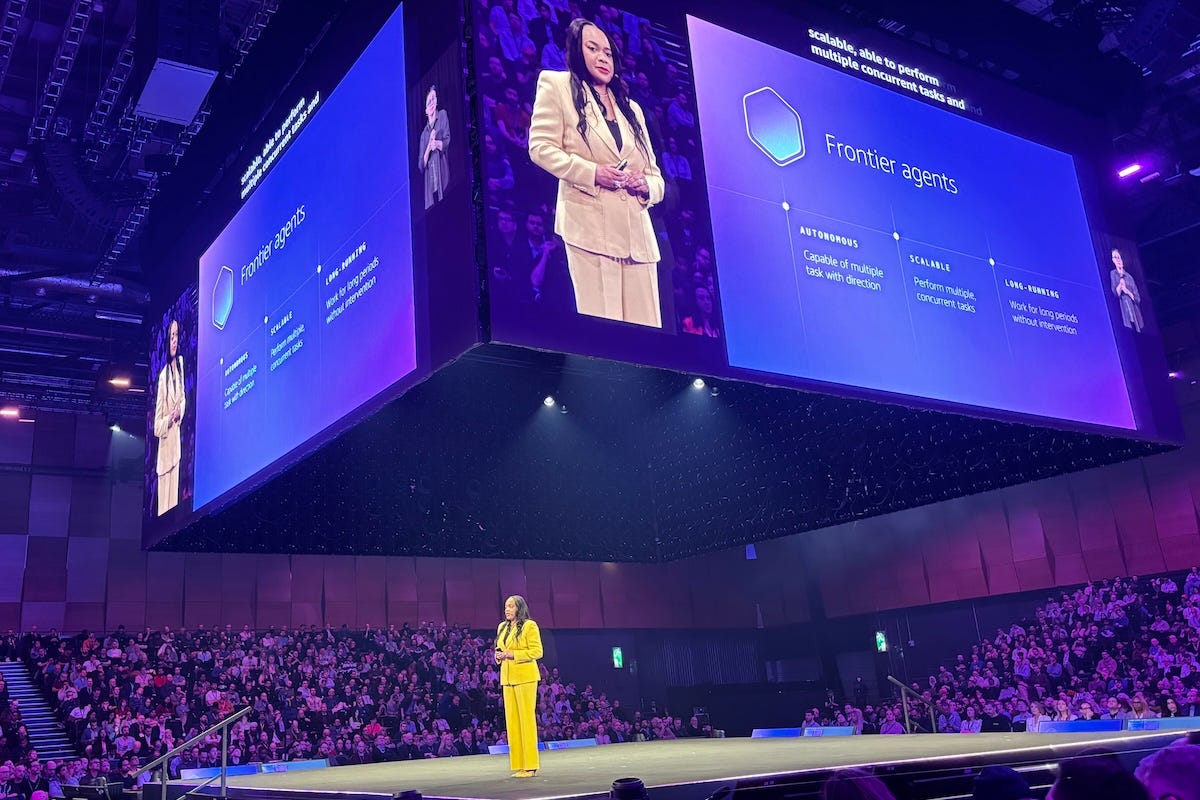
The shift reflects a broader compression in innovation cycles. AWS’s report says the move from dial-up internet to 3G took a decade, while the leap from generative AI to agentic AI took only months. It defines agentic AI as a partner that can plan and carry out tasks without constant instruction.
Vasquez said AI-powered software development tools had evolved rapidly over the past year, from inline tab completion to writing functions and completing multi-step tasks. But she said many teams still lacked a way to guide the process and align the output with their own standards.
“They were generating code, but builders couldn’t guide the process or ensure it aligned with their team standards,” Vasquez said. “We wanted to take everything that is exciting about AI-powered software development and add the structure that our developers need.”
Last July, AWS launched Kiro as a response to that problem. Kiro is an agentic, AI-powered integrated development environment (IDE) from AWS. Built on Amazon Bedrock, Kiro uses specification-driven development to turn natural language prompts into production-ready code, documentation and tests.
The tool is designed to generate detailed specifications before code is written, so software can be structured and maintainable from the start. It can produce user stories, acceptance criteria, technical design documents, architecture diagrams, sequence flows and implementation tasks.
“Kiro works with you, turning your prompts into detailed specs and those specs into working code,” Vasquez said.
That structure is important for enterprise adoption because AI-generated code still has to fit into existing development practices. For large organizations, the challenge is not only speed. AI-assisted work still has to be reviewed, tested, deployed and maintained with the same discipline as conventional software.
Vasquez also linked agents to legacy modernization. About 70% of IT budgets are estimated to be consumed by maintaining legacy systems. AWS Transform has saved more than one million hours of manual migration effort and transformed more than one billion lines of mainframe code, she said.
One example was Automatic Data Processing (ADP), a global provider of cloud-based human capital management solutions covering HR, payroll, talent, time, tax and benefits administration.
Vasquez said the company used AWS custom transformation agents to extract and document thousands of embedded business rules from a legacy tax-compliance system, cutting rule-extraction time by 80% and reducing manual effort by more than 90%.
Proof beyond pilots
Motorway, the UK online used-car marketplace, offered one of the clearest examples of how AWS wants companies to think about agents.
Ryan Cormack, principal engineer at Motorway, said the company turned to Kiro because engineers needed speed without losing discipline.
“We didn’t want to just ship things faster. We wanted it to work well, and that’s why we reached out to Kiro,” Cormack said.
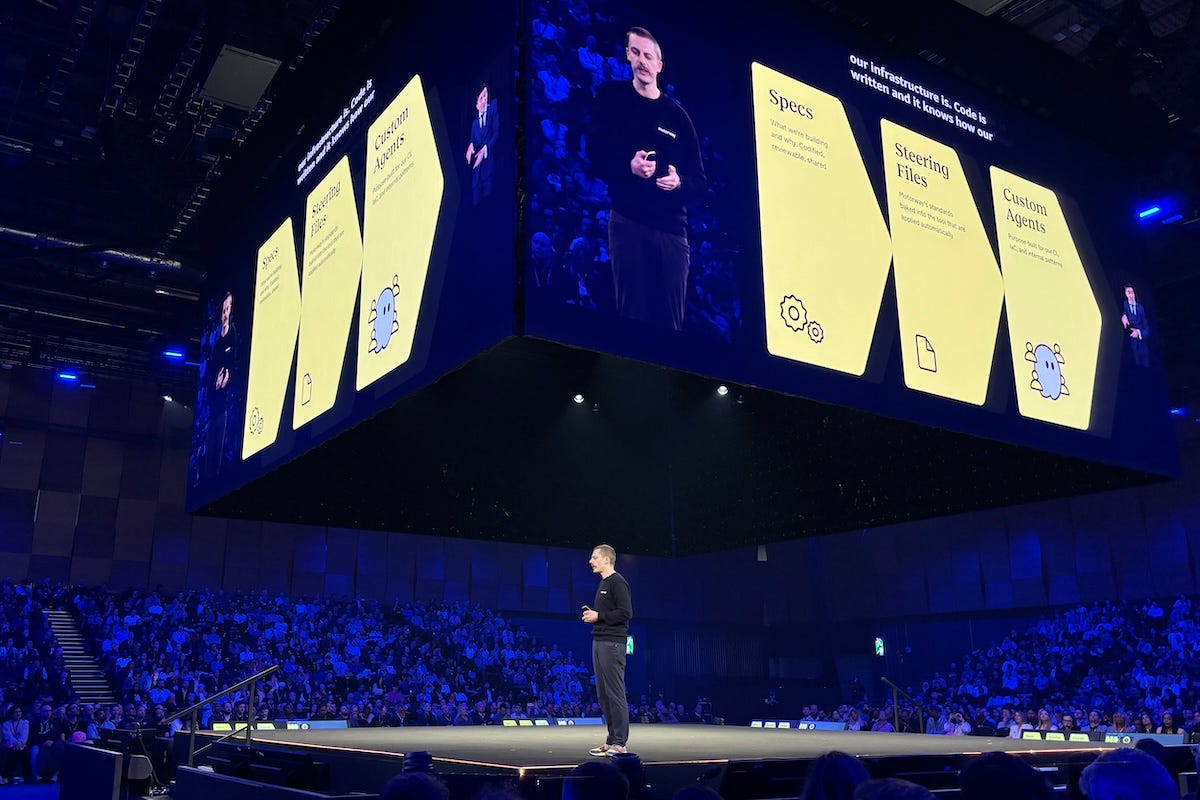
Motorway connects people selling vehicles with more than 7,500 verified dealers. Cormack said the UK used-car marketplace is worth more than £100 billion. Changes to the company’s systems can affect customers making large financial decisions.
“We don’t just jump straight into writing code faster,” Cormack said. “We make sure that we’re understanding the problem that we’re trying to solve.”
Kiro is now used throughout Motorway’s software development lifecycle. Product and user experience teams can ship prototypes in hours rather than weeks. Custom agents help review code, deploy software and monitor production. Cormack said the tool also helps resolve incidents and identify bottlenecks before they affect customers.
The company has seen measurable results. Cormack said Kiro is writing more than one million lines of code for Motorway each month. He said deployed code has increased by 250%, while engineering output is four times higher than before the adoption.
AWS also used the keynote to highlight smaller-scale examples. Dr. Werner Vogels, vice president and chief technology officer (CTO) at AWS, appeared briefly after the Motorway presentation as part of a “renaissance developer” moment. The message was that new tools and workflows are changing how developers build software.
A video case study from Timor-Leste showed Ajito Nelson, a data engineer, using AWS services to identify waste hotspots, allow citizens to report local issues and give authorities data for cleanup work. The example widened the keynote beyond corporate productivity into public-service use cases.
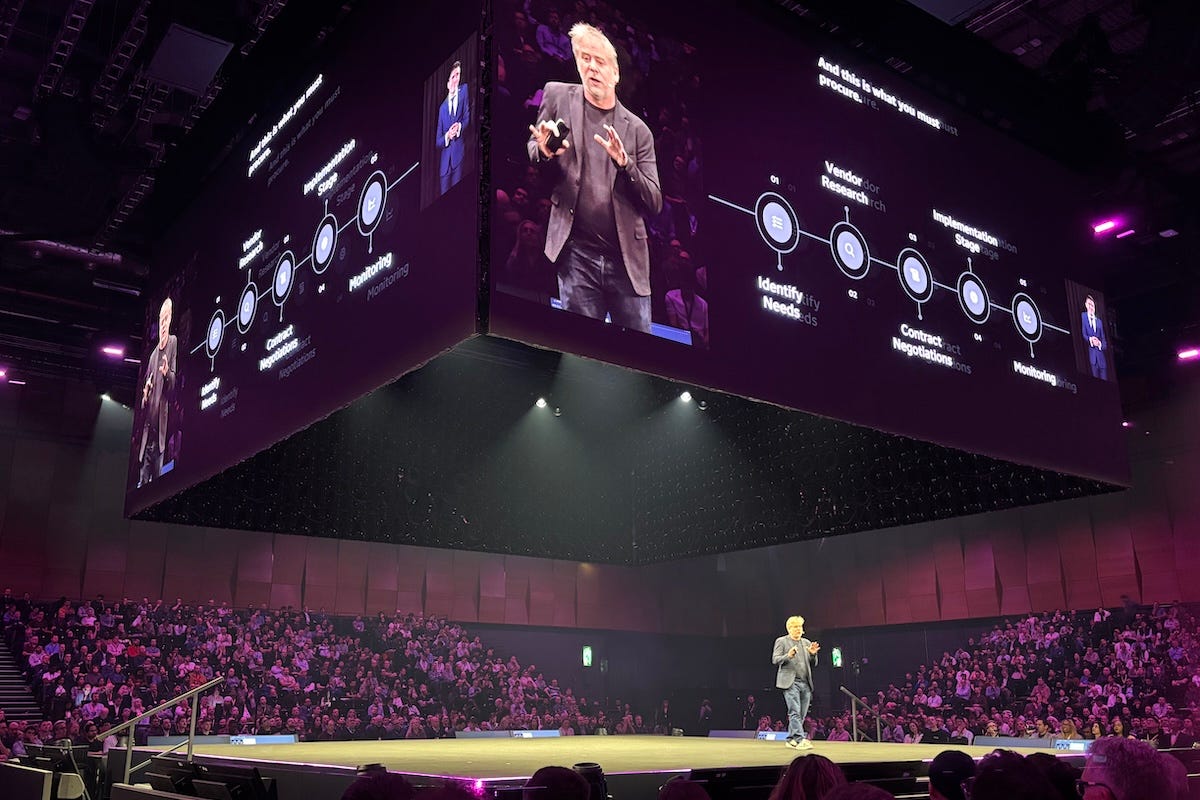
Greg Jackson, chief executive and founder of Octopus Energy Group, gave a broader argument for agile technology platforms in volatile markets. Enterprise software procurement often starts with companies trying to list existing functions and predict future requirements, even though business conditions can change quickly.
“When you’re identifying your needs, you’re almost certainly wrong,” Jackson said.
Octopus built its energy platform on AWS about a decade ago. The company wanted an agile architecture with large-scale real-time processing, rather than a rigid utility system, Jackson said. That platform later became Kraken, which is now independent from Octopus.
Jackson said Octopus was built as a technology platform, rather than a conventional utility company.
The scale of the operation is significant. Octopus ingested 10 trillion rows of data last year, equal to about 300,000 rows a second, Jackson said. The company uses data to support dynamic electricity pricing, electric-vehicle charging and decisions about where more charging infrastructure is needed.
Octopus controls three gigawatts of electric vehicles in the UK, even though EVs still account for only about 5% of the market. As more decentralized energy resources come online, the next challenge will be using AI, cloud infrastructure and real-time data to coordinate them without creating new layers of complexity.