

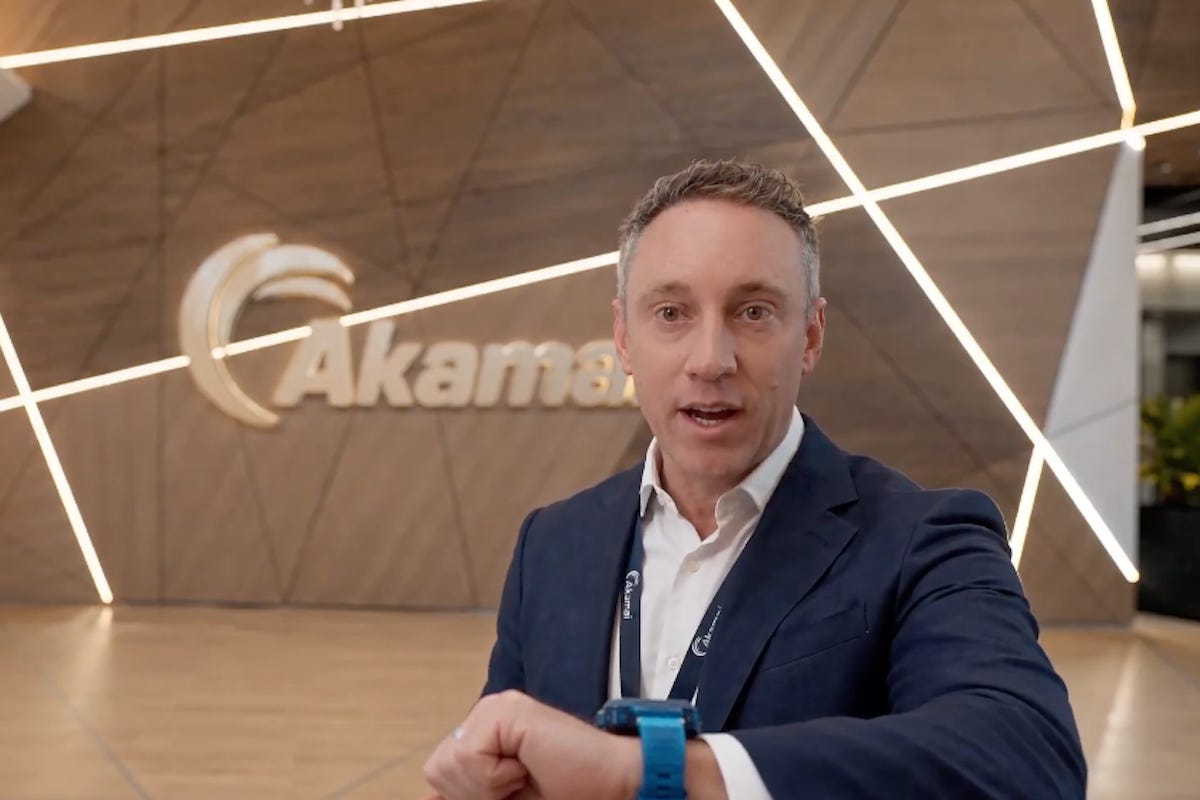
Akamai Technologies, a Cambridge, Massachusetts-based cloud and cybersecurity company, announced on September 24 that it signed a seven-year, $11.6 billion agreement to support Anthropic's growing central processing unit (CPU) workloads, the developer of the Claude artificial intelligence (AI) models.
The commitment could rise by a further $9 billion, lifting the relationship’s potential value to about $20 billion.
Anthropic will tap Akamai Cloud’s distributed AI infrastructure and software to meet its accelerating CPU workload demands. The contract adds to more than $2.8 billion in multi-year cloud infrastructure services (CIS) commitments that Akamai announced earlier this year across its customer base.
Tom Leighton, co-founder and chief executive of Akamai, said Anthropic was advancing the AI revolution and had chosen his company’s capabilities to build and operate AI infrastructure at scale.
“Our expanding global footprint, combined with our years of experience serving the world’s largest enterprises, positions us to be the infrastructure provider for secure and responsible AI applications and workloads,” he said.
Akamai Cloud supports computing from the core to the edge on a network spanning thousands of points of presence. Built on diversified hardware, it lets customers build and run applications and optimize how they serve users and AI agents.
It is designed to keep applications fast, reliable and secure across their full lifecycle, as customer demand for deploying AI workloads grows.
Akamai has also given Anthropic the right to buy up to about 5% of its shares at $111.33 each. About 2% is tied to the initial commitment. Anthropic can unlock the remaining 3% in 1% steps for every additional $3 billion it spends on Akamai’s cloud services over seven years.
Akamai estimates capital expenditure tied to the contract at about $5.5 billion. It expects no impact on its 2026 revenue guidance but plans to raise this year’s capital spending by about $1.7 billion to secure and pre-purchase critical supply chain components, including memory.
Guarding nonhuman identities
The deal came two days after Akamai published its latest State of the Internet (SOTI) security report on September 22, which warns that agentic AI is fundamentally changing enterprise risk.
Titled The Agentic Frontier: Speed, Scale, and Nonhuman Identity and aimed at chief information security officers (CISOs), the report said securing a business has evolved beyond managing people's identities and access to behavioral governance over nonhuman entities that execute tasks across application programming interfaces (APIs) and systems.
It identified two major challenges for CISOs. One is setting guardrails for autonomous agents. The other is how quickly AI models discover and chain vulnerabilities, often outpacing human patch cycles.
Key findings include:
Model Context Protocol (MCP) exposure ranks last among CISO security priorities, even though the protocol lets AI agents act autonomously across multiple software systems and security leaders expect rogue agents to become a top cyberthreat by 2030
More than 6% of enterprise AI chatbot conversations contain sensitive corporate data, mainly personally identifiable information, with 47% of interactions taking place via unmonitored personal accounts
More than 40% of enterprise users have installed AI-powered browser extensions, a quarter of which changed their permissions within 12 months; these tools are 60% more likely than standard extensions to carry known common vulnerabilities and exposures (CVEs)
AI bot traffic rose 300% in 2025, with the commerce industry hit hardest
The average annual cost to an enterprise of resolving API breaches has reached $700,000
Boaz Gelbord, chief security officer at Akamai, said companies face a triple threat from internal AI use, such as AI-generated code and productivity tools; AI built into customer-facing products and cloud workloads; and AI-driven attacks on the enterprise.
“AI presents an ‘everything, everywhere, all at once’ moment for the security ecosystem as a whole. Security programs need to adapt to this rapidly evolving reality, and there’s a lot of pressure in the system due to the unprecedented speed of these changes,” he said.
The report urges CISOs to:
Deploy edge-native runtime protections, API filters and isolation to neutralize vulnerabilities while back-end patching takes place
Build visibility and behavioral controls inside the browser to secure staff use of unmanaged AI extensions and web-hosted models
Use generative engine optimization (GEO) and machine-readable data at the network edge to stop AI crawlers and synthetic shoppers misrepresenting brand data
Grant AI agents autonomy according to how easily their actions can be verified and how reversible a failure would be, keeping humans in the loop for high-stakes actions
Gelbord said the issue will be a central topic for boards, customers and regulators for the foreseeable future.