


A new wave of autonomous AI (artificial intelligence) agents can now connect directly to bank accounts and other sensitive systems.
Security experts say most people are not ready to run these tools safely. The advice is to treat them like powerful, untested software, not personal productivity apps, and keep them off everyday devices until properly contained.
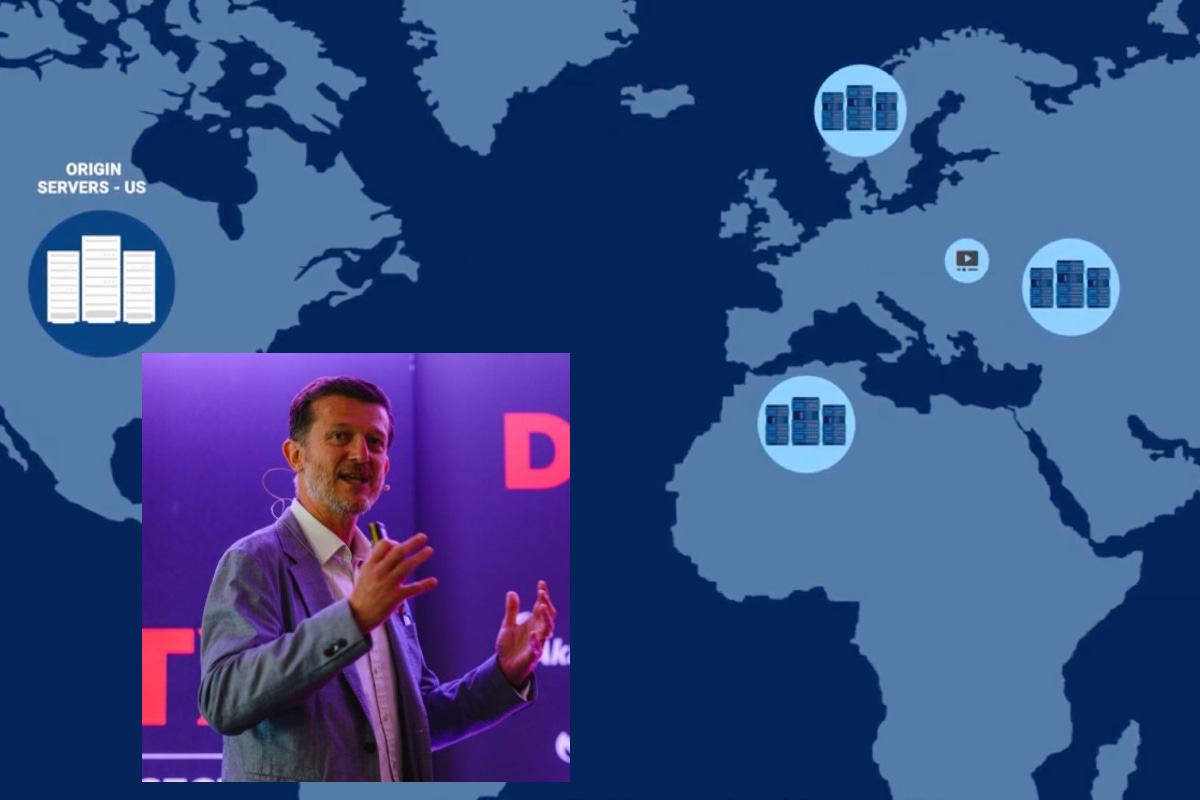
“If you use something like OpenClaw, I’d put it in a sandbox environment on our cloud platform,” Richard Meeus, EMEA Director of Security Technology and Strategy at Akamai, told TechJournal.uk in an interview. “It’s very powerful, and what it can connect to and do means you need to run it in controlled environments. It’s not something I would run on my work laptop.”
The compute challenge for inference is expected to be a thousand times greater than for training, according to Nvidia’s chief executive.
Akamai runs a recommended sandboxed deployment for OpenClaw, an open-source AI agent platform, on its own cloud compute platform. The edge security platform delivers and secures traffic, while the separate, optional compute platform runs customer processes, including storage, databases and Kubernetes; not all customers take both.
The compute business grew out of Akamai’s acquisition of Linode roughly four to five years ago.
The company says its combined network is now more distributed than any single CDN (content delivery network) or cloud provider, once compute and edge capacity are counted together.
“We’ve had a partnership with Nvidia, where we’re beginning to put Blackwell GPUs (graphics processing units) into our cloud compute space and create a distributed compute cloud,” Meeus said. “By doing this, we hope to be very well positioned for the next challenge of AI, which is going to be inference.”
On June 2, Akamai said it expanded its Nvidia partnership, planning to combine its Guardicore Segmentation platform with NVIDIA DOCA on the new Vera BlueField-4 STX storage architecture, aiming to enforce Zero Trust protection for AI factory data and workloads at the infrastructure level.
The inference platform is already live, with some customers using it.
“If your compute stack is in the UK but you’re doing development in the Philippines, or your compute stack is in the US but your tech people are in Australia, the latency isn’t going to work,” he said. “We’re putting the GPUs around the edge so you can do that inference at scale in a distributed manner.”
This shift towards distributed, edge-based computing is central to how Akamai is positioning itself for the next phase of AI.
Akamai is a United States-based cybersecurity and cloud computing company that also operates one of the world’s largest CDNs, protecting websites, application programming interfaces (APIs) and applications against attacks for enterprises across financial services, healthcare, insurance and manufacturing, in an industry where inference, not training, is fast becoming the dominant workload.
Paying for API gaps
Akamai’s research shows what happens when that kind of protection is missing. The company published its API Impact Study on April 28, and the findings still offer a stark illustration of the financial stakes involved.
“On average, it’s working out at about $700,000 per incident, once you wrap in the downtime and the time it takes to remediate,” Meeus said. “When 96% of respondents say an attack has happened in the last 12 months, that’s a level of certainty, and with that average cost, it’s a fairly weighty challenge.”
AI-linked APIs contributed to 42% of the incidents organizations reported over the past year.
The average EMEA incident cost £439,107, with the UK facing the highest economic impact in the region at £582,093 per incident, based on responses from thousands of organizations across the industry.
Three-quarters said they have a full API inventory, but fewer than a quarter know which APIs handle sensitive data.
“A lot of organizations believe they have comprehensive visibility into their APIs, and that’s aspirational,” he said. “They treat compliance standards as a ceiling, when really they should be a floor.”
A separate case shows how quickly that kind of gap turns into a real breach.
“A well-publicized security researcher went after the McKinsey chatbot,” he added. “They got the chatbot to point them toward 22 exposed APIs with no authentication, gaining access to the main database and terabytes of data. It had nothing to do with Akamai, but it highlights exposed endpoints and no visibility into APIs.”
Detecting abuse with AI
Akamai’s own defenses lean heavily on understanding how legitimate users actually behave, not just on blocking known attack patterns.
“API attacks are a lot more focused on authentication and authorization,” Meeus said. “You need to understand the business flow, the business logic of that particular API. You have to use AI to detect anomalies and changes at that scale, but you still need oversight because information can be assumed or hallucinated.”
Akamai also scans code repositories for common problems, such as improperly implemented authentication.
Quantum computing poses a very different kind of threat, one that comes with no fixed deadline for when it might strike, unlike the more immediate risks already showing up in API traffic.
“A lot of data being transferred is probably ephemeral,” he said. “If it’s only at risk for a period of 30 days or a year, you probably don’t need to worry about it. But if it’s permanent, like insurance documents valid for 100 years, that’s something to be concerned about.”
Harvest now, decrypt later means attackers collect encrypted data today to unlock once quantum computers can break current encryption.
“It’s a bit like Y2K (Year 2000 problem), but nobody knows when it’s going to be,” he said. “Organizations are stuck between needing to act now and needing to act in five years, and that uncertainty creates a reticence to invest.”
“We don’t need to change our symmetric cryptography, so we can park that and focus on what’s asymmetric,” he added. “What faces the cloud and the internet? That’s probably the easiest place to start.”
Akamai also sells tools designed to make that kind of inventory easier to build. The product, Domain Name System (DNS) Posture Management, checks records against certificate authorities to flag gaps.
“It is important to have that visibility to surface your DNS, crypto, and certificate posture across all of your websites on one screen,” Meeus said.
“There’s a lot of insecure code out there,” he said. “It highlights the need to have security tooling in place to look at your assets and find where the vulnerabilities are.”
The NCSC (National Cyber Security Centre) has said good cyber hygiene today means a good position going forward.
“We need to make it more effective, with visibility into our DNS, APIs and certificate management, and control through micro-segmentation to enforce Nvidia’s Zero Trust,” he added.
The combined pressure of AI and quantum risk does not mean overhauling everything at once. The priority is building the visibility to know exactly where the gaps are, in APIs, DNS records and network segmentation alike, before either risk fully materializes.