


Companies deploying AI agents in their workflows face a fundamental question that has nothing to do with technology: can the people who rely on those agents actually trust them?
One UK travel firm has found an answer, and it starts with treating an AI analyst the same way you would treat a new hire fresh out of university.
“If you were hiring a human analyst fresh out of university, you would spend the first few months guiding them through your business data: these are the columns, the KPIs and the measures to use in this context,” said Aman Bhattarai, EMEA Customer Success Lead at ThoughtSpot.
“We need to apply exactly the same approach to an AI analyst. Once it understands your business language, it is like getting eight to 10 years of experience in a couple of weeks,” he said.
He added that the principle applies universally, regardless of which AI analytics tool an organization uses. He was speaking about easyJet holidays, a UK packaged holiday provider and a client of ThoughtSpot, where the approach has helped transform a five-person data team into an operation serving 350 employees daily, while the company doubled its revenue without significantly growing its headcount.
EasyJet holidays is a fully owned subsidiary of easyJet, the budget airline, and operates as a packaged holiday provider of around 400 employees. It generated revenue of £1.3 to £1.5 billion (about $1.6 to $1.9 billion) in its latest fiscal year and made around £250 million in profit.
When ThoughtSpot began working with easyJet holidays in early 2023, the holiday firm's data team numbered just five people and was being overwhelmed by a surge in post-COVID travel demand. It could not keep pace with dashboard and report requests coming from around 200 employees at the time.
ThoughtSpot was introduced first with a single use case in the trading team, helping analysts optimize pricing and booking routes. Within six months, adoption had grown from 10 users to 100. It now covers 350 of the company’s roughly 400 employees. In January 2025, easyJet holidays retired every other analytics tool and became a fully ThoughtSpot-run business.
The commercial impact has been significant. Without substantially increasing the data team, which grew from five to around 10 people, the company doubled revenue from roughly £500 million to £1 billion. Of the 350 active users, 100 query the platform’s AI analyst, Spotter, every single day.
They ask questions such as which hotels were most profitable last week or what the average selling price is across different routes, questions that previously required a request to the data team.
The CEO of the easyJet group no longer waits for a daily report from the data team. He opens ThoughtSpot on his mobile phone each morning, with dashboards refreshed every 30 minutes, to check metrics including flight delay rates across the network.
Negotiating live
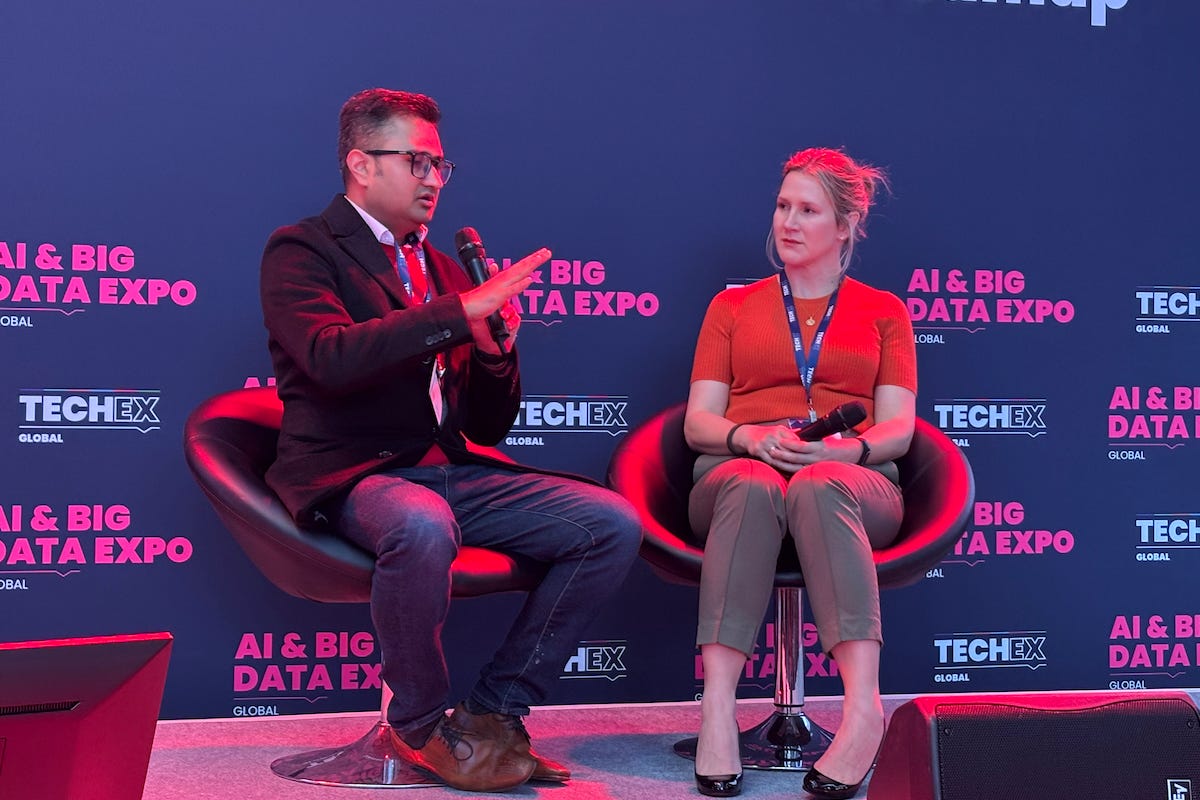
The session, titled “Analytics everywhere: How easyJet holidays put AI-driven insight in every team’s hands,” was presented at the AI & Big Data Expo, part of the TechEx conference, in London. It was delivered by Jane Smith, Field Chief Data & AI Officer at ThoughtSpot, and Bhattarai.
One of the most vivid illustrations of the transformation came from the trading floor. Before the overhaul, trading managers traveling to destinations such as Greece to negotiate contracts with hotel chains, including Hilton and Marriott, would prepare PowerPoint decks, spreadsheets, or PDF dashboards summarizing 12 months of booking data.
That process has been replaced entirely by live negotiation on mobile devices. Managers now pull up live boards, refreshed that morning, showing real-time booking volumes, lead data and performance metrics for each hotel partner.
“Every single member of the trading team, supply chain or marketing team has not asked for a single dashboard from the data team in the last three years,” Bhattarai said. “The end users, who have been enabled and trained, simply go and ask questions and build their own reports and dashboards.”
The reach of analytics extended to the customer service desk as well. When a customer calls in, a service agent can instantly query that person’s full booking history, any flight delays they have experienced and past cancellations, all in real time.
Bhattarai said achieving that level of adoption required deliberate investment in data literacy. Business users in each domain, whether trading, supply chain or marketing, were trained on which data columns and measures were relevant to their specific function rather than being given generic analytics instruction.
Smith said the AI analyst draws not only on structured enterprise data but also on knowledge stored in collaboration tools such as Slack, Microsoft Teams and Confluence, giving it a broader base for answering questions.
The data team, freed from building reports, pivoted to higher-value work: sourcing data from customer relationship management (CRM) systems, net promoter score (NPS) tools, customer service engagements and booking platforms, and building the semantic models that underpin both executive dashboards and AI agents. The data team has not built a single ThoughtSpot dashboard itself.
Smith said the shift at easyJet holidays illustrates how far an organization can move along the analytics maturity curve.
“It is the future of data and AI teams. We can almost see it start to happen now at easyJet,” she said.
The change was not painless. Bhattarai said the hardest part of the transformation was not the technology but the cultural shift. Data analysts who previously owned dashboards as personal products felt defensive when those were challenged or replaced. Business users had to be persuaded they no longer needed to rely on a colleague in the data team to get the right answer. They could trust themselves, or an AI agent, to do it instead.
He said that managing this change across large enterprises had been the biggest struggle for him and his team.
Coaching the agent
Trust is now the defining challenge of the agentic era, more so than speed or scale, which the travel firm had already solved. Bhattarai said once an AI analyst is properly onboarded with business context, the returns are asymmetric: what takes a human analyst months to absorb can be instilled in an AI agent within weeks.
Smith mapped the broader industry trajectory: from operational reporting to visual dashboards, then search-based analytics, then Gen AI and agentic tools, and finally fully autonomous analytics where agents not only surface insights but take action.
She cited Gartner's forecast that half of all business decisions will soon be automated by agents, and McKinsey's projection that a huge amount of focus, budget, and energy is shifting toward agentic AI.
For organizations still deciding where to begin, she recommended abandoning the traditional two-year, top-down exercise of data cleansing, governance frameworks and product roadmaps. Instead, identify one or two use cases at the edge of the business where data directly touches users and start there.
She said if building out that product reveals gaps in governance or weaknesses in the underlying data infrastructure, those can be fixed along the way. The approach generates visible proof points, secures stakeholder support and avoids the risk of a lengthy project that delivers nothing tangible in the short term.